A network can be working perfectly while the people responsible for it are having a dreadful afternoon. The links are up. The charts are available. Somewhere, an application is slow, and five monitoring systems are offering five versions of the truth. At BT Business, reducing that chorus became a measurable business decision. Its published account describes moving from five systems to IBM SevOne, with millions of dollars in annual savings.
- SevOne brings network metrics and traffic analysis into a shared operational view.
- Its buyers run large, mixed networks: enterprises, telecoms and managed service providers.
- The practical prize is faster investigation, fewer tools and better capacity decisions.
Five witnesses, one account
In BT’s case study, the rollout began with two major customers. Over the next eighteen months, more than 800 additional customers migrated. The reported estate eventually exceeded 200,000 devices. Distributed processing helped keep reporting responsive as the monitored network grew. Consolidation also removed integration points and reduced licensing costs. That is an unusually concrete answer to what network software can buy: less machinery devoted to explaining the machinery.
“Those combined efficiencies save us millions of dollars a year.”Hareesh Agaram, BT Business
The appeal is easy to miss when buying software by feature checklist. Every additional tool brings credentials, maintenance and a vocabulary. Eventually, engineers spend precious attention translating between systems. The cost of an incident includes that translation. For a service provider, a clearer explanation also changes the conversation with the customer who is paying for reliability.
The monitor was too slow
The original irritation was speed. In a 2014 University of Delaware interview, Vess Bakalov recalled working at a financial institution whose performance management systems struggled to scale. Reports arrived too slowly. He and fellow graduate Jim Young developed an architecture intended to handle larger environments.
Vess and Tanya Bakalov founded SevOne in 2005. Their early office sat behind a comic book store in Newark, Delaware. Tanya left Deloitte to become the first salesperson. Comcast became their first large account in the second year. The founders described sales cycles of six to nine months. An enterprise customer was entrusting them with infrastructure and, rather less comfortably, somebody’s professional reputation.
A traffic jam has several addresses
Today, IBM SevOne monitors networks spanning physical infrastructure, software-defined networks, Wi-Fi and cloud environments. The point is to relate network behavior to the applications people depend on. A congested connection matters because a service using it becomes difficult to use. Operators need to see where those two experiences meet.
The platform’s two core components divide the work. NMS collects and analyzes network data; Data Insight presents reporting, visualization and workflows. Performance metrics show how infrastructure is behaving. Flow data helps explain the traffic passing through it. Together, they offer a route from “something is slow” to a more useful investigation.
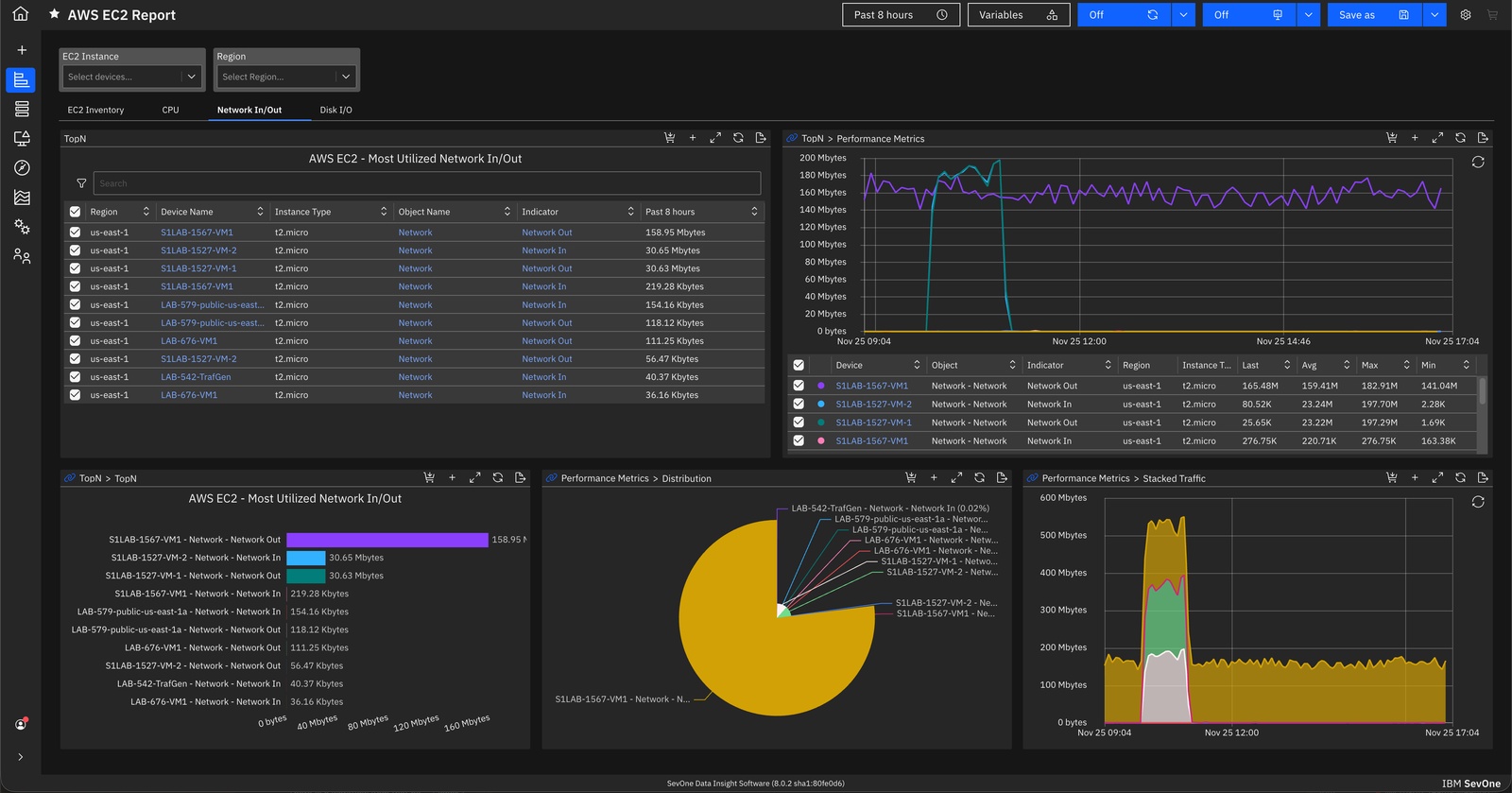
IBM’s version 7.0 announcement described recognition of more than 10,000 applications and support for over 250 device types and vendors. It also paired monitoring with workflow templates through Rapid Network Automation. Those are product capabilities, rather than promises that every customer will achieve the same outcome. Their value depends on the network and the work the operator needs to complete.
The satellite problem came before the alarm
An unnamed global satellite provider makes the distinction vivid. It already had event-management capabilities. Its earlier improvements had left a stubborn problem: gathering and normalizing unusual performance data. Staff were manually joining information from separate systems to associate it with particular resources.
SevOne ingested non-standard data through Kafka streams, allowing it to reach IBM’s AIOps tooling in a consistent form. A two-way ServiceNow integration connected that information to incident tickets and reporting. The sequence matters. First make the data coherent; then make the response repeatable. Buying more analysis before fixing the inputs would have left the original bottleneck in place.
Kafka streams02
SevOne03
IBM AIOps04
ServiceNow
Even the orange box had to move
SevOne’s own delivery model changed when customers changed theirs. An IBM deployment retrospective describes growing questions about security and data-center footprint from 2017, followed by demand for more flexible infrastructure. AWS and Azure deployment options arrived in 2019. After the June 2022 transition to IBM SevOne branding, the business stopped selling its orange hardware appliances directly, arranging a reseller route instead.
The corporate path also needs careful dating. Turbonomic acquired SevOne in 2019. IBM acquired Turbonomic in 2021. Financing had helped the independent company expand: $150 million in 2013, followed by a $50 million Series C in 2015. The software outlasted the box, and the name outlasted the independent company.
The buyer still has homework
IBM’s licensing methodology uses Managed Device and Managed Client Device metrics. A useful cost discussion therefore starts with what will be monitored, then adds infrastructure, implementation and support. Savings depend on which existing systems can actually be retired. A second platform added indefinitely to the first five makes a rather different financial argument.
Alternatives include SolarWinds and LogicMonitor. SevOne’s persuasive evidence concerns distributed processing, mixed-network coverage and customer consolidation. A sensible evaluation, in my view, should use a difficult site: confirm telemetry coverage, time a report and follow an alert to its owner. Where devices cannot supply usable data or nobody owns the response, software has little to work with.
A clearer view still needs a human decision
SevOne 9.0, announced in September 2026, adds OpenConfig/gNMI telemetry for multiple vendors in public preview, expanded Cisco integrations and API-driven Wi-Fi configuration. Its Integration Manager also exposes discovery progress and logs. Those details address the unglamorous work of getting monitoring established and keeping it useful.
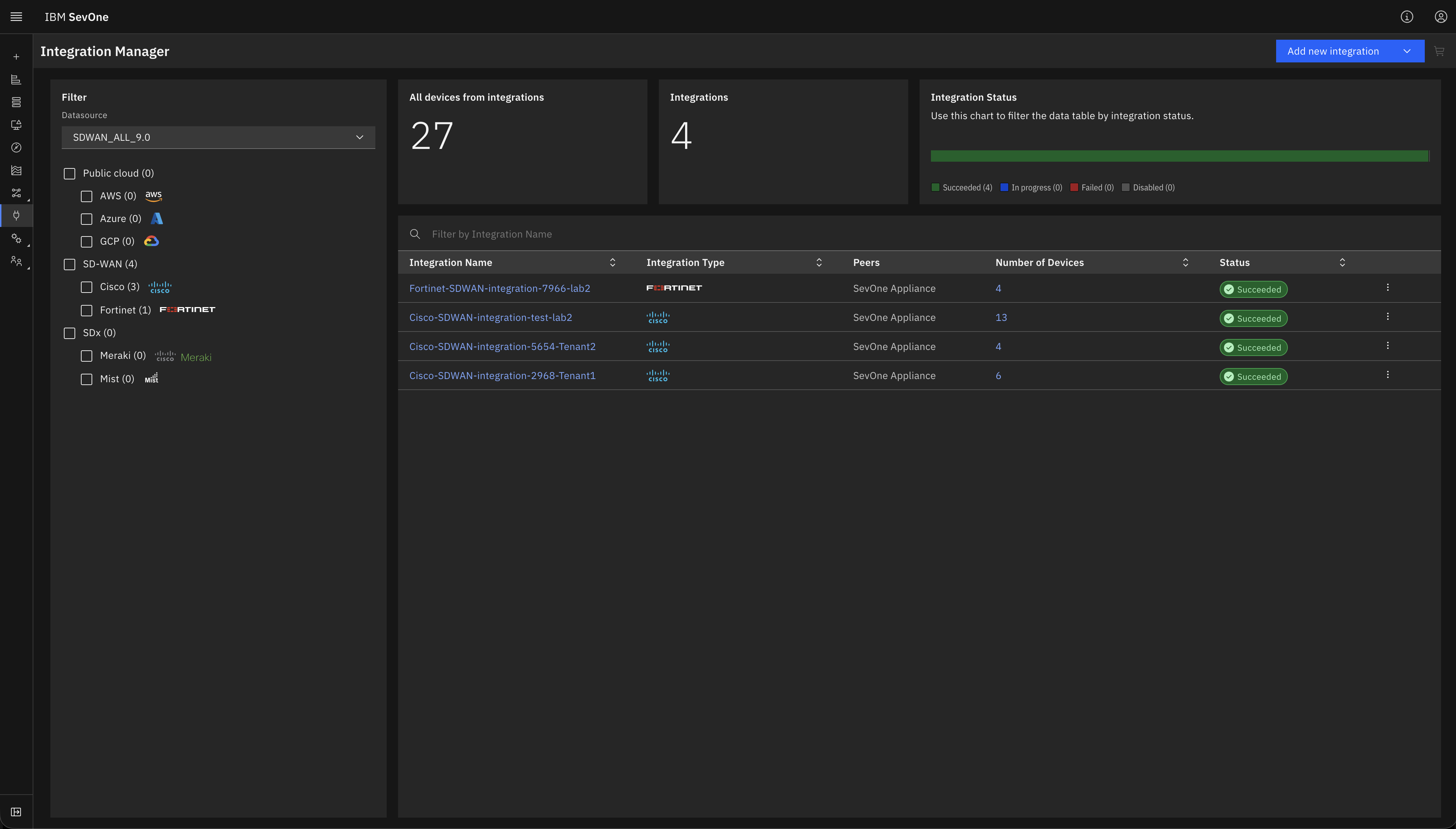
IBM’s own CIO deployment reports 20,328 monitored devices and 20 million flows per minute. Migrating the inventory still required careful planning. That is the useful closing detail: a shared view takes work. SevOne gives operators more evidence; organizations must decide who uses it, which tools disappear and what happens when the evidence suggests trouble.
Customer result, not a product limit.