The hardest part of management often arrives disguised as a calendar notification. A one-on-one in ten minutes. A top performer whose bonus disappeared. Two colleagues who have stopped speaking in complete sentences. The annual leadership course is nowhere to be found. The manager, meanwhile, is staring at a blinking cursor and considering the diplomatic possibilities of “Quick chat?”
Ian Gover has spent a career near that cursor. His companies have dealt in remote work, mentoring, compensation, and coaching, but the recurring subject is less fashionable and more durable: the machinery around how people work. He is a trained industrial psychologist who became a repeat HR-technology founder, an operator fluent in both organizational theory and the indignities of a meeting that should have had an agenda.
Rypple, the company he co-founded in 2024, was built for these small, consequential intervals. Its AI coaching system can help a manager prepare for a conversation, rehearse an awkward exchange, revisit commitments from a previous one-on-one, or find a next step when the textbook answer has gone missing. In June 2026, Betterworks acquired the company. The deal gave a tidy ending to one chapter and a much larger distribution problem to the next.
“Managers don’t need more theory - they need support in the moments where management actually happens.”Ian Gover
01 / The useful skepticThe question changed before the product did
Gover did not arrive at AI coaching as an evangelist. He was initially resistant to putting AI anywhere near coaching and mentoring. The objection made sense. Leadership is social, specific, and full of unsaid things. A language model can arrange an elegant paragraph without ever having disappointed a colleague or misread a room.
Then Gover examined his own education as a manager. He had received what he described as amazing training: a 30-day immersive leadership program, plus access to mentors and coaches when promotions brought unfamiliar responsibilities. He came to think of himself as one of the “fortunate few.” The revealing comparison was not between software and a superb human coach. It was between some timely help and the silence experienced by managers who receive little formal preparation at all.
That changed the design question. Replacement was too blunt. Access was more interesting. Could software make a useful coaching practice available at two in the afternoon, just before the real conversation? Could it remember enough context to avoid offering the same laminated advice to everyone? Could practice become normal instead of remedial?
Rypple's answer was a collection of intelligent assistants presented as a sort of leadership team. The system helps with meeting preparation and follow-up, points managers toward relevant material, and supports role-play. Each interaction adds context to a personalized leadership profile, allowing patterns and growth opportunities to emerge over time. Memory, in this conception, is not a parlor trick. It is the difference between advice and a relationship with continuity.
02 / A career in the plumbingWork changed. His subject did not.
The route to Rypple began well before generative AI. After studying at Memorial University of Newfoundland and earning a master's degree from Rensselaer Polytechnic Institute, Gover worked in human-capital management at PwC. In 2002 he moved to Sun Microsystems, where his responsibilities included Open Work, the company's flexible-work program.
Sun was sorting out distributed work when video calls still felt faintly futuristic. Its employees fell into office-assigned, flexible, and home-assigned groups, with different provisions and management practices. Gover spoke then about culture, affiliation, social networks, and collaboration across distance. Those concerns would later become the ordinary headaches of remote teams. His career has a habit of standing near tomorrow's management nuisance a little early.
He next founded Better Workplace, a remote-work platform he led to acquisition. At Everwise, which he co-founded in 2012, the lens moved from where people worked to how they developed. The platform connected employees with mentors, resources, and structured learning. Gover argued for continual development: use data to understand needs, guide learning throughout the year, tailor resources, and keep real people in the equation. Everwise was later acquired by Torch.
OpenComp brought him into compensation intelligence. As president, he helped with the company's development and early growth. The product category changed again, but the connective tissue remained visible. Remote policy, mentoring, pay, and management all sit where an institution's rules encounter a person's working life. Each can become either an opaque ritual or a useful system.
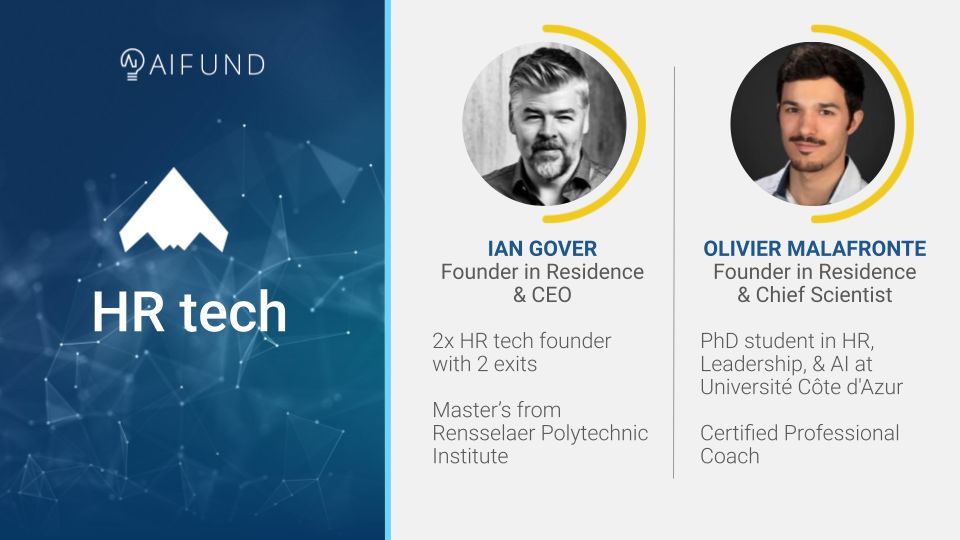
In 2023, Gover joined AI Fund as a founder in residence and teamed up with Olivier Malafronte, a certified coach whose work spans leadership and AI. One brought the scar tissue of company building and HR systems. The other brought coaching practice and research. Together they tested the premise that coaching knowledge and tools could reach far more managers than traditional delivery allowed. Rypple emerged from that work and launched the following year.
03 / From course to actionA coach that lives between the forms
Workplace software has traditionally been good at records. It can document a goal, register a rating, and preserve the official account of what already happened. Management itself is less orderly. It happens in fragments: an agenda prepared, a promise remembered, a feedback sentence softened until it says nothing, a decision delayed because no one is quite sure how to begin.
Rypple's phrase for its approach is a “system of action.” The distinction matters. A course asks the manager to store a principle for later. An action system appears when later arrives. It can help prepare a one-on-one, suggest an agenda, track follow-through, or let a manager rehearse the conversation before another person has to endure the first draft.
The use cases are agreeably unglamorous. One manager needed to explain a missed bonus to a valued employee. Another wanted to defuse tension between teammates. These are not grand strategic tableaux. They are the daily tests by which employees decide whether their manager is fair, prepared, and paying attention.
Gover's aspiration is not to turn every manager into a universal leadership expert. It is to improve the capacity of a meaningful share of the enormous manager population that has historically lacked sustained support. He has described the mission as opening up “leadership trade secrets” once reserved for the few and fortunate. The democratic promise is appealing. The practical test is whether the next conversation goes better.
“The thing that excites us every single morning is really that idea of what happens if we are able to level that field.”Ian Gover
04 / The next roomWhy Betterworks opened the door
Betterworks approached the manager problem from the other side. Its software helps organizations run goals, feedback, skills, and performance programs. Rypple worked closer to the manager's next move. A shared advisor introduced Gover to Betterworks CEO Doug Dennerline. What began as a request for marketplace advice turned into a conversation about how the two layers might fit.
The logic is almost architectural. Betterworks holds formal performance infrastructure. Rypple assists in the conversations and decisions that create performance between review cycles. One sees the organizational program; the other works in the manager's day. The acquisition, announced on June 2, 2026, joined those perspectives without pretending the technical and cultural integration could happen overnight.
The companies said they would initially operate independently and take a phased approach. They plan to learn from adoption, study where the experiences reinforce one another, and explore links between manager activity, performance data, coaching, and formal processes. This caution is not mere corporate throat-clearing. Coaching becomes more useful with context, while context introduces serious questions about access, security, privacy, and human judgment.
Gover's public claim remains carefully practical: help managers lead with more confidence, clarity, and impact. The words are modest enough to survive contact with a Tuesday. Better software will not remove the discomfort from telling someone hard news, nor should it. It might help a manager arrive prepared, remember what was promised, and choose a sentence that sounds like a person rather than a policy manual.
05 / The recurring betBuild where the human moment keeps escaping the system
There is a pleasing consistency in Gover's sequence of companies. Better Workplace treated location as a design problem. Everwise treated development as a continuing network rather than an annual event. OpenComp made compensation a system that could be examined and managed. Rypple brought guidance into the scattered minutes where managers make choices.
The technology keeps changing. The bet underneath it does not. Institutions create frameworks; people live in moments. The useful product is often the bridge between them. Gover's career suggests that the future of work is rarely decided by a slogan. It is decided when somebody has ten minutes before a consequential meeting and finds, at last, something better than a blinking cursor.