Huntley Ritter had a perfectly good chair on the set of Bring It On. He was playing Les, one of the cheerleaders in the 2000 comedy. Yet the seat that interested him belonged to a producer. During the shoot in San Diego, he pulled up beside Mark Abraham and asked to learn how the work happened on the other side of the camera.
Actors are supposed to want more scenes. Ritter wanted a look at the machinery. Abraham initially wondered why someone with such a comfortable acting job would volunteer for the complications of producing. He agreed to let Ritter shadow him. There is something pleasingly inconvenient about that choice: getting into a film, then immediately asking how to make one.
It offers a useful opening to a career that can otherwise look like a collection of unrelated occupations. Actor. Producer. Agency founder. Advertising technology entrepreneur. The connecting interest is the arrangement behind the performance: who puts it together, how an audience enters, and what happens once people start watching.
A screen career, with an eye on the credits
Born in Atlanta in 1977, Ritter built an acting résumé that included The Wedding Planner, Wishcraft and We Are Marshall. He played Randy Linden in the latter, alongside a cast led by Matthew McConaughey. His films moved between comedy, thriller and drama. There was no requirement that the next job resemble the last.
Production became another part of that working life. He took producer and acting credits on The Third Nail, and executive producer credits on projects including Dollar Wise Fly and the web series Heckle U. The distinction matters. A performer can concentrate on one character; a producer has to think about the conditions that allow the whole thing to exist.
Ritter also secured production deals at Paramount Pictures and Warner Brothers. Through Stafford, his work expanded into advertising and communications. The audience might now be a potential customer, an employee or a passenger waiting to depart. The basic creative problem survived the change of venue. Someone had a message. Someone else had plenty of reasons to look away.
The seat belt gets a soundtrack
Between 2011 and 2016, Stafford supplied branded entertainment services under the Virgin Produced name. Ritter served as president of branded entertainment, working on campaigns for Virgin businesses and other partners. It was a setting where entertainment and commerce shared a production schedule, and where the difference between an instruction and an invitation could be a song.
The 2013 Virgin America safety video is a particularly clear example. An airline safety briefing has an unusually difficult assignment. It must deliver practical information to people who may have heard it repeatedly, while competing with conversations, luggage and the private drama of finding an armrest. Familiarity is useful for instructions. It is less useful for holding attention.
The team made a musical. Jon M. Chu directed; Todrick Hall supplied the song and lyrics; Cyrus Spencer and Christopher Scott received choreography credits. Ritter was credited as president of production at Virgin Produced. Safety instructions remained the subject, but the presentation borrowed the energy and visual language of a music video. Even the life jackets acquired stage presence.
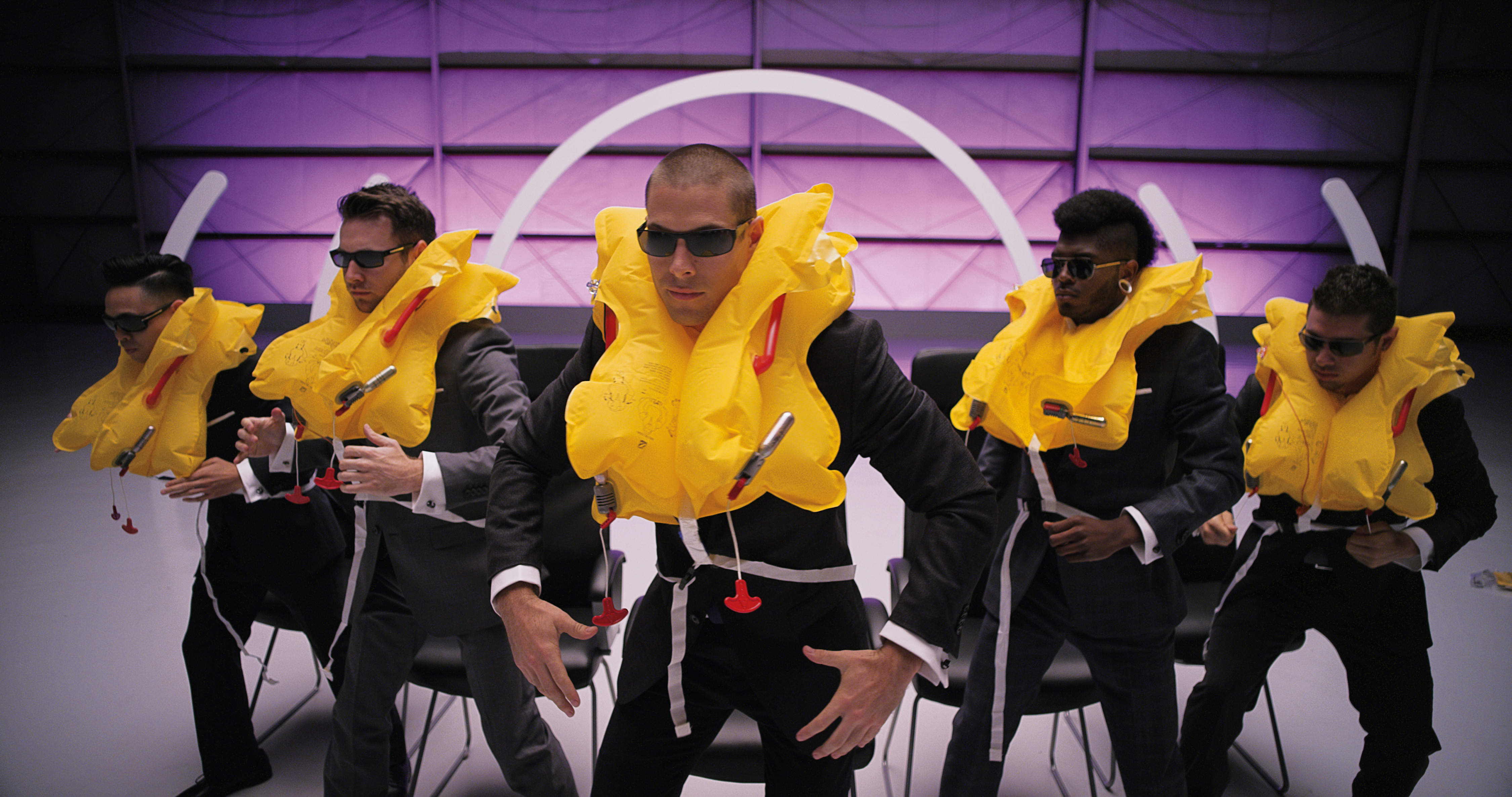
The campaign also invited viewers to submit short Instagram dance auditions for a future version. That detail is worth lingering over. Passengers usually receive a briefing; here, people outside the aircraft could put themselves forward to join it. The invitation extended the production beyond its original cast and gave the public a small job to do.
The campaign won the video category at the sixth Shorty Awards. It belongs to a large credited team, and that is part of its significance in Ritter’s story. His move toward the production side meant working through directors, performers, writers, marketers and distribution. A good idea needed an ensemble, even when the subject was the location of the exits.
Branson, a hotel and a well-placed rumor
Another Virgin project put Richard Branson beside Jonathan Goldsmith, familiar to advertising audiences as the Most Interesting Man in the World. The 2014 campaign, Rumors with Richard, promoted the coming Virgin hotel in Chicago. One Trick Pony handled the agency work; Yarrow Kraner directed; Ritter and Brian Skuletich were executive producers.
The premise fitted the product. A new hotel needed conversation before it had guests, and a campaign about rumors made conversation part of the entertainment. People could contribute a rumor through the hotel website for a chance to win a stay. The campaign treated participation as something to build into the idea, rather than a request tacked on at the end.
Ritter’s recollections of working around Branson have a similar interest in how a situation is arranged. He described Branson asking people to stand during big meetings, making long digressions less comfortable. He also admired Branson’s willingness to admit when he did not understand something. For someone who had once asked a producer for an informal apprenticeship, that is an appealing kind of authority: room enough to ask a basic question.
Give the viewer something to find
The limits of ordinary video advertising became a separate business problem for Ritter. A paid view could tell an advertiser that a video had played without settling whether anyone had paid attention. His USeek concept borrowed from the search-and-find pleasure of Where’s Waldo?. Viewers would look for objects inside videos, with rewards attached to participation.
USeek ran a University of Montana beta in 2015 and entered the broader market in 2016. In 2019, Ritter described a model in which advertisers paid for completed interactions. The proposition tied payment to an action the viewer performed.
“We don't charge unless the interactions take place.”
Huntley Ritter, describing USeek in 2019
The underlying invention has a more formal expression, too. Ritter and Matthew Ambert Hartle are named as co-inventors on U.S. patent 11,936,955, granted March 19, 2024, and 12,382,142, granted August 5, 2025. Both carry the title Attracting user attention to advertisements. After a film career, even the patent titles sound like production notes.
The disclosed approach places hidden objects inside video and records a viewer’s selection of their location. Finding an object can lead to a reward. The design gives the viewer a reason to inspect the image, while giving the system an action to register. It turns looking into a small assignment, closer to a game than waiting for a countdown to finish.
- 01WatchA video contains a hidden object
- 02FindThe viewer searches the scene
- 03SelectA click or touch records an action
- 04RewardParticipation can unlock a benefit
An interaction still leaves questions about memory, persuasion and purchase. Those are different outcomes. The interesting part of Ritter’s approach is the precision of the problem he chose: how to make the act of attending visible. That is a narrower ambition than solving advertising, and a more useful one to build around.
Headphones on, in Costa Rica
There is a photograph from a 2017 production in Costa Rica that puts Ritter back in an ordinary working posture. He sits with Miranda Hansen, Jenn Duncan and Alyssa Christen, the group wearing headphones and looking down at production equipment. The picture has none of the celebratory grammar of a premiere. Everybody appears occupied. A production has inconveniently insisted on being produced.
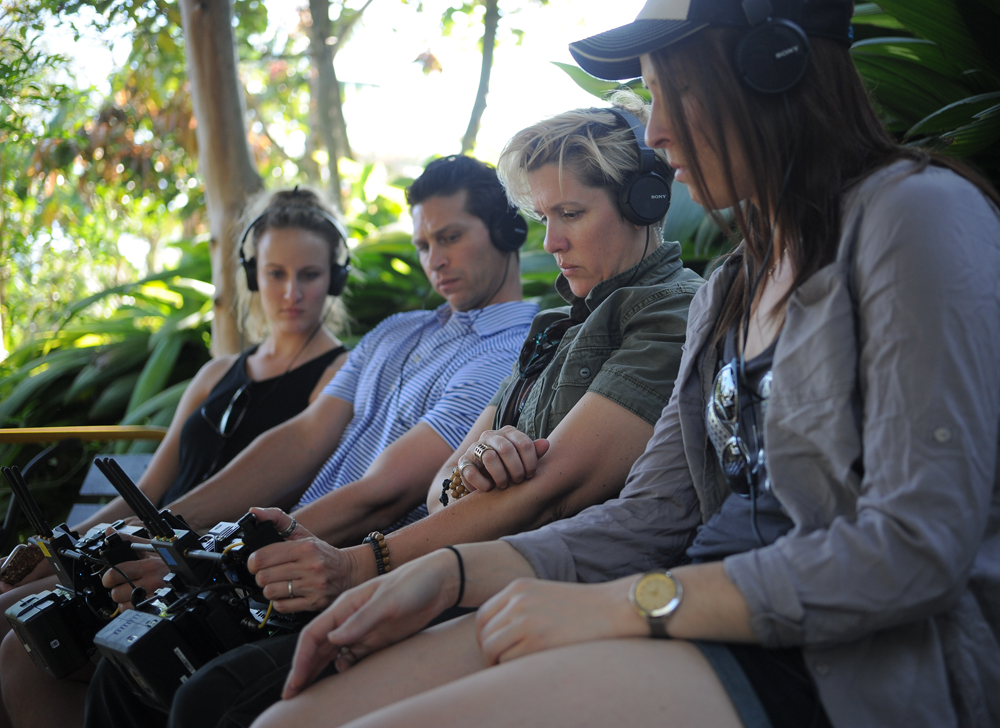
The project was the pilot for Human Nature, featuring farmer and television personality Chris Soules exploring ecological sustainability. Stafford Multimedia was producing, with local help from Costa Rica Film Support. Filming included a coffee farm and other locations. Ritter, an executive producer, spoke about learning from different cultures and showing how people connect humanity with nature.
It is an instructive companion to the advertising work. Here was a subject with processes to explain and places to visit, built around a host whose farming background belonged in the material. The challenge was again to find an inviting form for information. This time the invitation involved travel and coffee rather than choreography at cruising altitude.
A different place to do the work
Montana is more than a location in Ritter’s working life. He helped co-found HATCH, the creative gathering that began there in 2004. Its early focus on emerging filmmakers and artists fits the interest in learning across roles that appears throughout his career. Making connections between people can be a production decision in its own right.
He is based in Whitefish. His description of life outside work includes two children, five horses, a dog and time outdoors. The horses are a useful reminder that some commitments will never be satisfied by improving a slide deck. An animal has a rather direct view of whether somebody has shown up.
His professional interests have kept moving. He lists a 2024-2025 AI for Growth executive education program at Northwestern University’s Kellogg School of Management. Stafford’s present services span creative work, media, experiences and consulting. That range puts filmmaking alongside questions about positioning, partnerships and how a company explains itself.
Ritter’s career is easiest to follow through those acts of rearrangement: an actor moving his chair toward a producer, a safety briefing becoming a musical, a video acquiring something to find. Each changes the audience’s part in the scene. He has spent years working out how to make the next person lean a little closer.
Keep watching
The work, the interviews and the people behind the credits.
- Stafford Agency website ↗
- Huntley Ritter on LinkedIn Professional profile ↗
- Huntley Ritter on X Social profile ↗
- Film and production credits IMDb ↗
- Virgin America’s safety musical Watch on YouTube ↗
- How the safety dance was made Behind the scenes / YouTube ↗
- Ritter on building USeek 2019 interview / Forbes ↗
- An actor and entrepreneur in the Flathead 2018 podcast interview ↗
- On location with Human Nature 2017 report / La Nación / Spanish ↗
- Attracting user attention to advertisements 2025 patent grant ↗