Rio Penn-Grice wanted to hire a salesperson. By his own count, he had read more than 200 résumés over the preceding 18 months. The candidates who had done well had found him on social media and sent a quick video introducing themselves. His invitation to the next applicant contained a miniature audition: “You're a closer so close me!”
There is a certain economy to this. Someone applying to sell a service must first persuade the person selling the job. The cover letter can describe initiative at considerable length; an unexpected, considered introduction can demonstrate it. Penn-Grice gave applicants an audience of one and asked them to make that audience interested.
It is a useful opening scene for the founder and CEO of MarketU, the San Diego creative services business. Video is his trade. Getting people to engage with one another is a recurring subject. Across his work as a student speaker, podcast co-creator, videographer and founder, he has kept returning to the distance between having something to say and giving somebody a reason to listen.
“You're a closer so close me!”
Rio Penn-Grice, inviting sales applicants to introduce themselves
An audience vote before the founder title
Before the hiring request came a speaking competition. In 2020, while a student at Las Positas College in Livermore, Penn-Grice entered a leadership event at California Phi Beta Lambda’s virtual fall conference. Four students from different colleges delivered timed presentations. Viewers chose their favorite.
Penn-Grice won that audience vote with a presentation about leadership values and authentic communication. He also belonged to the college’s marketing case-study team, which placed second. One exercise asked him to hold a room’s attention; the other required a group to propose a solution to a business problem. Persuasion was present in both, with rather different marking schemes.
His student leadership work included community outreach and external affairs at FBLA-PBL. Those titles sound formal enough to require a meeting agenda. Their concerns were recognizably human: reaching people, representing a group and making contact beyond it. His later work would give those concerns a camera and a commercial brief.
Another experiment was already taking shape. Gen Z Journey brought Penn-Grice together with Aaron Pena and Joseph Rodrigues around a podcast about entrepreneurship and learning from experience. Its premise grew out of mentorship: the participants wanted to share what they had learned through their relationship with Rodrigues, rather than keep that access to themselves.
The idea had room for other voices. The published catalog includes conversations with founders, creative professionals and fellow young people. An interview program is a practical education in curiosity. You arrange the encounter, ask the question and allow someone else to supply an answer you could not have written in advance.
- 2020Student leadership recognition; Gen Z Journey
- 2021Networking on the TEDxBedford stage
- 2022MarketU’s listed founding year
- 2025Writing about production systems and virtual sets
What an introduction can become
His education also took him to San Diego State University, which his professional profile lists for 2021 through 2023. The overlapping dates place the networking talk alongside his university years. Speaking, studying and making creative work occupy the same stretch of his public record, rather than neatly succeeding one another.
In October 2021, Penn-Grice took the subject of connection to TEDxBedford. His talk, Generation Z: This Is How We Network, considered social media as a means of developing a network and rethinking the elevator pitch. The familiar phone screen could serve a purpose beyond passing the time.
For a videographer, this was close to home. An introduction is a short piece of storytelling with an unusually impatient audience. It needs a point of view, enough information to make sense and a reason to continue. The recipient has every opportunity to leave. Anyone who has watched a video’s opening seconds understands the arrangement.
Penn-Grice’s speaker biography described a freelance action sports and travel videographer. That combination puts the visual story first: people doing things, places worth seeing, moments that need selection and shape. His networking subject placed the same problem in a different setting. How do you make the encounter matter to somebody else?
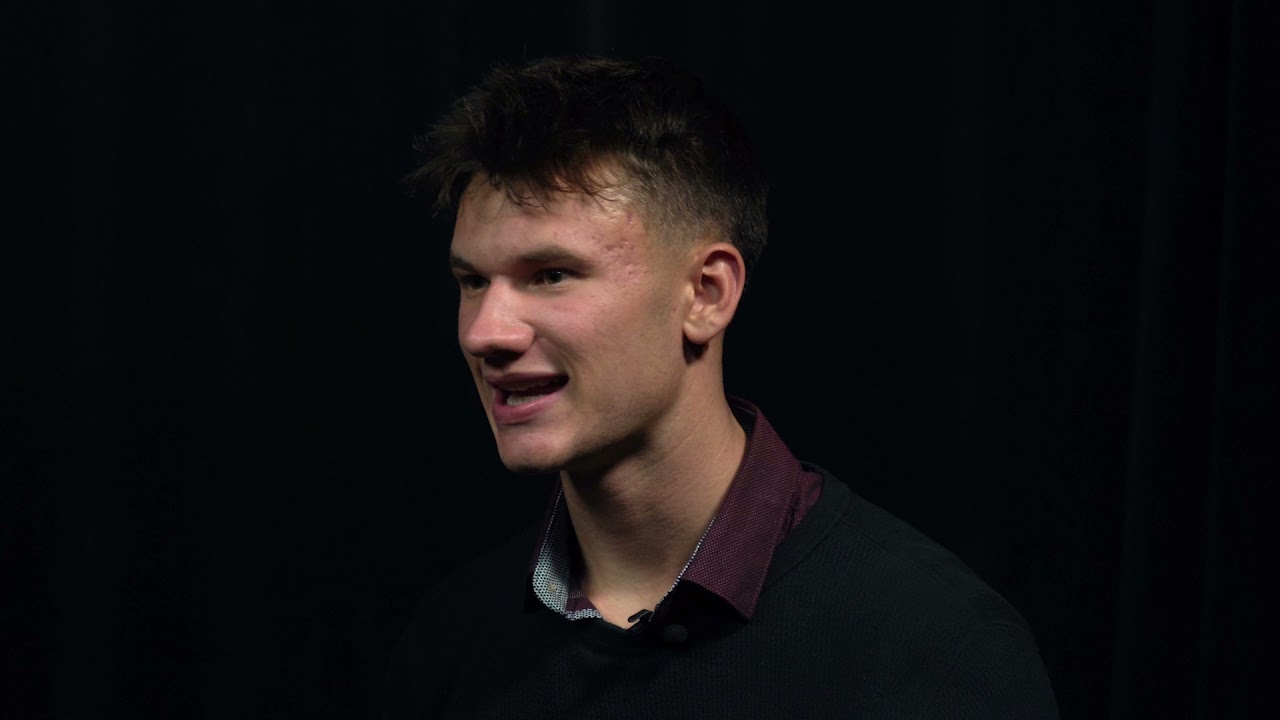
His later sales recruitment request reads like a practical companion to that talk. Find the person. Choose a form that lets them see you at work. Make an introduction worth answering. The connection between the two is an interpretation of his public work, but the repetition is striking: the camera keeps appearing where a relationship might begin.
The subject continued beyond the stage. In October 2022, he appeared on The Partners Podcast for a conversation about growing an audience through storytelling. A February 2024 appearance on Respectfully Inspired! ranged across finding friends, mentorship, travel and MarketU. The episode put professional ambition beside the people with whom a person chooses to spend time. That pairing makes sense within a career where an introduction can lead to a conversation, a creative project or an ongoing collaboration. The public appearances offer several entry points into the same set of interests, each with a different host and a different audience.
The camera has company
The filmmaking remained part of the picture. Epic Drone Tours identifies Penn-Grice as a visual storyteller, producer and cinematographer who works alongside its pilots. His task there concerns the images a flight produces. A drone can reach a viewpoint; the film still needs decisions about what the viewer should experience.
Dune Media House, meanwhile, identifies him as its founder and CEO. The company describes itself as an in-house media partner. Its team includes operations, videography and post-production roles: the people around the camera and the people who take over when the shoot ends. Even a brief look at those responsibilities reveals how many conversations a finished video contains.
In his October 2024 appearance on Learn Videography, Penn-Grice discussed production culture, client experience, communication and treating customers as business partners. Those are subjects with immediate consequences on a working set. A person who understands the purpose of a scene can make a more useful choice. A client who understands the process can participate in it.
The partnership language also changes the emotional temperature of a commission. A shoot brings together people with different expectations and different vocabularies. The finished work has to make sense to its audience, but first the collaborators need to make sense to one another. That is a less photogenic part of production. It can occupy rather more of the day.
The video you never post
One of the more revealing anecdotes concerns work that might never acquire an audience. Dylan Conroy, writing about Dune’s relationship with Los Cuernos Wine, credited Penn-Grice with challenging the marketing team to make a video every day. Publication was optional. The point was to get the practice.
It is an unusually forgiving assignment for a medium associated with public performance. The camera can stay on while the publish button gets the afternoon off. You can try an opening, discover that it sounds unnatural and try another. A private attempt does not have to justify itself with a view count.
Conroy’s account gives Penn-Grice’s advice a concrete setting and a useful limit. This was a challenge to practice, rather than a promise about what daily posting would achieve. Its appeal lies in how little ceremony it requires. The next attempt can be smaller than a campaign, cheaper than a shoot and still teach its maker something.
There is a family resemblance to the sales applicant’s video. Both exercises ask someone to make a choice and express it. Both make communication observable. One has an audience waiting; the other lets the speaker rehearse before inviting anybody in.
Make a video.
Publishing is optional.
Keeping the next conversation going
MarketU gives this interest in creative work a service structure. Its company profile lists 2022 as its founding year. Its current offerings include Flex, for editing without a monthly subscription, and Pro, for recurring support with a dedicated team. The menu recognizes that customers arrive with different amounts of work and different needs for continuity.
A small Flex feature is particularly telling: customers can save a preferred editor for later projects. A successful collaboration becomes something they can return to. The choice preserves a human connection inside an ordering process, allowing the next brief to begin with a familiar collaborator.
Penn-Grice’s June 2025 writing on creative velocity addressed the distance between ideas and finished output. He argued for repeatable production with dependable quality, supported by clear schedules, structured feedback and shared creative guidance. The emphasis was on making good work possible repeatedly. A process should retain what the team has learned.
An editorial illustration of the ideas in his June 2025 essay.
In July, he turned to virtual production for business marketing: designed environments, AI-assisted imagery and the possibility of adapting material for several uses. His examples included imagined scenarios, which belong to his proposed approach rather than a list of completed commissions. The direction was clear enough: make the production setup easier to change when the communication task changes.
Technology adds new possibilities to his older concern with getting an idea across. A virtual room still needs a story worth entering. A recurring editing service still depends on somebody understanding the brief. The tools change the available choices; the relationship determines which choices are useful.
MarketU’s stated ambition centers on becoming a trusted creative partner. Read alongside the student speech, the networking talk and the private video exercise, that ambition has a recognizable thread. Penn-Grice’s public work keeps asking people to communicate in ways another person can use. Sometimes the first step is an edited film. Sometimes it is simply a sales applicant turning on a camera, introducing themselves and leaving room for a reply.