At first glance, a passport is an unpromising object for a creative career. It is standardized, official and made to be inspected. Its best-known emotional register is the small panic of checking a pocket on the way to the airport. Hrant Boghossian saw something else in it: a designed object that quietly carries history, diplomacy and access. That observation became a useful way into a much larger system.
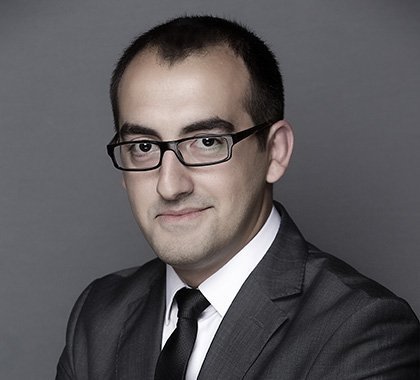
Boghossian is Chief Marketing Officer at Arton Capital, the financial advisory firm focused on residence and citizenship by investment. He also co-founded Passport Index, the interactive platform that compares travel documents by their mobility, and the Global Citizen Forum, a Canadian non-profit that gathers people around the idea of citizenship beyond borders. Those roles may sound like three lanes. Look closer and they form a single route: service, tool and public conversation.
The route begins in Montreal. In 2002, a Canadian student journal of architecture published a project called The Montreal Eco-Hotel, credited to Boghossian and Gordon Chan. The surviving record does not establish a degree, so it should not be made to carry one. It does establish an early design practice, in a city he still calls home, and an interest in the relationship between systems, places and the people moving through them.
The architect’s question
Architecture is partly the art of deciding what a person encounters next. A door invites. A corridor directs. A stair delays. A map reduces uncertainty. Boghossian’s official Global Citizen Forum biography later described him as an “architect of brands, spaces and experiences.” It is an unusually precise description of a marketing executive because it treats communication as circulation, not decoration.
That frame helps explain Passport Index. Before a user needs to understand bilateral agreements, visa waivers or shifting border policy, the platform offers an entrance. Pick a passport. Compare it with another. Look at a mobility score. Explore by region or color. A field thick with regulation becomes something a person can inspect with a few clicks.
The simplicity matters. Passport power is experienced individually, but created collectively. A traveler holds the booklet; governments negotiate the access. The resulting freedom is unevenly distributed and constantly changing. Passport Index makes that arrangement visible without pretending the score is the whole story.
“A country’s foreign policy reflects directly on its people when they travel abroad.”Hrant Boghossian on passport power
He made the point while discussing Ireland. Neutrality, he argued, can increase trust in Irish travelers and reduce visa requirements. The observation turns a ranking back into a relationship. A strong passport is not merely a trophy owned by its holder. It can be the downstream result of decisions made in embassies, parliaments and negotiating rooms.
Four colors, many stories
Boghossian’s most portable media idea may be his explanation of passport colors. Most passports work from four broad color families: red, blue, green and black. Countries vary the shade, and the choice can carry regional, political, historical or religious associations. Burgundy became closely associated with European Union members. Blue is common across the Americas. Green appears across several Muslim-majority countries and within West Africa.
The caveat is as interesting as the pattern. There is no universal rule that binds a nation to one meaning. Production is highly controlled, and practical constraints play a role. Identity meets manufacturing. Symbolism meets the available cover stock. This is why the story traveled: a familiar object offered enough pattern to be revealing and enough exception to remain human.
It is also a miniature of Boghossian’s wider craft. Find the visible part of an invisible system. Give people a clear comparison. Let the detail lead toward policy rather than burying the audience beneath it. The passport cover was a hook, but the subject was always freedom of movement.
From interface to institution
Passport Index gives the global citizenship idea a screen. The Global Citizen Forum gives it a room. Co-founded in 2013, the Forum describes itself as a Canadian non-profit driven by a community of leaders and catalysts. Its programs place mobility beside wealth, technology, culture and social initiatives. Boghossian’s role is explicitly creative, which places him behind the framing of the experience rather than at the center of its public mythology.
That division of labor says something about his public profile. There is no sprawling personal site or constant stream of self-narration. The work is easiest to see through the institutions. He appears as a named co-founder, an executive, a quoted explainer and a contributor. His footprint is closer to a builder’s signature than an influencer’s watermark.
At Arton Capital, the third piece comes into view. The company advises individuals and families on residence and citizenship by investment and works with governments and industry professionals. Here, mobility is neither an abstract ideal nor a public data point. It is a consequential process involving capital, compliance, documentation and long-term choices for a family.
The marketing challenge is unusually delicate. The product touches identity and sovereignty. It can involve substantial investment. Rules can change. A useful brand must make complexity navigable without making it look frictionless. Boghossian’s mix of design language, comparison tools and institutional convening fits that problem.
The Montreal Eco-Hotel appears as student work credited to Boghossian and Gordon Chan.
The Global Citizen Forum is co-founded.
Passport Index begins, turning mobility rules into an interactive comparison.
At ICAO’s Montreal symposium, Boghossian is listed as Passport Index Director, Marketing and Strategy.
He is credited as Arton Capital CMO in a new report on entrepreneurship, mobility and the ultra wealthy.
The score is a conversation starter
Rankings are seductive because they settle an argument quickly. First, fifth, forty-second. But the durable value of a ranking is the questions it creates. Why did one passport rise? Which agreement changed? What does visa-free access actually permit? Who has the means to use that access? What happens when policy turns?
Passport Index works because it gives those questions a shared object. The traveler can plan. The journalist can explain. The government can benchmark. The advisor can open a discussion. One interface serves different motives without collapsing them into one.
In 2018, the International Civil Aviation Organization’s TRIP Symposium program listed Boghossian as Passport Index’s Director of Marketing and Strategy. The listing described tools for comparing passports, monitoring rankings and educating the public. It also described work with governments on improving visa-free scores. That combination captures the business clearly: public utility on one side, strategic service on the other.
A good map does not remove the border. It shows you where the border is, what shaped it and which route remains open.
By 2026, Boghossian was credited as Arton Capital’s CMO in a report on entrepreneurship, mobility and the ultra wealthy. The topic had widened from the mechanics of a passport to the movement of people, capital and opportunity. Yet the design problem remained familiar. How do you show a complex world without flattening it?
A career built around entrances
The most useful lesson in Boghossian’s career is not about passports. It is about entrances. Complicated industries often communicate from the inside out, beginning with their vocabulary, exceptions and expertise. Boghossian’s projects begin with something a person can recognize: a colored booklet, a comparison, a gathering, a route.
That approach does not eliminate the harder questions around investment migration, unequal mobility or government power. It makes those questions easier to locate. The interface becomes a threshold. The brand gives the subject a shape. The forum gives competing views somewhere to meet.
Montreal remains the fitting base for the work: a multilingual city, an aviation center and a place where borders are experienced in more than one language. Boghossian’s professional profile lists Armenian, Bulgarian, English, French and Russian. Five languages do not explain a worldview, but they do make translation a daily practice.
A passport promises certainty in a changing world. It names the holder, names the issuer and waits for another state to decide what those names are worth at the gate. Boghossian has spent years designing ways to see that decision more clearly. The materials changed from an eco-hotel to a data platform, a forum and an advisory brand. The architect’s question held: where is the entrance, and what should a person understand once they step through? The result is less a monument than a working directory for a restless, unequal world.