Before Armand Arton made a business out of crossing borders, he watched his father prepare to cross them. His parents were Bulgarian teachers heading to Morocco, and they decided to take the car. Europe lay between home and work. So did a succession of embassies, forms, and permissions. A family journey had become a small administrative career.
Arton remembers fourteen countries with separate visa procedures. He was a child, following his father through the preparations, discovering that two people could approach the same border and encounter quite different worlds. The difference might have little to do with their intentions. It was printed on the front of a booklet.
That is the detail worth keeping in mind when his present-day work becomes crowded with government titles, investment programs, and passport rankings. The original problem was comprehensible to a child. Some people could go. Others had to ask.
Fourteen visas before the journey
Born in Bulgaria in 1976 to Armenian parents, Arton inherited a family history shaped by migration. Morocco added another language of daily life, another culture to learn, another experience of being the newcomer. Canada would eventually give him a different setting in which to make a career.
His account of those early journeys has remained central to how he explains himself. He remembers the effort required before departure as clearly as the travel. Permission had a timetable of its own, and the family had to work around it.
“I grew up with a suitcase ready to go.”
Armand Arton
There is a particular education in growing up this way. A country becomes somewhere people can leave, enter, and learn to understand. Belonging acquires several addresses. For Arton, those experiences would eventually become the subject of his working life. First, however, he wanted a career in finance.
- 01BulgariaBirth & family roots
- 02MoroccoA childhood move
- 03CanadaFinance & founding
- 04DubaiHome & a global business
Selected places in his life, in sequence. Not a map.
The return that wasn’t interest
Canada gave that interest somewhere to go. Arton studied finance at HEC Montréal, and his education also included an International Baccalaureate at Collège Jean-de-Brébeuf. His professional biography runs through BMO Nesbitt Burns and Hampton Securities, where he worked with immigrant investors.
He was learning a trade concerned with returns, risk, and what people wanted their money to accomplish. The investor immigration model supplied an answer that connected to his own experience. A family could commit capital to a destination country and pursue residence there. The attraction included something a conventional investment account could not provide: the possibility of a different future in a different place.
For someone who had learned to think of mobility as a constraint, that connection mattered. Finance offered a mechanism for changing the options available to a family. A government looking for capital and an investor looking for access could have reasons to meet.
In 2006, he founded Arton Capital in Canada. The business grew around advising clients on investment migration and governments on programs intended to attract investment. It put him between private ambitions and public decisions, a position requiring fluency in both.
The vocabulary can become bloodless very quickly. A residence, an investment, an application. The decisions behind those words concern where a family might settle, what it wants to preserve, and which opportunities it hopes to give its children. Arton’s career has been built around that meeting of financial arrangements and personal choices.
A private tool meets the public
Passport Index made the underlying question available to a much wider audience. It began as a tool for Arton’s team and clients, helping them understand the practical value of different travel documents. Its public version let people compare passports and the access associated with them.
The appeal was immediate enough to create a technical problem. Arton later recalled that the site attracted more than a million visitors within a month of launching and crashed. An internal aid had found people who wanted the information without necessarily wanting an investment adviser.
A passport ranking gives an otherwise abstract inequality a visible shape. Put documents beside one another and the differences become easier to grasp. People holding them may be traveling for similar reasons; the permissions attached to them can be very different.
The platform also changed the scale of the audience Arton could address. A private advisory relationship begins with a particular client. A public comparison tool begins with anyone curious enough to look. The same question about access can enter both conversations, though the available answers will differ.
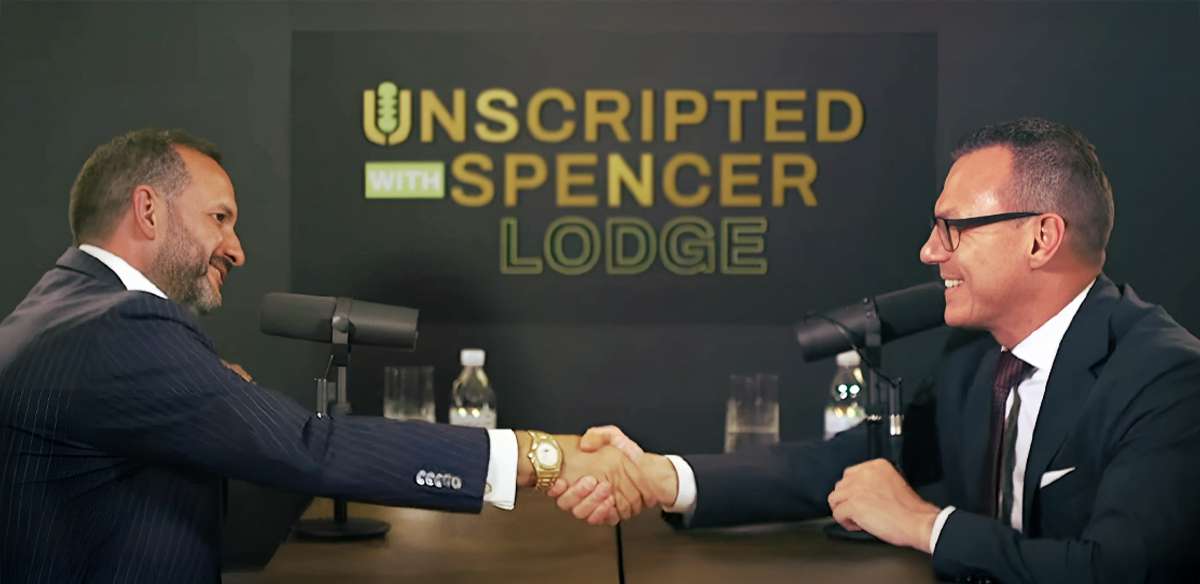
His interest in technology follows naturally from the problem. In his own writing, he describes a future in which digital tools and biometrics reduce dependence on paper visas and queues. The desired experience is easier movement; the proposed means include better information and simpler procedures.
Those ideas keep his work connected to the child who watched the applications accumulate. The interface has changed. The irritation is familiar.
A year off, a car with its doors up
In 2017, Arton began a Global Citizen Quest, taking time away from running his business to ask what the term actually meant. His questions ranged across identity, loyalty, technology, and the world his grandchildren might inherit. He planned to speak with business leaders and politicians, and with people whose lives sat well outside the conference circuit.
There is something useful about a founder pausing over the words attached to his business. Global citizenship can sound comfortably expansive until someone asks where loyalties lie, or what belonging requires. His mission statement left room for uncertainty and inquiry. He was going to ask questions and listen.
He also went driving. That summer he joined the Gumball 3000 rally, traveling from Riga toward Mykonos in a BMW i8 with friends and colleagues. Cars and charity were interests he could combine, and the route took him through a Europe that felt different from the one of his childhood.

His account dwells on the ease of crossing borders. The family journeys had demanded weeks of preparation; this trip made passing between countries feel almost casual. It also produced a more playful sort of access. He described stopping in villages to let children sit behind the wheel, after which their parents wanted a look as well.
The gold car was hardly discreet. The observation it prompted was quieter: an experience once dominated by permissions could become a journey people enjoyed. Policy changes were visible from the driver’s seat.
The distance to a billion
The Global Citizen Forum, which Arton founded in 2013, gives these concerns a public setting. Its first Dubai gathering brought together government representatives and people working in investment migration. Subsequent editions expanded the conversation around global citizenship. The Global Citizen Foundation adds an emphasis on children and education.
His own household offers another setting for thinking about belonging. He describes living in Dubai with his German wife and their three children, after a life spanning several countries. The questions about future generations have a domestic audience, too.
Government work remains part of his present. In September 2025, Arton Capital and Botswana announced an agreement to develop a citizenship-by-investment program. In February 2026, Antigua and Barbuda’s government identified him as a special envoy supporting its delegation at the World Governments Summit. The work brings him into rooms where mobility is discussed as national policy.
Yet the distance between a private client gaining another option and a wider population gaining freedom remains considerable. Arton has built a business serving people with capital. His public aspiration extends much further. The distinction matters when judging what comes next.
People he aims to help access borderless travel by 2040.
A personal target, not a count of people reached.In a February 2026 interview, he described plans to develop Passport Index into a place for handling travel authorizations and set out an ambition to facilitate borderless travel for a billion people by 2040. That is a different proposition from arranging investment migration for a family. It requires useful services at a much broader scale, alongside governments willing to participate.
The ambition also changes what counts as progress. A client who secures another place to live has an individual result. A traveler who can understand an entry requirement has better information. A country that chooses to ease access makes a policy decision. These outcomes belong to different scales, even when they begin with the same frustration. Arton’s proposed digital work will have to connect them in ways people can use.
That is why his earlier year of questions remains a useful part of the story. Asking what global citizenship means opens the conversation beyond the service a company sells. It leaves space for obligations as well as options, and for the people living in the places newcomers hope to enter. The answer needs to make sense on both sides of the border.
His personal writing returns to the hope that future generations will have more freedom to move. The test is whether the methods can reach people beyond the market that supported his original business. A public tool is one route. Changes in policy are another. Neither can be measured simply by the ambition behind it.
Arton’s story began with a father doing the necessary paperwork so a family could make a journey. Decades later, the son is still occupied with permission: how it is granted, what it costs, and whom it leaves waiting. The scale of the proposed answer has grown. The question would still make sense to the child beside him.
Keep the conversation going
Explore Arton’s writing, work, and conversations.