A city can appear in a banker’s career as a collection of clients. In Hussain Al Tajir’s case, it also appears as a collection of things people use: electricity, water, roads, airports and the Metro. Follow the transactions and an everyday Dubai comes into view, with a second set of numbers running underneath it.
There is something pleasingly practical about that. Financial advice can sound remote until the subject is the road beneath your car. Al Tajir’s career has crossed the space between public infrastructure and the investors and lenders who help finance it. In April 2025, that experience brought him to Lazard as chief executive of its Financial Advisory business in the United Arab Emirates.
His new assignment came with a change of emphasis on the map. Abu Dhabi would become Lazard’s main financial advisory office in the country. The appointment connected a banker with a long Dubai career to a firm increasing its presence across the Gulf. The interesting question was how those two kinds of experience would meet.
The aircraft behind the announcement
Start six years earlier, with a piece of financing that received considerably less attention than an airline launching a new route. On 27 June 2019, Dubai Aerospace Enterprise announced a $440 million unsecured revolving credit facility. Twelve lenders participated. First Abu Dhabi Bank and HSBC Bank Middle East were the bookrunners and mandated lead arrangers.
Al Tajir was HSBC’s head of Dubai coverage in Global Banking. His comment focused on the borrower’s performance and plans, interpreting the lenders’ response as confidence in the company receiving the money.
The facility was intended to support DAE’s future financing needs. At the time, its leasing business had an owned, managed and committed fleet of approximately 355 aircraft. The connection between a Dubai financing announcement and an aircraft operating elsewhere was quite literal. A local relationship could have an international working life.
“The significant oversubscription in syndication reflects the strength of DAE’s operational performance and strategic ambitions.”
Hussain Al Tajir · DAE financing announcement, June 2019
A revolving facility lets a borrower draw, repay and draw again within agreed terms. The word “unsecured” describes lending without specified collateral securing that facility. Neither expression is likely to sell many airport novels. Both matter to a business arranging its funding. This was the kind of work in which Al Tajir had been building his career.
When the ordinary becomes investable
He joined HSBC in 2003. He holds a BSBA in Finance and Banking from the American University of Dubai. Syndicated finance came before capital markets. His responsibilities later extended beyond the UAE to Egypt and Oman. By the time he left HSBC, his work had included both arranging transactions and overseeing substantial client relationships.
Two of the transactions on his record brought familiar Dubai services to the stock exchange: the initial public offerings of Dubai Electricity and Water Authority and Salik. These were collective undertakings involving issuers, government owners, banks and investors. Al Tajir’s advisory experience sits within that larger effort.
DEWA’s April 2022 offering raised approximately AED22.3 billion, or $6.1 billion. Nine billion shares were sold at AED2.48 each. The government retained 82% ownership, while the remaining 18% gave investors a stake in the utility. It was a large transaction built around an extremely familiar service.
The response reached beyond the UAE. Total demand amounted to AED315 billion, and the book was covered 37 times excluding cornerstone and strategic investors. More than 65,000 investors participated. Those figures describe the offering as a whole. They also show the scale of the investor audience involved when a city utility becomes a listed company.
Salik followed in September. The road-toll operator raised AED3.735 billion by selling 24.9% of its shares. Its offer price of AED2 implied a company value of AED15 billion. Shares began trading on 29 September 2022. A service drivers encountered on a journey could now occupy a line in an investment portfolio.
Salik’s annual report recorded more than 49 times oversubscription and described a business that had begun within Dubai’s Roads and Transport Authority in 2007. The listing gave that established operation a new shareholder audience. For an adviser, explaining such a business means connecting an ordinary daily transaction with the economics of ownership.
The numbers behind Salik’s offering were rooted in traffic. During 2022, its eight toll gates recorded 413 million revenue-generating trips, and annual revenue reached AED1.9 billion. Those operating figures help explain what investors were being asked to assess. A toll is a small payment in an individual journey. Across an entire network and a full year, those payments become company revenue. The public offering added shareholders to the group of people with a financial interest in that recurring activity, alongside the government’s continuing ownership.
That is one reason these two offerings make a useful pair in Al Tajir’s career. They put recognizable services beside the machinery of capital markets. A household pays for power; a driver pays a toll; an investor studies the company collecting the payment. Each is looking at the same operation from a different seat.
A longer timetable
His infrastructure experience also includes financing work involving Dubai Airports and the Dubai Metro, alongside advice on Dubai government capital-market issuance. Those assignments place borrowing alongside equity in his professional record. A share sale changes who owns a portion of a business. A debt issue establishes obligations stretching into the future.
Consider the government’s September 2020 transaction: $1 billion of ten-year sukuk and $1 billion of thirty-year bonds. The sukuk carried a 2.763% profit rate; the bonds carried 3.90% interest. A ten-year instrument and a thirty-year instrument ask investors to consider rather different lengths of time.
The Department of Finance tied the issuance to financial sustainability and continued infrastructure spending. For a reader following Al Tajir’s career, the relevant point is the range of financing work: corporate lending, public offerings and government debt. Each brings its own vocabulary, audience and timetable. A city has uses for all three.
- 2003Joins HSBC
- 2019Dubai coverage role in DAE financing
- 2022DEWA and Salik IPO experience
- 2025Moves to Lazard’s UAE advisory business
A new office, an existing region
Lazard announced his appointment on 15 April 2025. The plan named Abu Dhabi as the UAE financial advisory hub, initially subject to regulatory approval. He would work with Sarah Al Suhaimi, chairwoman, and Wassim Al Khatib, chief executive of Financial Advisory for the Middle East and North Africa.
The regional organization matters to the assignment. A country office operates alongside colleagues covering other markets and specialties. Lazard’s expansion in Abu Dhabi complemented its presence in Riyadh. Al Tajir was joining an effort that connected country coverage with a wider advisory business, rather than setting out on an independent venture.
A further milestone arrived on 6 August 2025, the effective date of his appointment as Senior Executive Officer of Lazard Gulf Limited in the Abu Dhabi Global Market register. The regulatory entry gives the expansion a precise institutional marker. An announced office had acquired another piece of its operating structure.
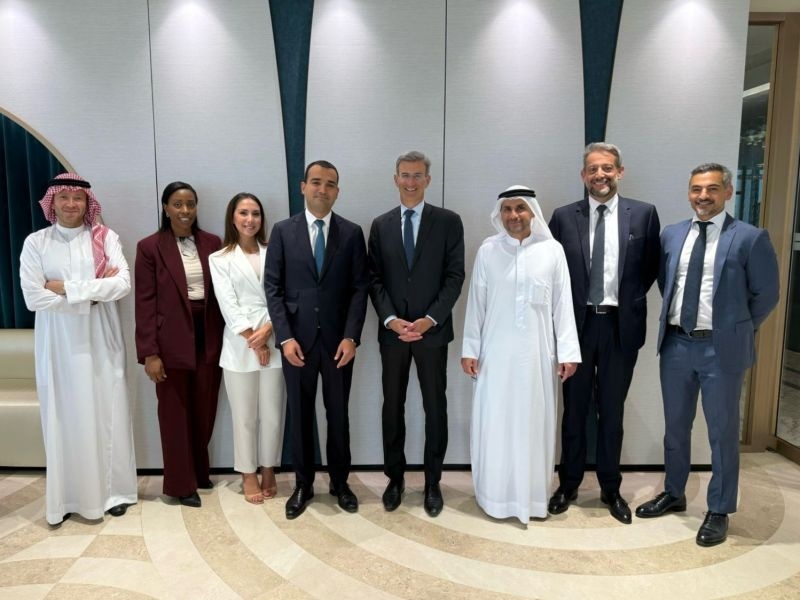
The opening brought together Peter Orszag, Jean-Louis Girodolle, Al Tajir, Al Khatib and Ali Syed, who led Lazard’s sovereign wealth fund group. Client meetings accompanied the occasion. The photograph records the gathering; the meetings explain the business purpose of bringing those people into the same place.
The return visit
On 13 May 2026, Al Tajir wrote about welcoming Girodolle to the Abu Dhabi and Dubai offices with colleague Roy Azzam. Clients, partners and colleagues took part. His account focused on discussions about adapting to changes in trade, geopolitics and capital flows, and on the firm’s continued expansion in the UAE.
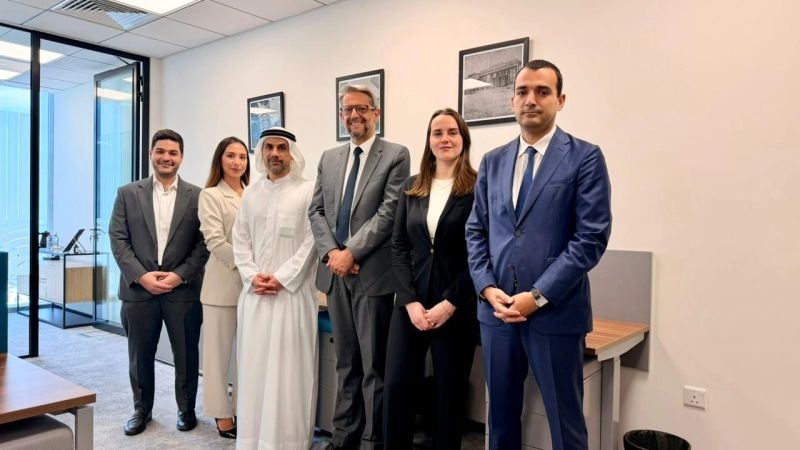
The passage from opening an office to hosting a return visit is a modest but useful measure of a business taking shape. There are premises, colleagues and conversations to sustain. His public account puts the emphasis on the people using that office and the decisions facing them.
Another transport business appeared in his professional circle in 2026. Al Tajir shared a post by Al Khatib announcing Lazard’s advice to National Taxi on its sale to Dubai Taxi Company. The post named him among the colleagues involved. The buyer announced completion of the AED1.45 billion acquisition on 8 July 2026.
The purchase brought together taxi operations in Dubai and Abu Dhabi, with a combined fleet exceeding 9,500 vehicles. Here the corporate question concerned ownership of an existing business. For passengers, the companies were part of getting from one place to another; for the parties to the transaction, they were businesses to value, negotiate over and integrate.
The distinction matters when reading an adviser’s career through deals. The operating companies carry on with the daily work. Financial advisers contribute to a particular decision along the way. The National Taxi transaction adds a recent example of that relationship to the transport and infrastructure work already associated with Al Tajir.
There is also continuity with the earlier Dubai work. The aircraft lessor, the utility and the toll operator each needed to connect an operating business with a financial audience. The UAE advisory role brings that experience to another setting, with a different firm and a regional organization around him.
Seen this way, Al Tajir’s career offers a second map of the city: alongside the roads, terminals and public services sit the arrangements that help businesses finance themselves. Most people can use the first map without consulting the second. His working life has involved knowing where they meet.