A vase helped send Hovhannes Avoyan into computer science. He had wanted to study art in Soviet Armenia, but the still life he submitted for admission failed to persuade the people judging it. He took another route. Years later, his daughter posted her own drawing online, received unkind comments, and wanted to stop making art. This time, Avoyan was in a position to offer something more useful than a sympathetic shrug.
He had engineering experience, companies behind him, and a very particular objection to the idea that someone else should decide when a beginner was finished. In 2011, he co-founded Picsart. Its premise joined two things that software companies often treat separately: tools to make pictures and a community in which people might feel encouraged to make another one.
There is a pleasing complication here. A would-be artist had become an engineer, then used engineering to reopen the door to art. The rejected vase had enjoyed a rather consequential afterlife. Today, Avoyan remains Picsart’s co-founder and CEO, working from the Miami area while maintaining close ties to the Armenian university where he studied and taught.
The admissions committee gets a second act
Avoyan was born in Yerevan in 1965. His path through education eventually took him from a computer science degree at the State Engineering University of Armenia in 1987 to a master’s in political science and international affairs at the American University of Armenia in 1995. Technical systems and the world outside them both had a place in his education.
The early computing equipment was less accommodating than the phones on which his later customers would edit pictures. He programmed with punch cards. One of his first projects involved expert systems, a form of artificial intelligence that used rules and knowledge databases to simulate expert reasoning. His interest in AI began well before a text prompt could conjure a picture.
Armenia’s independence and the collapse of the Soviet Union changed the conditions around that work. Avoyan has described the early 1990s as a period of survival that taught him how to handle crises. He also credits AUA with helping him adopt a more open, proactive approach. Friends in the Armenian diaspora supplied introductions and advice in California. The route abroad ran through people as much as through products.
His career became a succession of software businesses. CEDIT, founded in 1996, was acquired by Brience in 2000. He founded Sourcio in 2005 and Monitis in 2007; both were later acquired. By the time Picsart arrived, he understood how to build technical teams and navigate a sale. Helping a daughter keep drawing presented a different kind of brief.
- 1987Computer science degree
State Engineering University of Armenia - 1995Master’s in political science
American University of Armenia - 2011Picsart begins
Creative tools meet community - 2021$130 million financing
Valuation around $1.5 billion - 2026Armenian state award
Education, culture and economic contributions
A father outside the target demographic
His daughter Zara’s experience gave the project an unusually clear starting point. Online criticism could shut down the very impulse that sharing artwork was supposed to encourage. A useful editor would help with technique; a welcoming creative space could give someone a reason to return. Picsart tried to supply both.
Avoyan has been candid about the mismatch between his biography and the young people using the product. He came from engineering and business in Armenia, with experience building companies rather than a professional background in visual design. The customers were making fan art, flyers for Etsy shops and edits for TikTok. Being their father’s age did not automatically confer an understanding of their taste.
Listening became part of the job. He could recognize his daughter’s problem without pretending to share every preference of her generation. Artavazd Mehrabyan and Mikayel Vardanyan helped build the company alongside him. Picsart’s creative community grew around editing, sharing and remixing, allowing a picture to become material for someone else’s next experiment.
“Too many people equate good technique with being creative.”
Hovhannes Avoyan, 2021
That distinction explains much of the product’s appeal. A person may know what they want a poster or photograph to convey while lacking the technical fluency to get there. Making the operation easier leaves more room for choosing what belongs in the picture. Avoyan’s business grew around that gap between having an idea and knowing which button will make it visible.
The app outgrows the family problem
The business developed in stages. Picsart launched in 2011, added its community in 2013 and introduced paid subscriptions in 2018. Its own company timeline records a web platform in 2020. What began on phones acquired more ways to reach people, along with more ways to charge for the work it enabled.
In August 2021, Picsart raised $130 million at a valuation around $1.5 billion. The financing established its place among venture-backed companies valued above $1 billion. That number belonged to the company’s financing, rather than to Avoyan’s personal bank balance. The distinction is useful in a business where a founder’s biography can become an excuse to count someone else’s money.
The audience also extended beyond people making images for pleasure. Product photographs, social posts and small-business advertising gave the editing tools practical work to do. Removing a background could help a seller present an item. A collage could serve a fan account. The same underlying software could accommodate a commercial deadline and a leisurely afternoon.
At a company valuation around $1.5 billion.
The personal origin still mattered as the company expanded. It supplied a test that was easier to understand than a funding announcement: would these tools help someone keep making things? A beginner’s first satisfactory edit and a business owner’s finished advertisement are different outcomes, but both depend on getting past the point where software becomes an obstacle.
Yerevan remains in the picture
Avoyan’s connections to Armenia have continued through education and institution building. He served as president of the country’s Union of Information Technology Enterprises from its formation in 2000 until 2015. At AUA, his relationship moved from student to lecturer, supporter and trustee. In 2016, the university gave him its first Distinguished Alumni Award.
When he returned to AUA’s Entrepreneurship and Product Innovation Center with Picsart colleagues in June 2018, more than 30 entrepreneurs and guests attended. He emphasized the importance of partners and team members, and encouraged students to build with ambition. “AUA is our second home,” he said. For a company whose leadership included several AUA graduates, the phrase had some substance.
In December 2019, the university and Picsart announced an AI lab. The plan involved faculty, industry researchers and about 15 undergraduate students, with training beginning in January 2020. Students would study machine learning and computer vision, and the strongest performers would be hired after the initial six-week course.
The arrangement connected classroom learning to real data and software problems. It also put a practical mechanism behind Avoyan’s interest in developing technical talent locally: students could gain research experience and paid work without treating the university and industry as separate worlds. A graduate who had benefited from the institution was helping create another way through it.
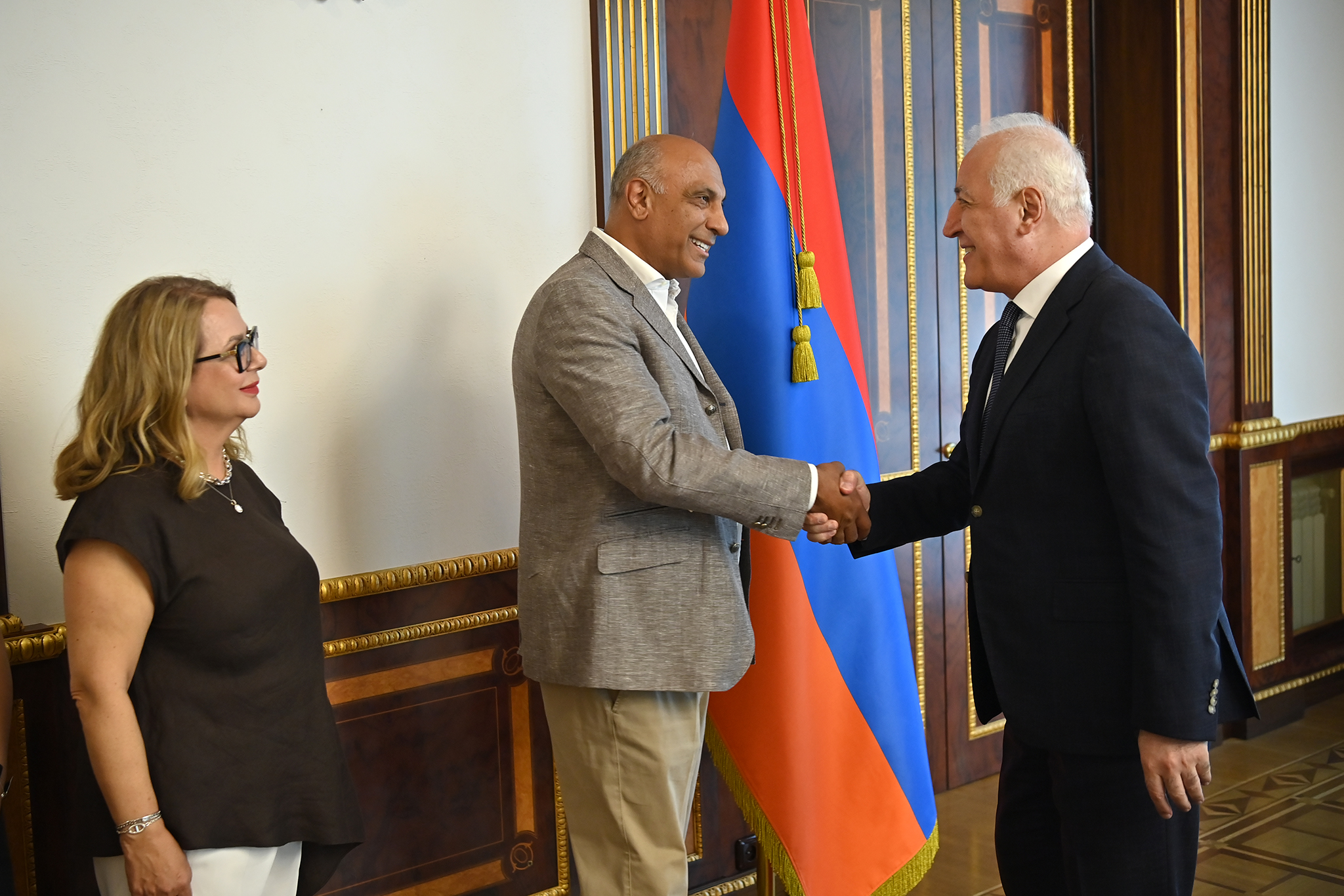
On August 6, 2026, President Vahagn Khachaturyan presented Avoyan with the second-degree Order “For Services to the Fatherland.” The recognition covered contributions to education, science, culture, the economy and the preservation of Armenian identity. It placed the company builder’s work in a broader setting than downloads and financing rounds.
The engineer keeps a playground
Artificial intelligence now occupies much of Picsart’s product agenda. Its tools have expanded from familiar editing operations into generating images and video. In September 2026, the company reported more than 1.1 billion AI videos and images created since launch. It also appointed Lusine Yeghiazaryan as chief financial officer as it pursued growth in AI and video.
For Avoyan, the subject has a long history. The young programmer who worked on rule-based expert systems is now running a company that puts generative models in front of everyday creators. The technology has changed considerably. His recurring interest is in giving people access to capabilities that would otherwise require more specialized knowledge.
AI Playground’s desktop edition for Mac and Windows brings more than 150 image and video models into one workspace. It adds direct access to local folders and editing operations that run on the computer itself. Generation still calls the model catalog online. The practical pitch concerns the small delays around creative work: uploading, downloading, moving files and waiting.
He also tries the tools himself. In a public post, he directed people to his own Picsart profile, describing it as a place to test the product. A CEO’s willingness to use his software does not settle questions about its quality. It does give him a chance to encounter the same awkward controls and unfinished experiments as everyone else.
Leave room for the next attempt
In March 2026, Avoyan was selected as an Endeavor Entrepreneur, joining a network of founders and mentors. He described entrepreneurship as a continuing education, with something to learn as well as something to contribute. That is consistent with his repeated returns to AUA and his interest in connecting technical training to company building.
The earlier art-school decision remains a useful way into his story because it was so ordinary. Someone judged a drawing, and a young person changed direction. Years later, another drawing met an unfriendly audience. Avoyan could recognize the moment and bring a different set of resources to it: engineering, colleagues and the experience of starting over.
Picsart has since acquired investors, subscriptions, AI models and a global business. Beneath that machinery sits a modest proposition with considerable staying power. Give people a workable tool and a reason to try again. The next drawing is allowed to be better. It is also allowed simply to exist.
Keep the conversation going
Explore Avoyan’s work, interviews and public profiles.
Picsart ↗His Picsart playground ↗LinkedIn ↗X / Twitter ↗Facebook ↗Watch: Startup Grind Yerevan interview ↗BBC Business Daily conversation ↗The 2014 AGBU interview ↗Avoyan’s published essays ↗Picsart’s product journal ↗The 2021 financing story ↗