The strangest thing on Himedi's website is not a stem-cell facial or a machine that photographs your insides. It is the shopping cart. A visitor can choose a baseline health checkup in Seoul for $299, add heart screening for $365, then continue to checkout with the procedural calm of ordering a desk lamp. The company has taken an experience usually wrapped in referrals, phone trees and anxious Googling and given it product names, prices and a button.
Himedi is not the hospital, the doctor or the diagnostic lab. It is the organized person in the middle. The company connects international patients with Korean providers, recommends a suitable clinic, books appointments, supplies English-language coordination and can arrange transport and accommodation. Its more elaborate concierge itineraries extend from airport pickup through multiple appointments and aftercare. The care itself comes from licensed professionals at independent clinics and hospitals.
That boundary matters. It is also the basis of the business. Himedi says customers do not pay a separate inquiry or concierge fee; they pay for the packages they book, while partner clinics pay Himedi referral fees. The company promises that prices offered through it are equal to or better than booking directly. In marketplace language, the patient gets a free buying agent. In medical language, the incentive deserves scrutiny: the agent is paid by the seller. Himedi's answer is curation, published pricing and a government license to attract foreign patients.
The product is the handoff
There is no shortage of Korean hospitals, glossy clinic pages or government tourism directories. The problem is deciding which option is credible, whether the quoted price is complete, how to reserve without a Korean phone number, and who explains the preparation instructions. A broad directory leaves those decisions with the traveler. Himedi says it walks clinic floors, meets staff and inspects equipment before admitting a provider to its network. Its public vetting framework begins with price transparency and direct English communication, then changes the medical-quality criteria by specialty.
This is the company's clearest differentiation. A customer does not need 1,000 options. A nervous customer needs someone willing to reject 700 of them. Himedi says every booking includes coordination, English support and a reviewed report. Its older operating network has been described as more than 100 medical interpreters, over 50 accommodation providers and five mobility partners. The website may be digital; the product is full of humans carrying context between systems that do not naturally talk.
“You pick the package and the date; we handle the rest of it.”Himedi's description of its checkup model
What, exactly, does $299 buy?
Himedi's current checkup ladder makes its pitch unusually concrete. The $299 Baseline is advertised as two to three hours and more than 28 tests, including blood panels, ultrasound and X-ray. Expanded costs $890 and adds CT imaging, gastroscopy and wider cardiac and digestive screening. Intensive is $1,630, with brain MRI and MRA among more than 50 tests. Comprehensive is $2,815 and layers on genetic and longevity markers. A separate whole-body MRI builder starts at $1,500 and offers heart, brain and cancer modules.
Complex care, given a shelf price
The lineup serves several customers at once: younger adults seeking a routine baseline, older travelers who want deeper imaging, Korean diaspora families frustrated by booking barriers, and affluent wellness travelers assembling multi-clinic itineraries. Beyond checkups, Himedi curates dermatology, dentistry, vision correction, hair restoration, regenerative medicine, plastic surgery and body sculpting. Named partners include Hanshin Medipia, KMI, Bright Eye Clinic, Bumin Prestige Lifecare Center, Minish Dental Hospital and Seoul National University Hospital's Gangnam Center.
The travel company that lost travel
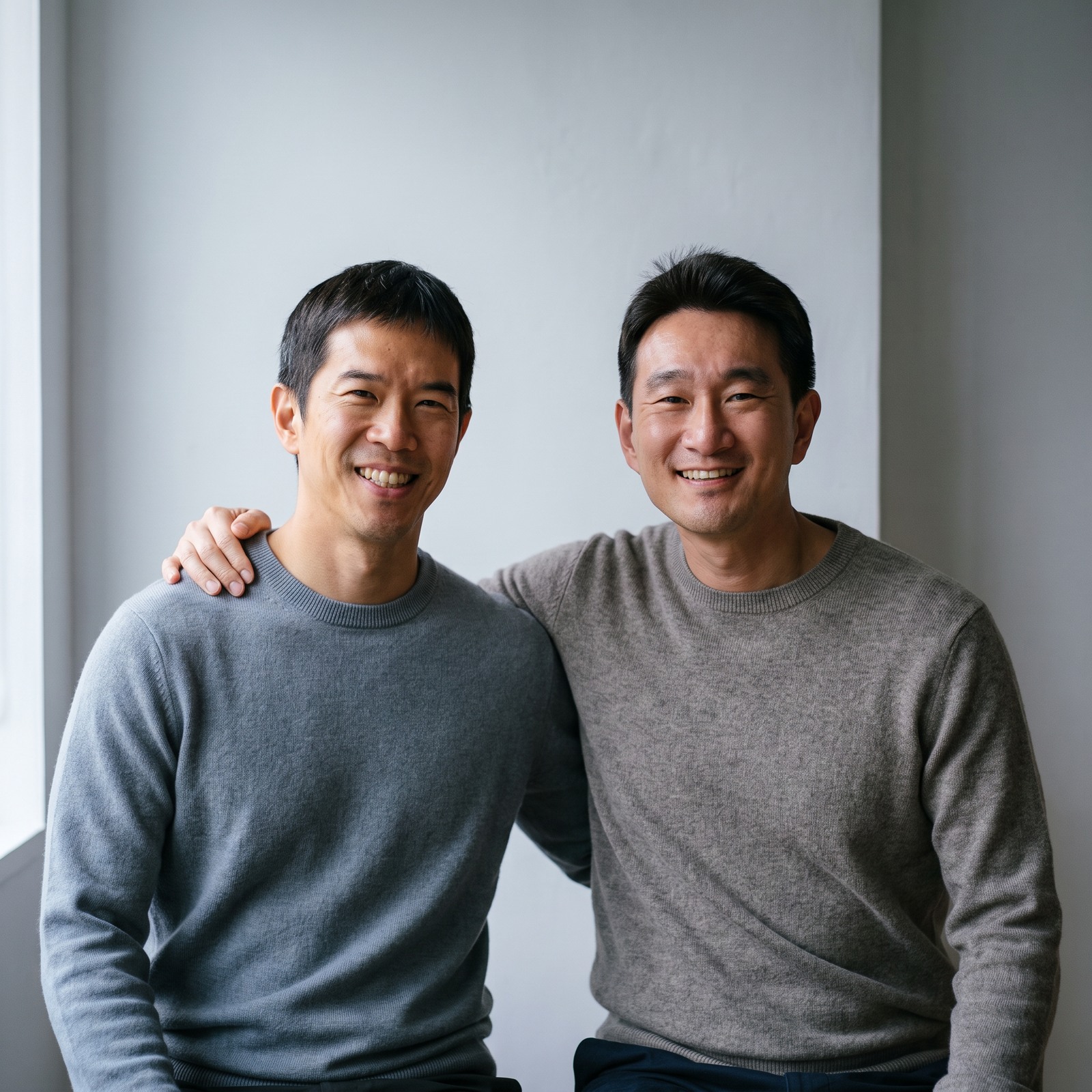
Himedi's history is more interesting than the tidy storefront suggests. The corporate operation traces to 2011, when it coordinated interpreters, accommodation and transportation for foreign patients, with a substantial business serving serious-care travelers from the Middle East. Investor White Star Capital identified Jeong Ju “Jay” Lee and Donkyo Seo as its founders and co-CEOs. Murex Partners invested a reported KRW 2 billion in 2018; Korean business press said first-half 2019 revenue grew 250 percent from a year earlier.
Then the first failure was brutally obvious: international patients could not arrive. COVID-19 did not reveal a weak button or a leaky funnel. It removed the trip. Korea's inbound medical-tourism market collapsed, and competitors disappeared. Himedi raised KRW 6 billion in April 2020 from White Star, Murex, Lighthouse Combine Investment and Solidus, then used the interruption to develop remote consultation and its foreign-patient platform faster. A KRW 3 billion extension led by TBT Partners followed in December 2021, bringing reported cumulative funding to KRW 11 billion.
What changed the company's mind was not a brainstorm about ecommerce. It was the realization that the old concierge knowledge could become a digital acquisition and booking layer before the plane ticket. Telemedicine helped identify demand during the shutdown. When travel returned, the company had more than drivers and interpreters; it had a way to explain, qualify and schedule care online.
A second wedge, aimed west
The current Himedi About page tells a later origin chapter. After his own Korean checkup, Korean American entrepreneur William Ban began testing U.S. demand with a one-page flyer in New York. In 2024, that work converged with Seo's clinic relationships. Himedi now describes Ban as co-founder and COO of its U.S.-facing business. This does not erase the 2011 company; it explains the sharper proposition visible today.
The audience shifted, too. Seoul's official medical-tourism directory says Himedi served about 5,000 foreign patients in 2023, mainly helping serious-care customers from the Middle East and Mongolia while beginning to attract Japanese and American clients. The latest English storefront sounds built for an American who has money, limited time and a nagging suspicion that an annual physical did not look very hard. Prevention, transparent packages and wellness now lead the pitch.
That market position sits between a travel agent, a healthcare marketplace and a local fixer. Direct hospital international centers remain an alternative, as do public portals and private facilitators such as Seoul Guide Medical, Korea Best Doctor and MediCaddy Korea. Himedi's bet is that its narrower, shoppable selection and one coordinator across providers beat both the overwhelming directory and the single-hospital desk.
The app is easy to copy. Knowing which clinic to reject - and what happens when a result needs follow-up - is the slower advantage.The operational lesson
What a founder can steal
First, sell certainty rather than selection. Himedi's claimed 1,000-clinic funnel is persuasive because most of it ends in “no.” Second, turn professional judgment into packages with visible boundaries. “Baseline” is easier to understand than a spreadsheet of tumor markers. Third, subsidize the human layer from the side with economic surplus. Clinics want international demand, so their referral payments can fund coordination for customers. Fourth, own every ugly handoff. Translation, fasting instructions, airport pickup and the English report may look peripheral to medicine, but they are central to whether a traveler completes the purchase.
Finally, keep the operations visible. Many startups disguise manual work because software sounds more scalable. Himedi's better pitch is that someone has visited the clinic and somebody will answer. In a high-anxiety transaction, a human is not technical debt. It is part of the interface.
Where the playbook breaks
This model needs a real price or access advantage at the destination, fragmented supply worth curating, providers with enough margin to fund referrals, and customers healthy enough to travel. It is a poor fit for emergencies, unstable conditions or care requiring constant local follow-up. Broad screening can also produce incidental findings, further tests and anxiety. A concierge cannot replace a physician who knows the patient's history, and a cheap scan is not automatically an appropriate scan.
Himedi's most durable idea is smaller than “the future of healthcare.” It is that geography creates strange pockets of abundance. Korea has dense screening infrastructure, advanced equipment and clinics accustomed to completing many tests quickly. International patients have money and curiosity but lack local context. Himedi converts that context into a storefront, then wraps the purchase in enough human attention to make a foreign hospital feel enterable.
The cleverness is not that a medical checkup can go in a cart. It is that the cart is only the beginning. The harder product starts after checkout, when a real person must turn a neat itinerary into a safe, comprehensible day of care.