Bargain Center had a perfectly ordinary ambition: find software that could run its 12 rent-to-own stores. Its existing proprietary system was restricting what the business could do. Several vendors could supply a replacement. Yet the operator chose High Touch Technologies partly because the Wichita company could also look after desktops, cybersecurity and Microsoft 365. A shopping trip for software had become a search for somebody who could take care of the surroundings.
- A specialist at the center. Rent-to-own software gave High Touch its start and remains a core business.
- Help around the edges. Managed IT, security, websites and communications extend beyond the application.
- Operating knowledge travels. A joint venture with restaurant operators produced Nigel, its restaurant platform.
That decision explains more about High Touch than a catalog of services would. Business technology is sold in pieces, while customers experience it as a working day. The payment must arrive, the screen must load, the employee must know what to do next. Nobody at the counter particularly cares which vendor owns the broken part.
High Touch occupies this awkward territory between the software purchase and the functioning business. The interesting question is how a company that began with one narrow retail problem learned to make a living there.
01 A checkout that never quite ends
The origins lead back to Wichita State University. Ted Cary recruited two students, Dave Glover and Mark Lenz, to work on business applications of technology. A rent-to-own company brought them a problem: build a point-of-sale system that could replace inefficient processes. The team incorporated High Touch in 1984.
Rent-to-own is a revealing place to start. In conventional retail, the sale often ends when the customer leaves. A rental agreement continues. Payments recur. Inventory changes hands. The same customer may need another conversation next week. A checkout button handles only a small portion of the relationship.
Today, High Touch’s cynergi|suite connects rental agreements, collections, inventory, accounting and multi-store information in a hosted, web-based system. Mobile applications extend some of that work beyond the counter. High Touch hosts and supports the platform, keeping the application and its upkeep within the same commercial relationship.
Scale reported on High Touch’s point-of-sale product page.
Those figures describe a specialized installed base, rather than the company’s entire customer population. Specialization matters here. A buyer should ask a prospective vendor to walk through a rental agreement’s full life, including the inconvenient parts. A polished demonstration of an uncomplicated sale tells remarkably little about a recurring-payment business.
02 The work hiding between eight applications
Special Products Kansas supplies incontinence products, a business where the unglamorous work of billing and delivery matters a great deal. Its owners, Jeremy and Rachel Banning, inherited a workflow spread across eight applications. Patient information, inventory and billing needed to connect. Available software brought compromises in complexity, cost or long subscription commitments.
After hearing another business owner’s experience and meeting High Touch, the Bannings chose custom development. The resulting system connected their business and patient management work. In a published customer testimonial, Rachel Banning reported that billing tasks previously taking three days could be completed in less than ten minutes. She also reported threefold business growth without a considerable increase in overhead. These are customer-reported outcomes, not a promise that another installation will produce the same result.
The lesson worth copying is the investigation. Before choosing a product, identify each place where a person transfers information, waits for another person, or corrects the same error twice. Those handoffs form a better specification than a wish list of fashionable features. Custom software becomes easier to evaluate when there is a particular, measurable job for it to do.
“The art is in understanding what the client can’t tell us.”
Heath Howard, Director of Custom Software Development, in High Touch’s case study
A second project makes the same point in a different setting. For the Sedgwick County Office of the Court Trustee, High Touch built Crusader around child support enforcement work. It included payment-data integration, arrears calculations, document generation and alerts when children reached emancipation. The published case study reports an average saving of 185.71 staff hours per month.
It also supplies a useful corrective to effortless-software mythology. Program director Joni Wilson-Colby described development as time consuming and sometimes overwhelming. A tailored application requires the customer to participate. The work of explaining the organization cannot be outsourced entirely to the people writing its code.
03 A restaurant walks into a software company
In 2018, High Touch entered a joint venture with Thrive Restaurant Group to develop and launch Nigel. Restaurant operator Jon Rolph had looked for a system that could serve multiple locations and states, and found the available choices wanting. High Touch brought engineering experience; Thrive brought experience of the shift itself.
That pairing is the meaningful detail. Restaurants are full of ordinary exceptions: an amended order, a particular kitchen workflow, another location with a different configuration. Nigel connects point of sale, kitchen displays and enterprise management. Its stated proposition includes flexible hardware and payment-processor choices, with billing options by location or device. The product also advertises a backup approach intended to keep operations running through connectivity interruptions.
For buyers, these are concrete subjects for a demonstration. Bring the actual menu, devices and payment requirements. Ask the team to show the kitchen handoff and the behavior during an outage. Flexibility has commercial value only when it includes the equipment and workflows the restaurant really uses.
The joint venture repeats the company’s original arrangement: people with an operating problem work alongside people capable of encoding a solution. Industry familiarity is earned by listening to the exceptions. It rarely arrives as a checkbox in a sales presentation.
04 Somebody has to connect the cables
High Touch expanded into broader IT services in the early 2000s. Its current offering can replace an organization’s IT department or supplement one: network management, backups, Microsoft 365 administration, cybersecurity and strategic guidance. Website development, hosting, SEO, phones and collaboration tools widen the scope further.
Its Wichita Wind Surge work gives that breadth a physical form. When the baseball organization was building a new ballpark, it needed help planning equipment, working with the design and construction team, and managing the technology installation. The engagement later became managed services and support. Technology consulting, in this case, had to survive contact with a building site.
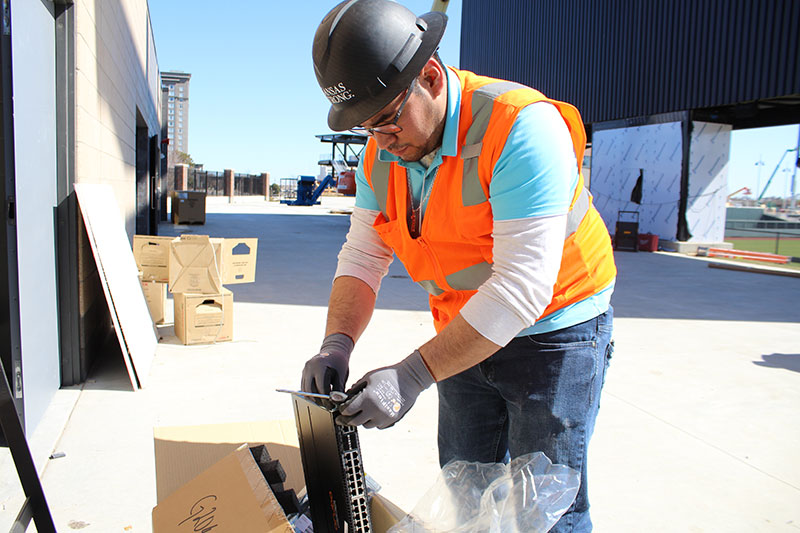
This combination places High Touch between a specialist software vendor and a broad managed service provider. Its own vertical products give it a reason to know an operator’s daily work. Its wider services give that operator fewer handoffs to manage. Bargain Center’s purchasing decision illustrates the attraction.
The distinction has limits. A company buying only a straightforward website may need a much narrower engagement. An organization with an established IT department may want selected assistance. Breadth is useful when it removes coordination work; buying unused services merely gives the invoice more personality.
05 Read the support agreement before the slogan
High Touch combines hosted software, ongoing managed services and individual development or infrastructure projects. Each involves a different commitment. Nigel’s location-or-device billing choice, for example, affects how a restaurant should compare proposals. The sensible comparison includes equipment, deployment, training, integrations and continuing support alongside the software charge.
Its managed-services packages make the staffing question explicit. Premium is presented as a full-service IT offering. IT Assist is intended for clients with an internal IT resource and excludes help desk services. High Touch distinguishes round-the-clock critical infrastructure support from services delivered during business hours. Buyers should match those boundaries to their actual operating hours.
- Who answers? Name the owner of user support, infrastructure incidents and application problems.
- When do they answer? Separate monitoring, critical response and routine help desk hours.
- What changes the bill? Specify devices, locations, projects, licensing and migration work.
These questions make the model portable. Start with a narrow workflow, measure its friction, involve the people doing it, and give somebody responsibility for keeping the result usable. If an ordinary packaged tool already fits, a custom build may add maintenance work without removing enough operational work to justify it.
06 The people on the other end
The name comes from John Naisbitt’s Megatrends and its idea of “high tech, high touch.” High Touch is now 100% employee-owned through an ESOP, according to its careers page, which describes company stock as part of compensation. Its published values include staying steady under pressure and being humbly confident. Those are particularly relevant ambitions for people receiving calls from frustrated users.
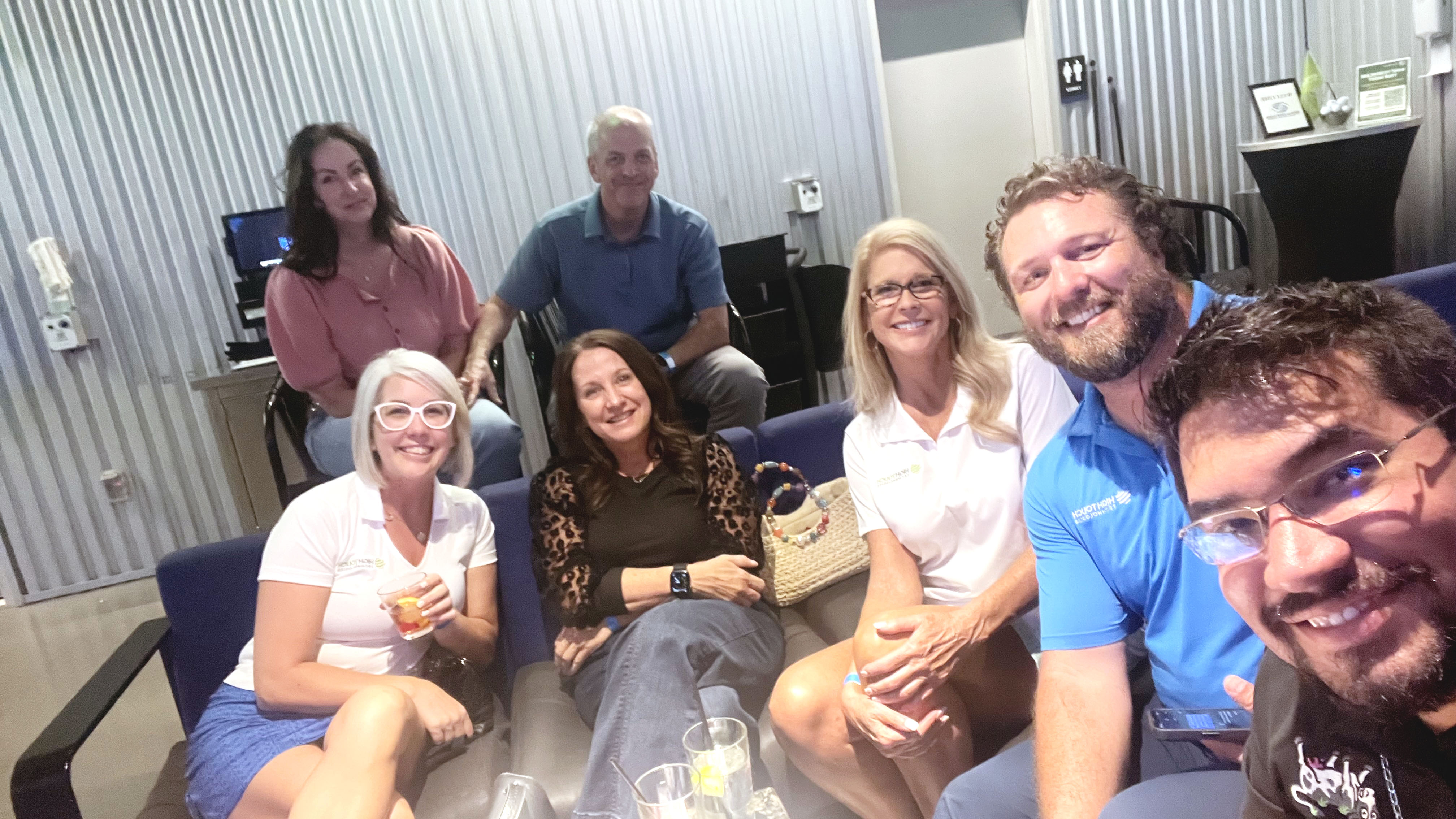
Ownership alone does not establish service quality. It does give the company’s talk about long relationships a concrete organizational counterpart. The ongoing relationship is part of what High Touch sells, and employees participate in ownership of the business that sells it.
The present-day work is still changing. In 2026, High Touch announced placement in CRN’s Security MSP 100, Tech Elite 250 and Solution Provider 500 lists. In September it highlighted MES Computing coverage of its AI governance expertise. Its advice there concerns approved tools, sensitive information, human review and responsibility for policy. The application changes; the questions about people and their working habits persist.
That is the durable idea in this Wichita story. A successful technology purchase must fit what happens after the demonstration: the employee with a question, the unusual transaction, the task nobody mentioned. High Touch has built a business around remaining available for that part of the day.
Meet the company, inspect the products, or watch the founders look back.