The theft arrived in small change. Fifteen cents. Twenty cents. Thirty cents. Hemen Vimadalal was a student from India learning how to live in the United States, including the unfamiliar business of using a credit card. The little transactions accumulated into hundreds of dollars. Then came a more consequential discovery: someone had used his identity to open a bank account in California.
He had come for an education and the possibility of a job. Instead, he also received an education in how easily a person could become a collection of details that somebody else could borrow. A name, a number, an account. The paperwork knew him well enough to let an impostor in.
That experience helps explain the persistence of his subject. Across Vaau, Simeio and 1Kosmos, Vimadalal has returned to the question of who gets access, and what counts as proof. His career has changed scale and business model. The awkward encounter between a real person and a system demanding identification has stayed remarkably familiar.
An education in being yourself
Vimadalal studied at the University of Mumbai before pursuing a master's degree in engineering at the University of Southern California. Moving countries meant repeatedly establishing his identity: applying for a Social Security number, opening an account, arranging the ordinary permissions that make everyday life possible. Every institution wanted its own introduction.
Years later, explaining the origins of 1Kosmos, he returned to this immigrant experience of having to prove himself with different documents. There is a particular absurdity to the process. You remain the same person all afternoon, while the paperwork insists on treating each new counter as a fresh philosophical inquiry.
The business question underneath that irritation is substantial. How should a service know that the person presenting an identity actually owns it? And once that person has been checked, how much of the exercise should have to happen again? These questions would eventually become the organizing problem of his next company.
The less glamorous side of opening doors
Before 1Kosmos, there was Vaau, an enterprise role-management company acquired by Sun Microsystems. Vimadalal was part of its founding team. Role management concerns the permissions attached to a job: which applications an employee can use, which information they can see, and which actions they can take. It is the organizational chart translated into doors and keys.
Simeio, which he founded in 2007, addressed the practical business of making identity systems work inside enterprises. Companies could buy sophisticated software and still lack the people or expertise to operate it. Several vendors might be involved, along with old applications, new services and employees whose responsibilities kept changing. The installation was only the beginning.
Simeio offered implementation and managed identity services. Its Identity Intelligence Center was designed to operate, monitor and defend complex environments containing tools from multiple suppliers. The proposition required an appreciation for what happens after the sales demonstration, when the software meets a real organization and discovers that everybody has exceptions.
- 2007Founds Simeio
- 2015Welsh Carson invests
- 2020Hands over the CEO role
- 20211Kosmos leaves stealth
In April 2015, Welsh, Carson, Anderson & Stowe invested in Simeio, with Vimadalal and the existing management team continuing to run the business. The plan was to expand the services and enter new geographic markets. That same month, Simeio and NRI SecureTechnologies announced discussions about creating a Japanese base for the Identity Intelligence Center.
The Japanese initiative captures something useful about this stage of his career. Identity problems traveled, but delivering the answer required partners, operating capability and local presence. Building a security company involved a good deal more than having a theory about security. Someone had to make the machinery run on Tuesday.
Learning to leave the chief executive's chair
By February 2020, Welsh Carson had sold its investment in Simeio to ZMC. In the announcement, Vimadalal credited the investor's support with helping the business grow and scale over the preceding four years. The company had become an established platform for customers trying to manage increasingly complicated identity infrastructure.
Then, in August, he handed the chief executive role to Chris Schueler. Vimadalal had led the selection process himself and remained chairman at the time of the transition. Simeio's current leadership page continues to list him among its board members and advisers. The company he built remained part of his professional life after he stopped running it day to day.
For a founder, arranging a successor is a distinct piece of work. The business needs a future that can survive a change in the person making the decisions. In Vimadalal's case, the transition also makes the career easier to understand: the same entrepreneur could stay connected to an established operation while pursuing another version of the identity problem.
The password has excellent references
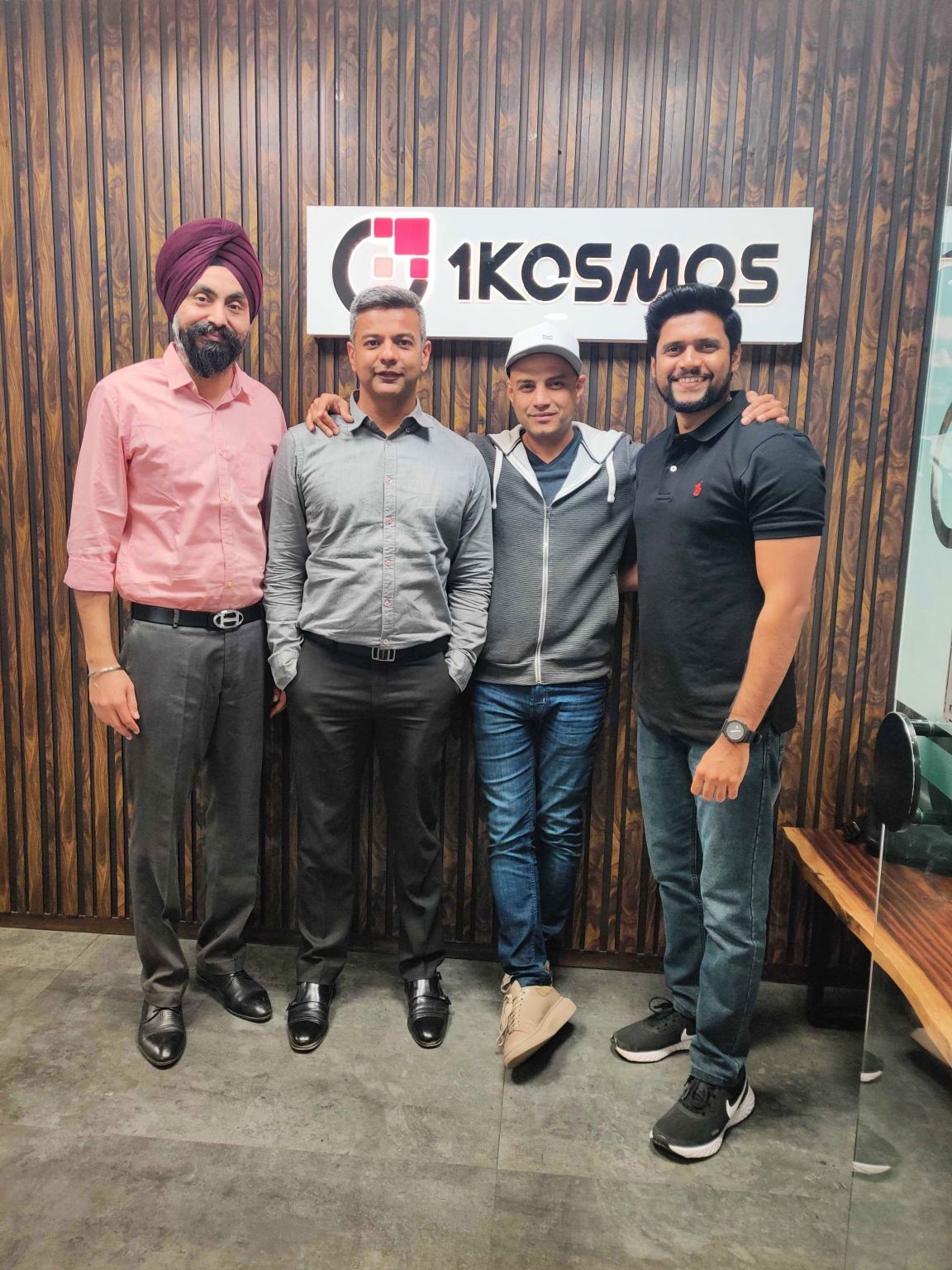
In February 2021, 1Kosmos emerged from stealth with a $15 million investment. Vimadalal was its founder and CEO, working with co-founders including Rohan Pinto and Mike Engle. The company joined identity verification to passwordless authentication: establishing who a person is, then allowing that person to return without relying on a reusable secret.
A password is an oddly persuasive object. Present the correct string of characters and a computer may treat you as the rightful account holder. The string can have an impeccable record while the person typing it is an impostor. Vimadalal's work at 1Kosmos puts the relationship between the credential and the individual at the center of the design.
The platform brings together identity proofing, credential checks and authentication. Its approach uses live biometrics and a private, permissioned distributed ledger, with encrypted identity information. The intended result is a reusable digital identity that helps a person access services while retaining control over personal information. Convenience and assurance have to be designed together.
India remained an important market. In 2021, Vimadalal described plans to expand there, with the company speaking to prospective enterprise customers and already working with organizations including NPCI. The journey from an Indian university to an American security business had developed a return route through customers, colleagues and product deployment.
Money arrives. The sleeves stay rolled up.
In August 2025, 1Kosmos announced a $57 million Series B financing package, including a $10 million line of credit from Bridge Bank. Forgepoint Capital and Origami's Oquirrh Ventures led the round. Members of the management team participated, alongside investors including Gula Tech Adventures, NextEra Energy Ventures and Carahsoft founder Craig Abod.
Vimadalal made a point of the personal commitment: founders and team members were putting their own capital into the round. The company planned to fund product development, expand sales across North America, EMEA and Asia-Pacific, and deepen integrations with existing identity platforms. Its ambitions depended on fitting into other people's systems.
His public reaction also contained a smaller, more revealing detail. Responding to a candid planning video after the funding announcement, he joked about the absence of expensive production. The money, he said, was going toward building and scaling the platform. His preferred description of the spending habits was concise.
“We're not cheap… we're frugal.”
Hemen Vimadalal, August 2025
It is a useful line from someone selling a technically elaborate service. A funding announcement invites spectacle; he chose to talk about allocation. The roughness of the video became part of the message. There would be work, a team meeting and a plan. Apparently the cinematic universe could wait.
The company is also the people who return
His investment work extends through Sprout & Oak, where the team includes Sachin Nayyar, Manoj “MJ” Ramachandran and Anjan Shenoy. Their connections reach back through earlier security businesses. Shenoy began his career with Nayyar and Vimadalal at Vaau. A company can be sold while the working relationships continue into another venture.
Sprout & Oak's account of Vimadalal's investing includes Brinqa, AuthMind and Crypteron. Saviynt's leadership biography also describes his involvement in early-stage technology companies through the venture platform. Operating and investing give him different ways to participate in the same broad field: developing a business directly, backing another founder, or helping a team through its next stage.
He has described entrepreneurship in similarly practical terms: customer problems, a capable team and durable relationships. His emphasis on colleagues willing to challenge the founder is especially relevant to a business built around trust. A team that can disagree honestly offers a useful check on the assumptions inside the room.
The next impostor may have a job interview
The work keeps finding new settings. On October 21, 2026, 1Kosmos announced that Kforce had selected its identity-verification platform. The staffing firm places approximately 17,000 consultants annually and had encountered candidate substitutions: a person arrived for an assignment who differed from the person interviewed. Sometimes the discrepancy emerged only weeks later.
The deployment brought verification forward to before the first day. It checks a government-issued document against a live facial image, with liveness detection intended to identify attempted substitutions using photographs, video or deepfakes. Kforce went live in less than six weeks. The point was to investigate a mismatch before granting client access.
In April 2026, Vimadalal had been named an EY Entrepreneur Of The Year New Jersey finalist. By then, his company's account of its mission included interactions initiated by AI agents as well as people. Oathera, another venture he co-founded with Pinto and Engle, now addresses agent identity and the human responsibility attached to an agent's actions.
The vocabulary has traveled a long distance from a student's bank statement. Yet the underlying difficulty remains recognizable. A system accepts an introduction. Somebody gets through. Vimadalal keeps building around the moment before that happens, when there is still time to ask whether the person - or now the agent - belongs there.
Keep following the question
1Kosmos ↗Simeio leadership ↗Sprout & Oak ↗Oathera ↗LinkedIn ↗X / Twitter ↗Writing at Dark Reading ↗The Capital Tea conversation ↗Watch: CNBC interview ↗2025 financing announcement ↗Kforce deployment, October 2026 ↗