The number was 9.6. Not ten, which would have sounded suspiciously neat, and not “some,” which is the sort of quantity that expires the moment a budget meeting begins. Heidi Morin was a nursing director being pressed to reduce her workforce. Her experience on the units told her they needed more people. The reports told another story. So she built a calculator, tested it on the departments she managed and, within six weeks, found the operation was 9.6 full-time equivalents short against industry staffing standards.
The calculator did more than settle an argument. It converted work that could be felt on a hospital floor into a form that could travel upstairs. Patient volume, acuity, staffing guidelines and workload became a financial framework. Morin says the analysis supported additional nursing positions while reducing labor costs, improving morale and decreasing turnover. A clinical conviction had acquired decimals, and decimals are terribly difficult to wave away.
The education of an operator
Morin did not arrive at software by way of software. She began in 2002 as a registered nurse in the Level IV neonatal intensive care unit at Johns Hopkins Hospital. In 2007 she moved to Central Maine Healthcare, working across labor and delivery, postpartum, the newborn nursery and NICU. She became a clinical nurse coordinator, then a nurse manager responsible for that unusually varied collection of units and childbirth education. In 2013, she joined Maine Medical Center as nursing director for Women and Infants Services.
Each move widened the lens. A bedside nurse sees the shift. A charge nurse sees the assignments. A manager sees schedules and teams. A director sees the labor plan, the quality expectations and the uncomfortable distance between a monthly productivity result and the conditions that produced it. Morin eventually paired that operating education with a Master of Science in Nursing Administration and an MBA from St. Joseph's College of Maine. The pairing would become her professional grammar: clinical reality in one column, financial accountability in the next.
The breakthrough was learning to translate between the realities seen by nurse leaders and the framework used by hospital finance.Heidi Morin's founding insight, paraphrased
That sentence is the hinge in her story. Hospitals already had electronic records, schedules, payroll systems and productivity reports. The missing piece, as Morin came to define it, was operational intelligence for the decision in progress. Retrospective data could explain whether a labor target had been hit. It was less useful to a charge nurse deciding who could safely be moved, kept or called in while the unit was changing.
+ acuity
decision
financial outcome
A workaround asks to become a product
The first calculator was built to solve Morin's own management problem. The signal that it might belong elsewhere arrived through other nurses. She presented the work at the Association of Women's Health, Obstetric and Neonatal Nurses National Convention, first as a poster and then, the following year, from the podium. Peers encouraged her to turn the approach into something hospitals beyond her own could use.
That is customer discovery stripped of jargon. Build a thing for Tuesday afternoon. Show it to people who have lived the same Tuesday. Notice when they ask to take it home.
MaineHealth gave the idea a route forward. Its innovation program listed Morin's Nurse Staffing Tool among the projects supported by an internal fund designed to advance care-team inventions. It also listed her 2021 project under the wonderfully direct title “Shifting the Healthcare Productivity Paradigm.” Morin joined the system's Innovation Cohort, secured grant support for development and spent two years piloting the software with hospitals in the United States and Canada.
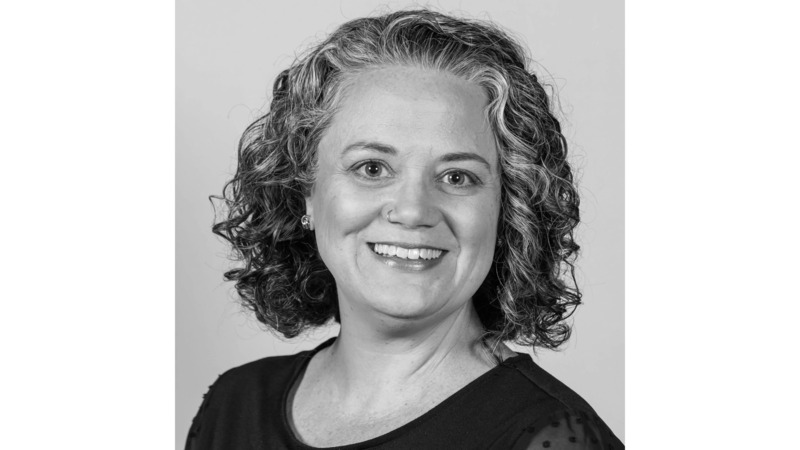
She eventually resigned from the nurse director job to pursue Parity full-time. The leap came after the prototypes, the professional feedback and the pilots, not before them. It looks less like a cinematic plunge than a carefully built staircase. For an enterprise company selling into hospitals, that patience is part of the product. The buyer is not merely purchasing code; the buyer is trusting a model that influences consequential staffing and budget decisions.
The patent has the plainest name in the room
On March 9, 2020, a patent application called “Staffing and Patient Acuity Tool” was filed with Morin as its inventor and MaineHealth as the applicant. Published that October, it describes a system that receives census and acuity information, applies staffing guidelines and outputs a staffing-level indicator for a hospital department. The title has no appetite for poetry. The method does: it tries to make the changing shape of work visible before it hardens into a month-end variance.
Parity Healthcare Analytics was founded in 2020. Its early focus was women's and children's clinical units, where Morin had spent much of her career and where generic volume measures can struggle to describe abrupt shifts in work. The company described its platform in terms of real-time, acuity-based staffing, forecasting, scheduling and budgeting. By 2026, its language had broadened to “Nurse Workforce Performance Partner,” pairing a decision-intelligence platform with continuing operational guidance.
A company assembled around the translation
Morin's central problem requires more than a nurse's point of view, even though nursing is where it begins. Parity's co-founder and chief operating officer, Chuck Alsdurf, brought more than 15 years in healthcare finance, experience with software companies and teaching work in graduate healthcare finance and value-based care. His presence makes the company's bridge literal: a nurse executive who needed finance to understand the floor working beside a finance executive who had encountered the same labor-management gap from the other direction.
The rest of the public team follows the same pattern. Sarah Austin, Parity's director of customer success, has more than 20 years in nursing with experience in maternal and newborn care. Chief technology officer Leah Sapan came with more than 15 years in software development and an interest in building modern tools for nursing teams. Clinical operations, finance, customer implementation and software engineering sit close together. For a small company selling into an institution famous for departmental boundaries, the org chart doubles as a thesis.
Morin's own path supplies the connective tissue. She knows the sensation of watching a unit change in the middle of a shift, and she knows what happens when that fluid scene is compressed into a productivity measure. The point of a decision tool is not to replace the person making the call. It is to give that person a more defensible view of the inputs, then preserve enough context for another department to understand the decision later.
This is why Parity's evolution from a software label toward a performance partnership is coherent with its origin. A dashboard can display a variance. Sustained operating change asks people to interpret the variance, decide what deserves attention and test whether the intervention worked. The company's 2026 description combines software intelligence, workforce expertise and continuing review. The calculator became a platform, and the platform acquired a practice around it.
The case for useful stubbornness
Morin's public advice to other nurse innovators is practical. Start with the frontline problem. Listen to peers. Challenge processes that persist only because they are familiar. Learn to speak to clinical and financial leaders. Be persistent. It sounds obvious until one remembers that her own story required years of nursing practice, an internal tool, two conference appearances, an innovation cohort, grant funding, pilots and a resignation.
Her manner is direct, and the verbs do most of the work: start, talk, listen, validate, challenge, speak, persist. The personality revealed in that sequence is less interested in founder theater than in getting an operating case through a complicated institution. Morin's recurring aspiration is to put nurses at the decision-making table with information sturdy enough to support their judgment. The software matters because the conversation around it changes.
“Start with the frontline problem.”Heidi Morin's advice to nurse innovators
In April 2026, Morin was the featured speaker for an Ohio State University College of Nursing webinar on evidence-based benchmarks and real-time staffing data. In June, Parity brought the conversation to the AWHONN conference in Orlando. In August, she published an extended account of the company's origin, stakeholder resistance and the need for quick, demonstrable wins. The argument has remained consistent even as the product vocabulary has grown: decisions improve when the workload on the floor and the dollars in the budget can be seen together.
The 9.6 has endured because it captures the whole enterprise in miniature. It is clinical observation translated into operational evidence. It is precise enough for finance and grounded enough for nursing. It came from a leader who distrusted the available answer, but respected the institution enough to return with a better one. Founders are often advised to find a pain point. Morin found a disputed decimal and built the bridge around it.