A promising healthcare startup can build its product and still get stuck at the next question: who inside an insurer will actually buy it? Healthworx has made that awkward stretch of the journey its business. Created within CareFirst in 2017, it invests in companies, helps founders understand healthcare purchasing and builds new ventures around problems that existing services leave unresolved. The introduction is part of the product.
That makes Healthworx an unusual subject for a company profile. Patients generally encounter the businesses it backs, rather than Healthworx itself. Founders encounter a curriculum, an investor or a studio partner. Insurers and health systems encounter a way to evaluate outside ideas with some help from people who understand the institution on the other side of the pitch.
The proposition is practical: a clever solution needs a customer, a payment route and a place in somebody's working day. Healthworx puts those questions near the beginning. Its most revealing stories concern what happens when the answers refuse to match the business plan.
A $25,000 introduction to the insurance business
The accelerator is the most accessible entry point. Its current program page advertises a $25,000 investment alongside education, introductions and fundraising support. At the 2024 relaunch, that investment was described as an uncapped convertible note. Founders should distinguish the published cash amount from the full terms of the instrument they eventually sign.
There is also a time commitment. The first stage lasts 12 weeks, mixing virtual and in-person sessions. Selected companies can then spend nine months working with an industry partner on potential commercial pilots and closer collaboration. Selection depends on strategic fit. Getting into the classroom does not reserve a place in a customer's budget.
Stage two is selective. Commercial partnerships are not guaranteed.
Healthworx's roots in insurance shape the lessons. The curriculum covers health plans, corporate venture funding and industry challenges. That knowledge can help a founder work out whether the person enthusiastic about a product is also the person able to approve it. Those are different jobs, with different incentives.
WellSet co-founder and CEO Tegan Bukowski captures the usefulness of that translation: “The program helped us find our niche in the confusing payor space.” A niche sounds small until it gives a young business a recognizable customer and a reason to exist in that customer's spending plan.
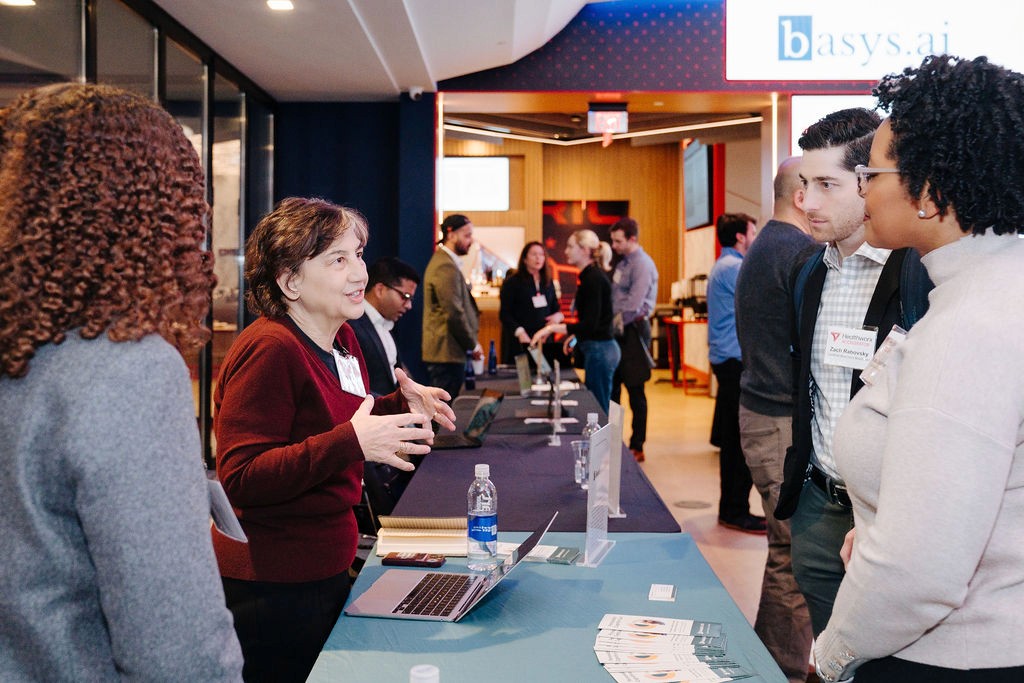
The year-long incubator gets a shorter front door
The present format grew out of 1501 Health, launched with LifeBridge Health in January 2021. The original announcement offered participating startups up to $100,000 in investment, plus mentoring from payer and provider experts. Its premise was to give founders access to both sides of a healthcare transaction.
In 2024, the program became Healthworx Accelerator. The initial curriculum contracted from a year to three months, while the cohort expanded beyond the earlier groups of five to eight companies. CareFirst's 2024 mission report records 250 applications and 20 selected startups for the reworked program. That is an 8 percent selection rate for that cohort, calculated from those figures.
The redesign divided broad education from deeper partnership work. It also widened the institutional mix: Highmark joined the program, and a January 2025 showcase named CareFirst, LifeBridge Health, Highmark Ventures and 450 Ventures as partners. The resulting network gives founders more than one institutional perspective on whether an idea is ready.
Company-reported figures. Follow-on funding belongs to cohort companies; it is not Healthworx's own funding or revenue.
These totals describe activity and subsequent fundraising. They do not establish how much of that fundraising the accelerator caused, or how many pilots became durable contracts. For a founder evaluating the program, the useful next conversation is with an alumnus whose product, buyer and stage resemble their own.
Four ways to get a company off the drawing board
Healthworx describes four branches. The accelerator develops existing startups. Ventures invests in companies and helps them navigate healthcare institutions. Studio creates businesses around identified needs. Funds acts as an institutional partner to investment managers. Together, they let Healthworx participate before a company exists, during its early development and as it seeks capital to expand.
This is a corporate investment and company-building model. In a 2025 Health:Further interview, then-managing partner Doba Parushev discussed balancing financial returns with strategic impact. For founders, that means assessing two kinds of fit: whether the business can become valuable and whether it addresses needs that matter to the healthcare organizations around Healthworx.
A conventional venture investor, a specialist accelerator or a direct health-system pilot can be an alternative route. Healthworx's distinguishing feature is its relationship with CareFirst and the operating knowledge that relationship brings. Its advantage is most relevant when selling into insurance or care delivery is itself a difficult part of the business.
There is an early example of investment and distribution appearing together. In January 2018, CareFirst announced a four-year relationship with Sharecare for wellness and disease management, with services beginning in 2019. CareFirst also made a strategic investment through Healthworx. The commercial relationship gave the investment thesis something concrete to work through: services intended for members.
The portfolio has errands to run
Look through the Ventures portfolio and healthcare becomes less abstract. SafeRide Health arranges non-emergency medical transportation. evolvedMD brings behavioral health services into primary care. ShiftMed addresses staffing. Scene Health supports medication adherence through video and human engagement. Socially Determined analyzes social risks relevant to health.
These businesses occupy the practical spaces around treatment: getting to an appointment, finding available workers, keeping a medication routine or making behavioral care easier to reach. Healthworx's expertise lies partly in recognizing how such services fit within a payer or provider organization, then helping entrepreneurs explain that fit.
“They help us navigate the larger enterprise by identifying the right leaders and connection points”
Trenor Williams, CEO and co-founder of Socially Determined, on Healthworx
Studio works earlier in the process. Its published approach starts with conversations with patients, providers and payers, then tests proposed solutions and prepares businesses to launch. Support includes strategy, product design, engineering, operations and recruiting. Customer feedback is supposed to change the design before a company commits to scaling it.
Here Now Health shows what that can mean in practice. Founder Michelle Turner brought experience in healthcare and foster parenting to a behavioral health business for families affected by child welfare. Its intake process accommodates incomplete records, including accepting a placement letter instead of a Medicaid card. Administrative friction becomes a design problem the provider takes responsibility for solving.
Another studio company, Paralign, connects health plans with local emergency medical services for preventive care at home. An August 2026 Healthworx account reported a $3 million seed round led by Flyover Capital and relationships with 11 Missouri ambulance and fire protection districts. The business is trying to organize payment and administration around capabilities already present in communities.
The recruitment idea that needed to stop recruiting
One studio story exposes the limits of an attractive spreadsheet. Grapevyne initially pursued physician recruitment through peer referrals. The apparent opportunity was straightforward: expensive intermediaries, unfilled jobs and doctors who already trusted one another. A network could connect those pieces.
The difficulty arrived with actual preferences. In Healthworx's June 2026 account, available roles often failed to match physicians' long-term plans. The recruitment framing also created suspicion. Founder Zhen Chan changed direction in 2025, building a free professional community supported by sponsorships and affiliate relationships. By the time of that account, it had about 400 members.
The lesson is specific enough to borrow: investigate what people trust before attaching a transaction to it. A peer relationship does not automatically become a job marketplace. Grapevyne's revised model also carries a tradeoff: community participation must eventually support a business whose users do not pay membership fees.

Bring a buyer problem, and a willingness to revise
Healthworx publicly emphasizes collaboration and practical experimentation. Its studio's willingness to support Grapevyne through a change of direction gives that language some substance. The accelerator's advisor roster supplies another clue to its working style: clinicians sit alongside people from investment, insurance, law, research and technology. A founder's assumptions can meet several kinds of scrutiny.
That environment suits a company prepared to learn how its proposed service fits an existing institution. The accelerator's eligibility criteria call for an incorporated, for-profit healthcare business, a full-time team and a scalable product or model already in market or ready to launch. A loose idea without an operating team is earlier than that brief.
The approach also depends on alignment. A company needing an immediate purchase order cannot count on mentorship to produce one. A startup whose needs fall outside partner priorities may gain useful education without advancing to a pilot. Corporate access has value when the available institution has a reason to act.
Readers can copy the sequence even without joining: identify the buyer's problem, test the workflow with the people doing the work, agree on what evidence would justify adoption, and treat the pilot as an experiment with a decision attached. The Grapevyne story adds a further instruction: change the commercial premise when customer behavior contradicts it.
As of September 9, 2026, Healthworx advertises a September 14 opening for its 2026 accelerator applications. For a founder considering that door, the strongest preparation is a precise answer to a plain question: whose problem becomes easier when this company succeeds?
Meet the people behind the programs
Explore the Healthworx website, accelerator program, Ventures portfolio and Studio companies. Follow Healthworx on LinkedIn or read its founder stories and updates.
Listen to Doba Parushev on corporate venture capital and Soo Jeon on the accelerator's work.