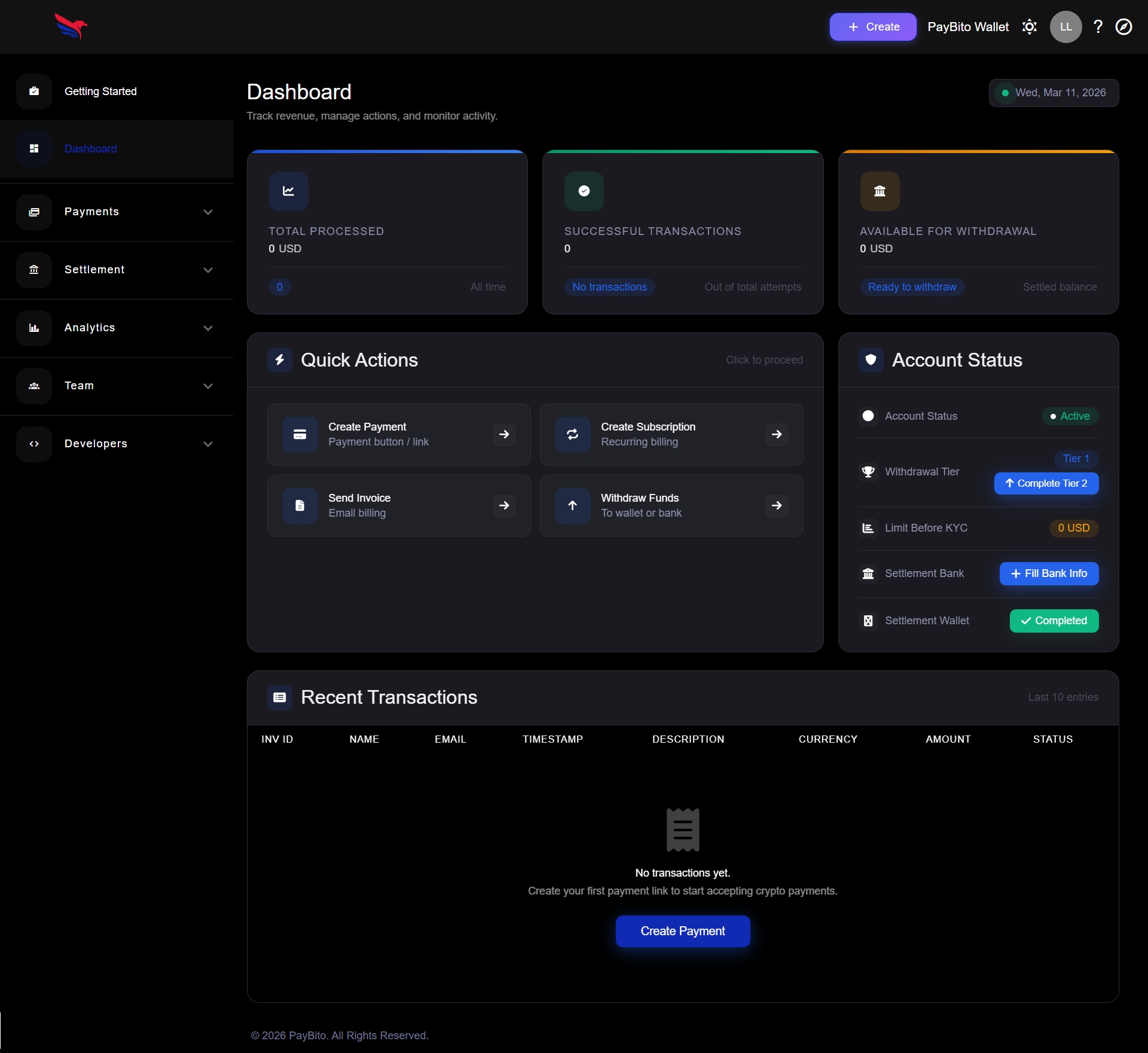
The revealing thing about a crypto payment business is what happens after the excitement. Somebody has to issue an invoice. Somebody has to decide which employee can withdraw money. Somebody has to explain why a payment is still pending. Look at PayBito’s merchant dashboard, and the supposed frontier of finance starts to resemble a rather familiar workplace. There are balances, permissions, subscriptions and a button marked “Create Payment.” Even a revolution needs accounts payable.
- What it sells: blockchain applications, exchange software and payment infrastructure that customers can put their own brand on.
- Who buys: banks, fintech businesses, exchange operators, payment providers and merchants.
- The interesting wrinkle: its remittance design still relies on prefunded bank accounts and domestic payout networks.
- What to copy: demonstrate the workflow before paying for a full implementation.
A financial business, with the software already assembled
HashCash Consultants occupies the space between having an idea for a financial service and possessing the machinery to operate it. Its consulting business covers custom blockchain applications and integration. Its product business supplies more repeatable components: a network called HC NET, remittance software called HC Remit, corporate payment tools and the PayBito family of trading and payment products.
White-label software is the key to the proposition. A customer takes an existing platform and presents it under its own identity. The customer’s brand faces the market; the supplier’s technology does much of the work behind it. The appeal is easy to understand. An entrepreneur may know a particular market very well without wanting to spend the next year becoming an expert in exchange engineering.
HashCash’s pitch addresses that division of labour. But it also produces an instructive question: which responsibilities can be bought, and which still belong to the operator? A branded login screen is a deliverable. A good financial business is an ongoing activity.
The bank account hiding inside the blockchain
Consider the framework in HashCash’s Bank IT remittance paper, carrying a 2021 copyright. At the beginning of the day, a remitting partner prefunds an account. The parties can see the balance. A transfer arrives with identity documents. Compliance checks follow. Bank IT can approve automatically or intervene manually. After the blockchain step, the prefunded account is debited and the beneficiary receives a domestic payment through IMPS, NEFT or RTGS.
That sequence is more interesting than a general promise of instant money. It puts the proposed improvement in a specific place: institutions sharing documents, seeing the same transaction status and reconciling records. The paper describes typical settlement of three to five seconds within its HC Remit process. That is a company-stated process figure, not a guarantee that every recipient in every country will have spendable cash in five seconds.
- 01PrefundMoney in a partner account
- 02CheckShared KYC and approval
- 03RecordTransaction on HC NET
- 04Pay outDomestic banking rails
The ledger coordinates the transfer. The participating institutions still provide the funds and the payout path.
The inference is practical. This design needs participating institutions, adequate prefunding and a working domestic payment route. If those conditions are absent, a faster shared record cannot complete the whole journey. A buyer should therefore map the entire corridor, including the last bank account, before admiring the stopwatch.
A prototype is a better opening bid
The customer stories published by HashCash offer a second clue about how it works. A testimonial attributed to Bitrump director Sara Haik describes a prototype, a demonstration of its design and technical details, client confirmation and then a completed web-and-mobile project in 12 weeks. It is a vendor-published account, but the sequence is useful regardless of whose software one buys.
First demonstrate what the business will actually do. Then agree on what counts as completion. Only then begin the larger build. That approach makes a vague wish - “we want an exchange” - into something both parties can examine. It also gives a buyer a chance to change the specification before the expensive part begins.
“We used HC NET to make payments to vendors in China, India, and the Philippines.”David Stewart, Energify World
Testimonial published by HashCash
That published account describes a concrete use: cross-border vendor payments. The company’s customer-facing material also targets currency exchanges, banks and fintechs. These are organizations trying to make transactions work for other people. Their problem is less romantic than predicting the next coin price, and rather more demanding: the service must behave sensibly when someone else’s money is involved.
The copyable lesson is to bring an actual transaction to the demonstration. Follow it from the customer’s first click to the final withdrawal and the accounting record. Ask what happens when an identity check fails, a payment needs review or an employee leaves. A smooth homepage tells you very little about Tuesday afternoon.
The price tag has several layers
PayBito’s platform pricing, checked on October 1, 2026, displays a Basic plan at $149 per month on monthly billing. It lists a five-day trial and one-day delivery. The same page offers larger plans and different billing terms. Treat those delivery periods as advertised software timelines, rather than promises about the date a financial operation will be ready to serve customers.
Payment processing is a separate calculation. The published crypto fee schedule specifies a 1% platform charge and blockchain network fees passed through at cost. At that rate, a $2,000 transaction produces a $20 platform fee before the network charge. That arithmetic is pleasantly dull, which is a virtue in a price list.
The larger engagements are negotiated. PayBito Enterprise advertises volume-based pricing, dedicated settlement arrangements, private deployment options and custom revenue-share models. A subscription, a processing fee and a tailored infrastructure contract buy different things. Putting them in one budget helps prevent a modest entry price from being mistaken for the cost of the whole operation.
The back office is part of the product
The merchant guide makes PayBito’s everyday usefulness fairly tangible. Users can create payment links, invoices, hosted checkout pages and subscriptions; inspect incoming transactions; manage settlement; and give team members different permissions. Developers get API keys to connect applications. A merchant can use a payment link before undertaking a deeper integration, while a more technical operator can connect the service to its own systems.
HashCash’s broader catalogue reaches beyond payments. It advertises digital identity, smart contracts and token-related development, alongside AI, IoT, analytics and cloud services. The breadth makes it resemble an enterprise software supplier with a pronounced financial speciality. A bank seeking a custom workflow and a small merchant seeking a payment link are buying from different parts of that catalogue.

Founder Raj Chowdhury describes his career as spanning enterprise software and financial systems. His financial-systems biography emphasizes cross-border payments and digital assets. The biographical emphasis fits the product catalogue: the company treats blockchain as a tool for operating services, with a sizeable amount of business software surrounding it.
Its partner programs include resellers, integration specialists, education providers and application developers. That matters because selling infrastructure involves more than persuading the final customer. Someone must fit it into the customer’s environment. A software platform becomes more useful when other businesses know how to implement it.
What the shortcut buys
HashCash operates in a market with other suppliers of exchange machinery. HollaEx offers branded exchange software with hosting, wallets and liquidity tools. AlphaPoint markets exchange infrastructure with matching, risk controls and high-availability architecture. White-label branding alone therefore does little to distinguish a vendor.
HashCash’s distinguishing pitch is the combination: exchange infrastructure, merchant payments, an enterprise blockchain network and custom development under one company. For a buyer with several connected workflows, that combination may simplify the search. For a buyer who needs only one narrow service, the wider catalogue is less consequential than the exact integration, control and support arrangements.
The choice becomes clearer when framed around work. Which pieces repeat across businesses? Which pieces make this particular business worth choosing? Renting the former can free time for the latter. It is an attractive trade if the operator understands the system it is renting and has a credible reason for customers to use it.
HashCash’s own September 2026 discussion of tokenization reinforces the point. It describes ownership management, investor onboarding, transfers and continuing administration, and notes that a token does not automatically establish legal transferability. The difficult work continues after issuance. In that respect, tokens and exchanges have something in common: creating the object is only the beginning of looking after it.
That is the useful way to read HashCash Consultants. It offers assembled machinery and help connecting it. The buyer must still have a market, an operating plan and the necessary institutional relationships. The logo on the door may take minutes to change. The obligations behind the door tend to stay.