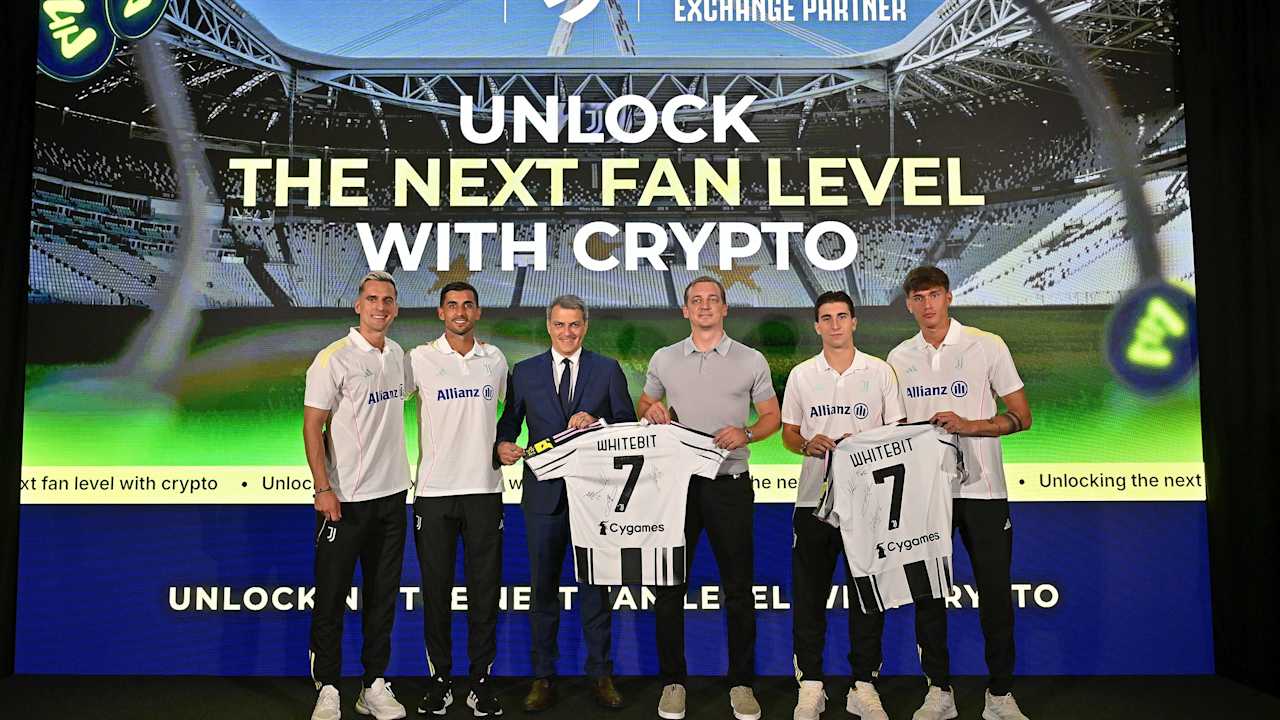
A football shirt is an expensive place to put a financial argument. At Juventus, WhiteBIT has tried to give that argument a second location: the fan’s wallet. When the club and the crypto exchange unveiled a fan platform in August 2025, the offer included a concrete perk - 10% discounts on match tickets and membership purchased through the WhiteBIT Nova debit card.
That detail explains the company more clearly than another photograph of executives holding a jersey. WhiteBIT wants digital assets to circulate beyond the trading screen. A supporter has a reason to try the payment product; the exchange gets a chance to become part of a recurring habit. Whether the habit lasts is the commercial question behind the football.
Founded in 2018 by Ukrainian entrepreneur Volodymyr Nosov, WhiteBIT operates a centralized cryptocurrency exchange. It matches buyers and sellers, holds customer assets and supplies tools for everyone from a first-time spot trader to an institutional market maker. Around that core, it has assembled spending products and connections to a wider family of businesses called W Group.
The football deal has a checkout button
Juventus announced the three-season agreement in June 2025, putting WhiteBIT on the men’s first-team sleeve beginning with the Club World Cup. By August, the partners were presenting club-themed cards and payment benefits. Those are separate steps: purchasing attention, then giving that attention somewhere to go.
Barcelona supplies another long-running connection. The relationship began in 2022; in April 2026, the club confirmed an extension through 2030, covering associations with its men’s and women’s football teams, basketball and the Barça Innovation Hub. The ambition includes education and interactive experiences. A partnership announcement establishes the relationship, however, not how many supporters become paying customers.
“Global partnerships are never the beginning of a story.”
Oleksii Kozenko, WhiteBIT CMO
February 2026
Kozenko’s argument, made on the company blog, is that a functioning product and an ability to plan over years precede the glamorous contract. The useful lesson for another business is smaller than a stadium: connect the partnership to a customer action. Give people something intelligible to do, then measure whether they come back. Shirt visibility alone cannot answer that question.
A trading desk, with a shop window attached
WhiteBIT’s basic service is familiar exchange machinery. A customer selects a trading pair, places an order and, when it executes, receives the purchased asset in an account balance. Spot trading uses the customer’s own funds. Margin introduces borrowing; futures introduce contracts and their own collateral requirements. These products serve different purposes and demand different levels of understanding.
The practical problem is coordination. Buyers need sellers, prices need an order book, and customers need ways to deposit, withdraw and keep track of holdings. WhiteBIT packages those functions into web and mobile interfaces. Its professional business adds services for firms whose problem is less “Where is the buy button?” and more “Can this venue support our operation?”
WhiteBIT Institutional targets market makers, high-frequency traders, brokers, hedge funds, asset managers and family offices. It advertises OTC dealing, custody, liquidity services and dedicated support. The market-making program adds APIs and colocation, with volume-dependent pricing. These are the less photogenic foundations of an exchange: counterparties willing and able to keep participating.
The positioning puts WhiteBIT among multiproduct centralized exchanges. Its distinctive combination is the exchange, a spending card and distribution through sport, supported by a broader group of crypto businesses. That combination is a reason to examine it; it does not establish better execution or cheaper all-in costs than every alternative.
The small percentages do the work
The published standard spot schedule lists 0.1% for both makers and takers. On an illustrative $1,000 execution, that is $1 of fee value. The actual asset charged depends on the trade. Spreads, price movement and the cost of depositing or withdrawing are separate, so that dollar is an execution example rather than a complete journey.
For futures, the listed standard rates are 0.01% maker and 0.055% taker. Margin borrowing carries a published daily charge of 0.0585%. On $1,000 borrowed, that works out to about 59 cents per day before discounts and other costs. Low percentages become meaningful when positions are large, repeated or held for longer.
Illustrative standard trading fees only. Different products carry different risks. Excludes funding, borrowing, spreads and transfers; discounts and pair exceptions may apply.
WhiteBIT’s historical token white paper identifies transaction, withdrawal, listing and borrowing fees as revenue streams. Professional clients can qualify for rebates and discounts, which help attract order-book activity. The economics reward usage, not merely account creation. Likewise, trading volume measures the value passing through a venue; it is not company revenue.
Nova makes the balance spendable
Introduced in December 2024, Nova is a Visa debit card issued by Wallester AS. It lets eligible customers use supported crypto assets for purchases without manually arranging a separate fiat withdrawal first. WhiteBIT’s help center says purchasing power is calculated from selected assets on the exchange’s Main balance and shown in euros.
That is useful for someone who already holds digital assets and wants to spend them. It removes steps between an exchange balance and a checkout. But the card’s scope is specific: it pays for goods and services, and does not support transfers to other bank cards. Physical and virtual versions also have different capabilities.
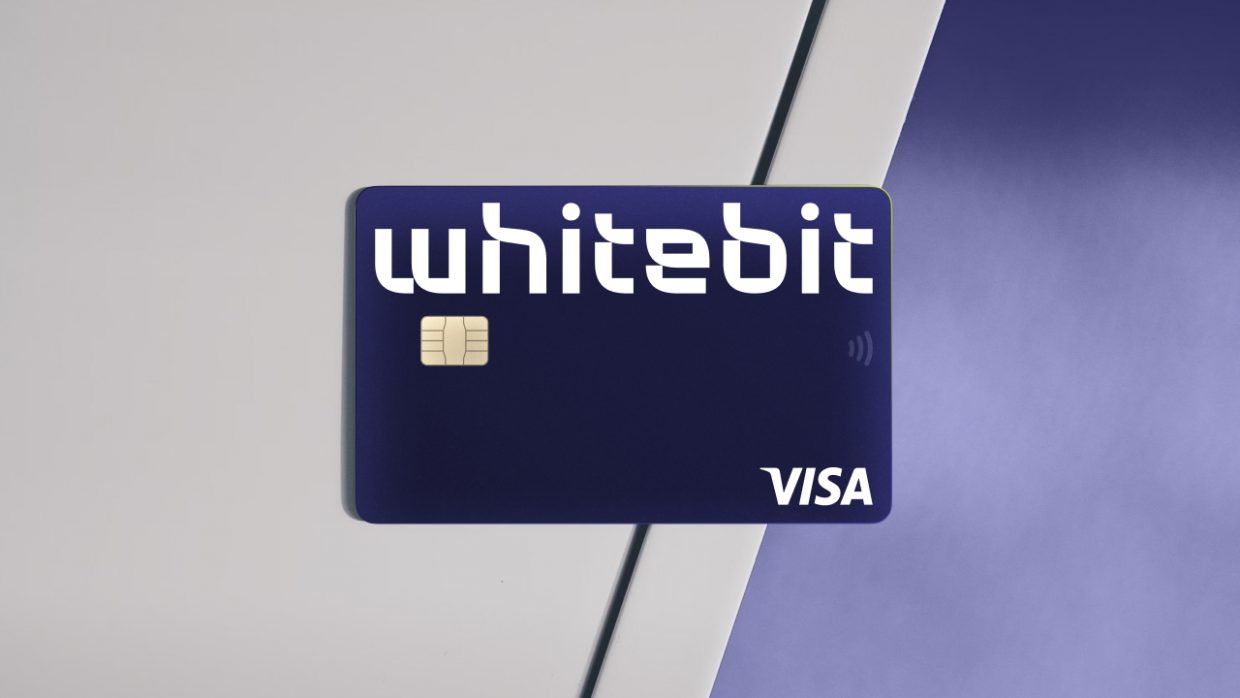
The card has no monthly fee, according to the help center’s quick FAQ, but transaction fees can reach 1%. Eligibility covers specified European countries and Ukraine, with verification required. Cashback is category-dependent and capped. Those conditions matter more to a prospective user than the largest advertised reward percentage.
The model also depends on what the customer values. Someone seeking independent control of private keys has a different requirement from someone prioritizing an exchange-linked payment card. A fan discount offers little to a person who cannot obtain the card, never buys tickets or would rather keep holdings untouched.
Eight million is not forty million
WhiteBIT’s December 2025 review reported more than eight million exchange users. Its current corporate page describes W Group as serving more than 40 million customers. The latter includes a wider collection of businesses; treating it as the exchange’s own user count would erase an essential distinction.
The group’s range helps explain the ambition. Whitepay supplies merchant payment tools, while WhiteMarket deals in Counter-Strike 2 skins. Whitechain is an EVM-compatible blockchain, renamed from WB Network in February 2024. The products address different activities, from accepting a payment to trading a game item. Their audiences should not be casually added into one measure of exchange activity.
Nosov’s own biography describes a career in distribution before WhiteBIT, including a business sold in 2017. That background makes an interesting companion to the present product catalogue: distribution remains central to the story. The exchange needs reasons for people to arrive, tools to serve them and reasons to stay.
Expansion includes closing a door
The catalogue has also contracted. Bitcoin Global, a related peer-to-peer trading platform, ceased functioning on December 23, 2025, according to WhiteBIT’s help center. Its closure notice says the interactive platform and automated withdrawals are unavailable following a 90-day notification period. Remaining customers are directed to manual recovery, requiring identity verification and an administrative fee.
That is a concrete operational consequence of a discontinued product. It also offers a sober test for any expanding financial platform: what happens to a customer’s assets when a service ends? New features are easy to announce. An orderly exit requires instructions, staffing and a process that reaches people who missed the earlier notices.
Other changes show the operating rules being adjusted. In February 2025, WhiteBIT announced an increase in the margin maintenance requirement from 2.5% to 3%, alongside automatic order cancellation at margin call. In July 2026, its VIP program moved to qualification through one eligible criterion instead of simultaneous requirements. The changes address two different operating problems: exposure around leveraged positions and friction in qualifying for account benefits.
The next test sits behind the interface
Custody is central to the bargain. WhiteBIT says it keeps 96% of assets in cold wallets. Hacken’s audit catalogue includes a WhiteBIT CCSS Level 3 engagement dated December 2025. CCSS examines controls around matters such as keys, wallet operations and safeguards. It is useful evidence about security procedures, not a promise about market prices or future returns.
The legal structure is also becoming more specific. Austria’s FMA authorized WB-Shield Innovations GmbH under MiCAR on June 18, 2026, for named services including custody, exchange and transfers. WhiteBIT identifies that company as WhiteBIT EU. The authorization belongs to that entity and its defined activities; the brand name should not blur those boundaries.
Meanwhile, July’s AI Hub introduced an open-source MCP server, command-line tools and analytical workflows. It connects supported local AI clients to exchange functions. Public market queries can work without authentication; private account actions require credentials and permissions. The interface changes, but an authenticated trading instruction still reaches a real exchange.
The workplace behind these products is presented as international and collaborative. WhiteBIT’s careers material emphasizes practical assessments and room to propose ideas. That fits the range of work on display: payment operations, market infrastructure, compliance and consumer marketing must coexist. The football shirt attracts the glance. The company earns another transaction through what happens afterward.
Follow the exchange, inspect the product
Explore WhiteBIT, the Nova card, current trading fees and API documentation. For developments, visit the company news blog and its YouTube channel.