Haroon Mokhtarzada had moved out. His alarm bill had stayed behind. Every month, another $40 went toward a security system at a house he no longer occupied. The charge was small enough to escape attention and regular enough to become expensive. When he finally spotted it, he had been paying for at least a year. Somewhere, a billing system was doing its job with rather more dedication than the customer required.
This was an awkward discovery for someone who had already built and sold an internet company. Mokhtarzada knew how software worked. He understood online businesses. Yet his own transactions contained a problem he had failed to notice. His brothers found unwanted recurring charges, too. Four brothers, four imperfectly supervised sets of finances. The embarrassment was useful: they had found a problem they could test on themselves.
The eventual company was Truebill, now Rocket Money. In December 2021, Rocket Companies acquired it for $1.275 billion. That number attracts attention, understandably. But the smaller number tells you more about its founder. Forty dollars was enough to irritate him. A familiar annoyance, examined closely, turned into work that occupied years of his life.
A family business before the family startups
Mokhtarzada grew up in the Maryland suburbs after his family left Afghanistan. His parents built a passport and visa procurement business from home. The children saw customers, paperwork and computers sharing domestic space. Entrepreneurship was something adults did in the next room, with all the ordinary repetition that a polished business biography tends to leave out.
For Haroon, the early ventures included lawn mowing, snow shoveling and magic shows. The combination is pleasingly practical: earn money when the grass grows, earn money when the snow falls, and have something ready for a birthday party. His parents’ example mattered to him. He later described growing up without seeing his father work for anyone else as an influence on his own desire to start businesses.
There was another education at Montgomery Blair High School. Haroon credited the magnet program’s group projects with teaching a sequence he recognized in startups: propose an idea, make the thing, then present it. A completed product had to survive contact with other people. Years later, he wanted students to learn the tools for building websites and apps because those skills could let them start something of their own.
The server in the closet
In 2001, Haroon and his brother Zeki were at the University of Maryland when they started Freewebs, later renamed Webs. Their younger brother Idris helped. The premise was accessible website creation: people should be able to put a site online without paying someone to build every page for them. Each of the two older brothers put in $1,000. Servers lived in Zeki’s apartment.
The timing offered little encouragement from the wider market. The dot-com boom had collapsed. In an early interview, Haroon explained that starting with their own money suited their circumstances: they were working part time on the business, wanted a workable model, and did not know how to seek investment. They began small because small was available.
Haroon then went to Harvard Law School, earning his J.D. in 2005. Webs continued alongside his studies. By graduation, it could support salaries, making the decision to give it more attention considerably less abstract. A law degree had not obliged him to become a lawyer. The website business was already offering a reason to choose another working life.
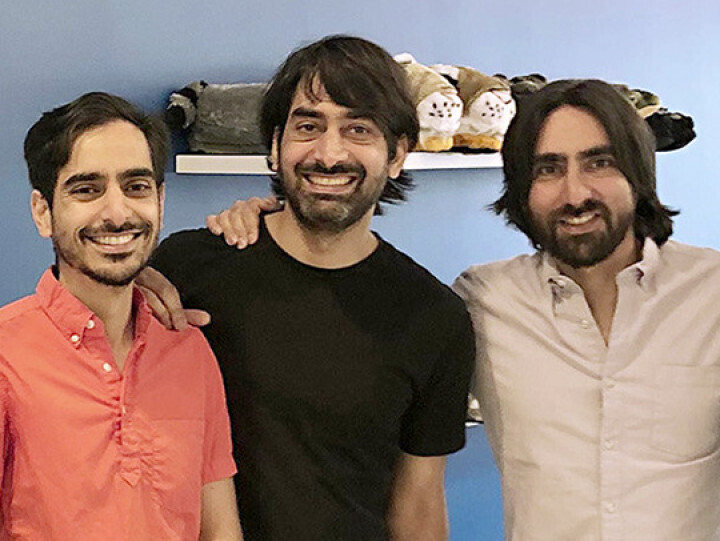
Webs eventually reached more than 50 million users. Vistaprint bought it in 2011 for $117.5 million, bringing the website tools into a business already serving small companies with printed marketing materials. A customer who needed business cards might also need somewhere to send the people receiving them. The connection was easy to understand.
For Haroon, the sale did not settle the question of what to do with his time. He worked at Vistaprint on digital products and innovation. Later, time away from running a company gave him more room for family life, but retirement did not hold his interest. He described continuing to look for problems to solve. Financial freedom had arrived before freedom from the habit of noticing things.
The Floundry earns its name
The brothers called their next idea-making operation the Floundry. Based in Idris’ basement, it was a place to flounder through possibilities before committing to one. There is a modest pleasure in that name. The eventual success story begins with people admitting that they did not yet know what to build.
The subscription question kept returning. People could link financial accounts and still struggle to see a clear list of recurring commitments. An old AOL subscription could quietly outlive its usefulness. So could an alarm contract. When Idris brought his experiments with bank-linking company Plaid into the discussion, the brothers had a practical route to examining transaction data.
The early work included importing transactions into Excel and looking for recurring payments. Then they put a service online for friends and family to try. The response helped establish that the brothers’ own forgetfulness had company. Truebill entered Y Combinator’s winter 2016 batch, getting funding and a concentrated period of mentorship as they developed the business.
“All of the companies I've started start from just a problem that annoys me.”
Haroon Mokhtarzada
Seeing an unwanted subscription was only part of the job. Users wanted to press a button and have someone cancel it. The brothers added that option. Behind the interface was human effort: Yahya, in a small office, calling companies and asking them to end subscriptions. Software could find the charge. Someone still had to endure the conversation.
That distinction matters to the story. A screen showing a problem can be useful and still leave the customer with an unpleasant afternoon. Taking responsibility for the next step made the service more valuable. It also created an operation that needed people, engineers and money. Being helpful did not automatically make the accounts add up.
The subscription he did not want to sell
Truebill tried an advertising or affiliate approach, but it did not produce a sustainable business. The team eventually faced a narrowing set of options. Yahya pushed an idea Haroon had resisted: charge a subscription for the cancellation service. For a founder trying to help people escape unwanted subscriptions, the proposal sounded faintly like opening a locksmith’s shop and keeping everyone’s keys.
Haroon’s objection was understandable. The business depended on trust, and a recurring fee risked looking like the problem it promised to solve. Yet customers might value ongoing help enough to pay for it. His opinion could not answer that question. The company had to put a price in front of people.
The initial offer was about $3 a month. People paid. Later experiments let customers choose a monthly amount. The useful lesson is specific: Haroon held a strong view about the model, pressure forced a test, and the result changed the decision. A founder’s instincts can start a company. Customers still get a vote on how it survives.
Company transaction values, not personal wealth.
When the name became too small
By September 2021, Truebill had reached one million premium members. At a team celebration in Silver Spring, Haroon spoke about making the company somewhere people could grow personally and professionally. The ambition extended to the people building the service, alongside the customers using it. That concern belongs in the story as much as the sale price.
In his December announcement about joining Rocket Companies, he described a team that had grown from three to 159. Customers were asking about goals beyond cleaning up subscriptions: paying down debt, preparing for a family, buying a home. Those requests helped explain why the company wanted to offer more than a list of bills.
The acquisition closed that December. In July 2022, Haroon announced the coming Rocket Money name, explaining that Truebill no longer described the range of services. Budgeting, savings tools and credit monitoring had broadened the product. The rebrand followed in August. His account of the change centered on expanding what customers could do with the app.
He also received an EY Entrepreneur Of The Year award for the Mid-Atlantic region in 2022. Ardent Venture Partners lists him as a CEO Partner and as Rocket Money’s CEO and chairman. His investing has included early-stage companies such as Instacart, Carta, Relativity Space and Pluto TV. The work now reaches beyond the products he and his brothers originally built.
Back to the room where ideas begin
At Maryland, Haroon, Idris and Zeki funded the Mokhtarzada Hatchery, offering student founders workspace, mentoring and up to $10,000 per team annually. The appeal is concrete. Early founders need somewhere to work, someone to question their assumptions and enough money to try the next step. The brothers have experience of all three requirements.
On September 8, 2026, Haroon joined the Hatchery’s fall kickoff, discussing early decisions with students: finding a problem, judging a market, developing a product. One student came seeking feedback on an idea for paid, asynchronous answers from professionals. The setting was smaller than an acquisition announcement and closer to the uncertain beginning of a business.
That is a fitting place to leave him. Before the millions of users and the transactions with nine or ten digits, there was a household business, a server in an apartment, a basement full of unfinished ideas. And there was a charge that kept arriving after its purpose had gone. Haroon noticed it late. He gave the discovery a long working life.