The paperwork was easy. Getting the right people into the room was the problem. When Zander Isaacson started the student organization that became Happy Valley VC, his finance friends were within reach. Engineers were another matter. He recalled visiting classrooms, distributing flyers and turning up at campus events. Before he could help students understand venture capital, he had to persuade students with different skills to spend time together.
That small recruiting problem explains a good deal about Happy Valley VC. The Penn State organization connects people who want to understand investing with people trying to build companies. Its work includes student projects, founder conversations and pitch competitions. The useful transaction often happens before anybody writes a check: a founder meets someone who can help, and a student gets close enough to a business to learn something specific.
The investment was an introduction
Happy Valley VC lists 2017 as its founding year. Penn State identifies Isaacson, later the co-founder and CEO of electric vehicle charging company Xeal, as its founder and former president. A student organization can sound like an extracurricular footnote in a founder biography. Here, it helps explain the interests and relationships that preceded the company.
Isaacson’s interest in venture capital emerged while he was considering his future in finance. He saw a way to bring investing and entrepreneurship together. His recruiting experience supplied the practical correction: a venture community required people his existing circle did not contain. The lesson readers can borrow is wonderfully unglamorous. Go to the places where the missing skills already gather.
“So the paperwork, that was the easy part.”
Zander Isaacson · Dare to Disrupt
His later career gives the campus chapter additional weight. Xeal operates in EV charging, a business requiring both technical and commercial judgment. Happy Valley VC’s value as an educational experience is easy to understand in that context. The interesting question for a student is whether the work helps them discover what they want to spend their working life doing.
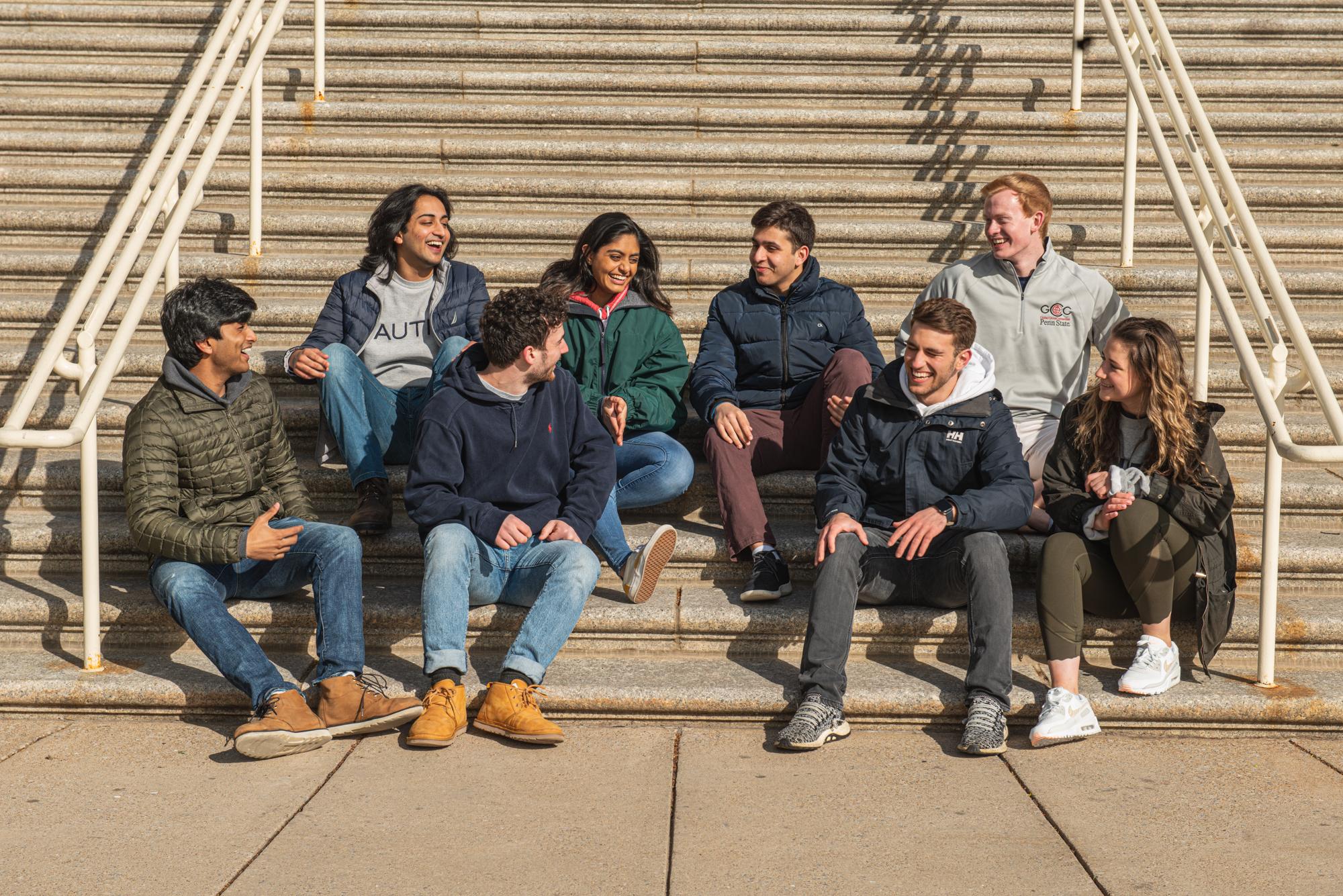
A startup education with people attached
The organization’s audience spans two groups with complementary needs. Students curious about venture investing need experience they can discuss beyond a classroom exercise. Student founders need useful collaborators and access to people who understand early businesses. Faculty and alumni entrepreneurs also sit within the community described by Penn State’s student entrepreneurship center.
The center lists general meetings, industry fireside chats, investment competitions and intercollegiate conferences. Members can take on optional team projects about technology trends and work directly with local startups. Those are different ways to test an interest. A student can enjoy researching an industry and discover that operating a young company is a very different proposition.
The Venture Fellows cohort makes the connection explicit. Its advertised activities include working with Penn State founders and meeting early-stage investors and accelerator programs. The promise is practical exposure. For a founder, a useful student collaborator brings time and a particular skill; for a student, a live business supplies questions with consequences.
Anyone approaching that arrangement should arrive with a concrete request. A founder can describe the problem, the work needed and what a useful result would look like. A prospective fellow can identify the skill they want to practice. That is our reading of the model’s practical appeal: a defined task gives an introduction somewhere to go.
Three hours, three reasons to show up
The April 2022 Startup Week celebration shows how the organization packaged that access. Happy Valley VC and Innoblue co-hosted an afternoon at Penn State’s Innovation Hub. Networking and a community roundtable came first, followed by a pitch competition and then a keynote. Attendees had more than one reason to make the trip.
The announced roundtable included Rachel Sapienza of PayPal Ventures. Six student startups were scheduled to compete for $25,000 in non-dilutive funding, with an audience-voted People’s Choice Award adding another reason to pay attention. Founder and investor Lynsie Campbell was booked to speak about failure and flexibility in the startup journey.
The sequence is worth copying. A conversation before a pitch can establish context; a pitch gives the room something concrete to discuss afterward. That is an interpretation of the event design, rather than a measured outcome. It is also a more useful organizing principle than filling an evening with unrelated speeches.
There was an additional offering beyond the stage. Coverage of the 2022 event described a Startup Advisory Program giving finalists access to a curated online resource library. The appeal of that combination is straightforward: a founder can leave with material to work through after the audience has gone home.
Follow the prize money carefully
For the sixth annual competition, scheduled for March 20, 2023, Happy Valley VC advertised more than $25,000 in non-equity prizes. The dollar figure matters to a student founder. So does the wording: an award described as non-equity does not ask the recipient to exchange an ownership stake for that prize.
An Invent Penn State announcement shared on LinkedIn identified the Farrell Center for Corporate Innovation and Entrepreneurship as fully funding the reported competition prizes. It listed $10,000 for Alert Heart, $6,000 for CTFGuide, $4,000 for PresentAI and $1,000 for Snag Speed. These were different businesses, covering cardiac-arrest monitoring, cybersecurity, presentation skills and nightlife access.
Individual reported awards; not a complete accounting of the advertised prize pool.
Another participant, Alternative Vision Technologies, reported receiving the 2023 Diversity Founder Award. Its team described work on technology for people with visual impairments. Taken together, the examples show a competition with room for quite different kinds of student venture, rather than a single product category.
The next year supplies a particularly clear account of how one award fits a larger effort. Saveware’s co-founder reported a $5,000 first-place Happy Valley VC prize in March 2024, alongside $15,000 from Inc.U and $1,250 from Lion Tank at Mont Alto. He also said the competitions had pushed the team to think through the business more broadly.
Those amounts describe money awarded to startups. They should be read separately from the economics of running the organization. Happy Valley VC’s documented operating model centers on student participation, educational programming and collaborative events, with institutional support visible in the prizes. For the founder, the practical benefit is a funding opportunity combined with preparation and feedback.
The expensive part fits on a calendar
Time is another cost, and former president Leo Girlando gave it a memorable scale. In a 2022 Penn State profile, he said he devoted 70 to 80 percent of his time outside classes to Happy Valley VC. A club can be inexpensive to describe and demanding to run.
Girlando’s route into entrepreneurship began through work with Fitted Laundry and contact with the organization’s earlier incarnation, Smeal Venture Partners. In a separate university interview, he emphasized teamwork, different perspectives and basic scheduling. His explanation is a useful antidote to the idea that networks maintain themselves once someone creates a mailing list.
He also helped found College Ventures Network, extending the kind of campus connection he valued to other universities. That network lists Happy Valley VC as its Penn State venture organization. The local community thus has a route to intercollegiate relationships, while its daily usefulness still depends on people doing the work nearby.

A place in the campus circuit
Happy Valley VC occupies a particular place among Penn State’s entrepreneurship options. Happy Valley LaunchBox provides another point of access to startup support. Inc.U offers a separate pitch competition. Innoblue has been a collaborator. The Nittany Lion Fund offers a different investment-learning setting. A student’s choice depends on the experience or help they need.
That makes the organization’s distinguishing feature its combination of venture curiosity and founder contact. Its Founder Series, for example, advertised a 2021 session with Returnmates co-founder Eric Wimer about building a company. Such encounters give students a business and a person to question, rather than an industry label to admire.
The model asks something of participants, too. A founder needing substantial committed capital cannot budget around winning a contest. A student who can only attend an occasional talk will have a different experience from someone doing project work. And a university trying to reproduce the idea needs willing founders, capable students and people prepared to organize introductions repeatedly.
For a reader at Penn State, the useful first move is specific: contact the organization with a project, a skill or a question about participation. For a student elsewhere, the transferable idea is to assemble people around actual work. Isaacson’s classroom visits remain an apt starting point. The people you need may already be nearby; finding them still takes getting out of your own room.