The advertisement looked like the sort of paper that exists to be discarded. A fully equipped yogurt factory was for sale in South Edmeston, New York, a village with more cows than strategic consultants. Kraft was closing it. Fifty-five employees were winding down the lines. Hamdi Ulukaya showed the notice to an adviser, who supplied the sensible verdict: throw it away.
Ulukaya did the inconvenient thing and drove to the factory the next day. The place was tired, but it was intact. Stainless-steel machinery waited behind neglected walls. More important, people nearby knew how to make yogurt and no longer had a place to do it. He had arrived in the United States from Turkey in 1994, studied English, worked around dairy farms and started a small feta business. He was not searching for a monument. He was searching for better yogurt.
In 2005, with financing backed by the Small Business Administration, he bought the plant. He hired five former employees. Their first production run was paint. Together they freshened the walls, an act so humble it makes most corporate origin stories look overdressed. The recipe took nearly two years to refine. In 2007, the first cup bearing the name Chobani reached a grocery shelf.
The milk came before the MBA
Ulukaya grew up in a Kurdish dairy-farming family near the Euphrates in eastern Turkey. Summers meant going into the mountains with shepherds, making cheese and yogurt, and sleeping beneath the open sky. He became the first in his family to attend university, studying political science at Ankara University. When he moved to New York, he initially came to learn English, not to become a food executive.
A classroom assignment nudged the plot along. After he wrote about cheese making, a teacher invited him to a farm in upstate New York. The landscape and agricultural rhythms felt familiar. His father later visited and complained about the feta available in America. This was parental criticism at its most productive. Ulukaya started Euphrates, a modest cheese operation in Johnstown, in 2002.
The closed factory arrived three years later. What Ulukaya brought to it was less a theory of disruption than a memory of how yogurt ought to taste. He also brought patience. Chobani did not outsource its first difficult years to a mythology of overnight success. Ulukaya has said he did not leave the factory for seven years. Every pipe, package and complaint became part of his education.
There was also a set of shrewd decisions hiding inside the homespun beginning. Ulukaya insisted that Chobani sit in the ordinary dairy aisle, beside familiar national brands, instead of being exiled to a specialty section. The price had to invite repetition, not ceremony. Since the young company could not comfortably pay retailers' slotting fees, he negotiated to pay over time as the yogurt sold. Sampling put the product directly into shoppers' hands. The first 300 cases went to a kosher grocer on Long Island, and then came an agonizing week of waiting. The store ordered again.
This was democratization conducted through shelf placement. Thick, strained yogurt already existed in America, but Chobani treated it as everyday food rather than a delicacy requiring explanation. By 2009 the company was shipping about 200,000 cases a week. Growth came so quickly that capacity became the danger. Ulukaya rejected the easiest private-equity money, preferring loans and reinvested cash that allowed him to keep control. Independence determined whose patience could set the clock.
“People will give you credit, but 99% of it is not you.”Hamdi Ulukaya, at Stanford Graduate School of Business
That line is the useful hinge in his story. Chobani's growth made Ulukaya wealthy and recognizable, but his account of the company repeatedly returns credit to the people near the machinery. In the early days, the telephone number printed on the cup reached him directly. The customer could interrupt the founder. The factory floor could correct the office. Distance, in this arrangement, was a defect.
A share of the thing they built
By 2016, Chobani employed roughly 2,000 people. Ulukaya gathered them for an announcement and distributed white envelopes. Inside were awards that tied employees to as much as 10 percent of the company's future value, with the amount influenced by tenure. The value would be realized if the private company went public or was sold. It was not a sentimental bonus. It was a claim on what came next.
The decision gave material form to a familiar executive phrase: our people built this. Language is free; equity has a cap table. Ulukaya called the announcement one of the finest moments of his life. The plan also revealed his preference for independence. Chobani explored an initial public offering and later withdrew it. He has said the company would enter public markets only if doing so served opportunity and growth, not because outside pressure demanded an exit.
The portfolio widened. Chobani acquired coffee roaster La Colombe in 2023 and plant-based food company Daily Harvest in 2025. Ulukaya personally bought San Francisco's closed Anchor Brewing Company in 2024, promising to bring the 1896 brewery back. Once might be opportunity. Twice begins to resemble a taste. He is drawn to institutions whose last chapter has been prematurely typeset.
When employment became the product
At Chobani's plants in New York and Idaho, the workforce came to include refugees from several countries. The practical requirements were immediate: language support, transportation, training and supervisors willing to make a diverse line function. Ulukaya saw that the benefits ran in both directions. Plants needed committed workers; newcomers needed a foothold in ordinary civic life.
The setting mattered. Upstate towns had lost industrial jobs while nearby Utica had become home to resettled families. In Idaho, the Twin Falls plant drew from another community where newcomers were building lives. Ulukaya's proposal did not require an employer to solve geopolitics before breakfast. It asked the employer to notice a local labor pool, remove practical barriers and judge people by the work they could do. The moral case and the operating case occupied the same chair.
“The minute a refugee gets a job is the minute they stop being a refugee.”Hamdi Ulukaya
The sentence compresses a complicated legal and personal condition, but its emphasis is plain. A job brings routine, colleagues, income and the ability to make plans. It makes a person visible for skills rather than displacement. In 2016, Ulukaya founded the Tent Partnership for Refugees to persuade other employers to act on that idea.
Tent is now a network of more than 500 major companies across a dozen countries in the Americas and Europe. Its members include employers in hospitality, retail, manufacturing and technology. The work is deliberately specific: prepare refugees for local labor markets, connect them to jobs, and help companies manage hiring and integration. Compassion, in Tent's hands, comes with onboarding.
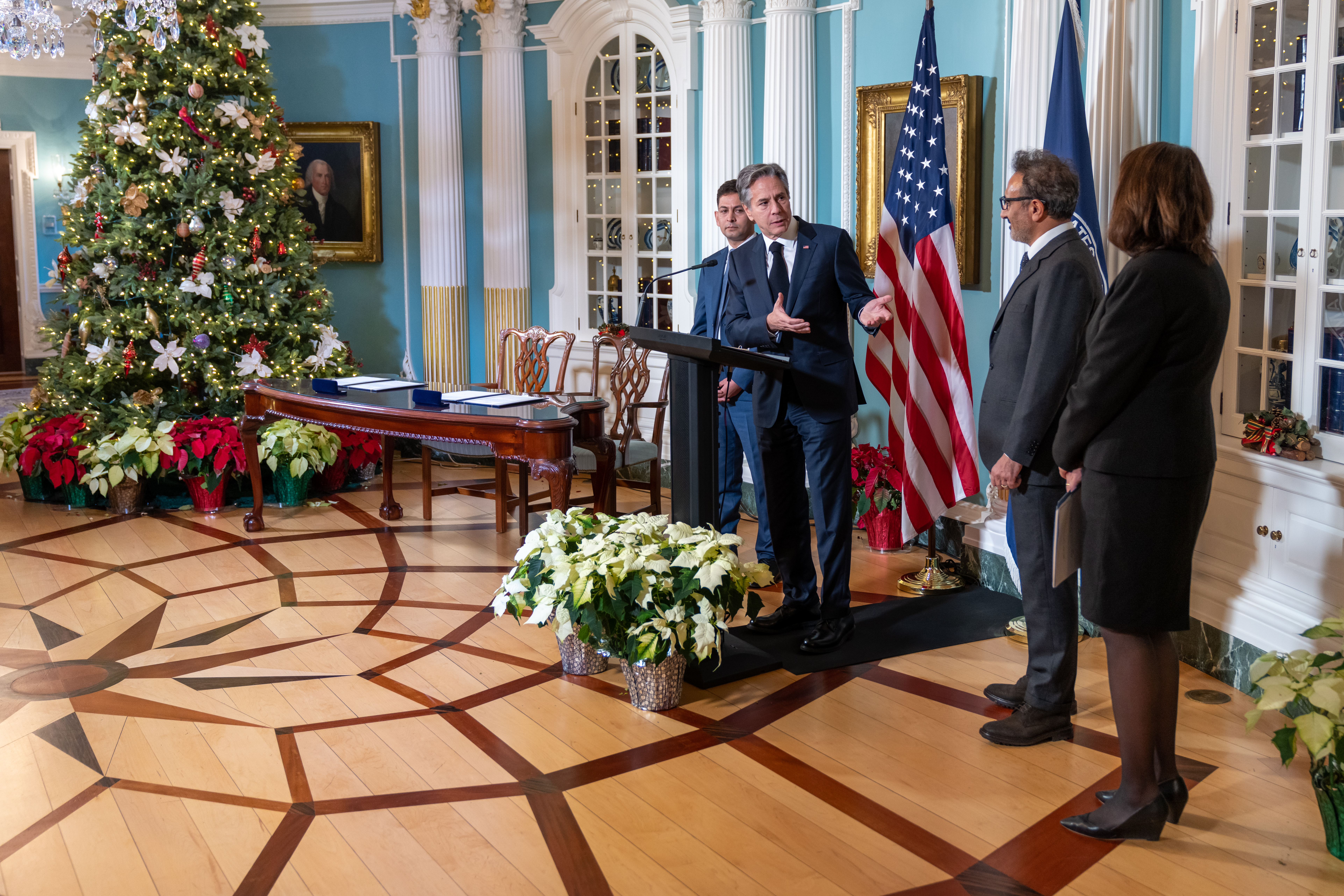
This expansion did not appear from a separate philanthropic personality. Ulukaya's public argument is that the social and commercial parts of a company belong in the same operating system. He signed the Giving Pledge in 2015, dedicating a majority of his personal wealth to helping refugees. In his letter, he traced the impulse to his mother, whose habit of giving stayed with him. The following year, Tent gave that inheritance an organizational chart.
The three caps
At a Stanford conversation, an interviewer noticed Ulukaya's cap. He explained that he rotates among three loyalties: Chobani, Tent and Fenerbahçe, the Turkish football club he has supported since childhood. He had worn the Tent cap that day. Chobani, he added, was his first love. In 2025, those worlds overlapped again when Chobani agreed to sponsor Fenerbahçe, including naming rights for the club's stadium.
The hats are a charming piece of personal inventory, but they also expose the architecture of his career. Food, refugees, football. Factory, cause, club. Ulukaya has not polished away the attachments that preceded his title. He has fed them into the title and accepted the obligations that follow.
His style can be emotional, impatient and openly intuitive. He has described anger as fuel. He speaks of companies using the language of love and belonging, words that can wilt quickly under fluorescent office lights. Their survival depends on decisions: whom to hire, what to share, which town to stay in, when to resist a sale. The record matters more than the vocabulary.
That record began in a factory a corporation had already judged expendable. The walls were shabby. The experienced workers were about to scatter. Ulukaya's useful talent was refusing to confuse neglect with worthlessness. He looked at the same building, the same equipment and the same small town, then allowed for a different ending.
The method has since traveled far beyond yogurt. Find what has been overlooked. Stand close enough to understand it. Give the people doing the work a reason to own the result. Then widen the door. There are grander theories of management, and most come with thicker binders. Few begin with five workers and a paintbrush.
Keep following the work
Elsewhere with Hamdi
Story image by Ron Przysucha, U.S. Department of State. Public domain.