Before Caleb Wang built spreadsheets for a national frozen-food company, food had already organized his memory. There were morning walks in Shanghai with his grandfather, negotiations conducted in the universal currency of one more sheng jian bao. There was the brief French bakery his parents attempted after moving from China, where Wang remembers sleeping in a cupboard while his mother baked at five in the morning before leaving for her full-time job. Later, his family operated a small group of Mrs. Fields franchises. His teenage summers smelled like chocolate-chip cookies and the business of making rent.
He still chose finance. Stability carried particular weight in a family building a life in the United States, and Wang knew the path before college. He studied finance at Carnegie Mellon University, then worked in the field, with public profiles connecting him to Citibank, Francisco Partners, and Glenhill Capital Management. The career gave him security and a rigorous way to think. It did not quiet the appetite.
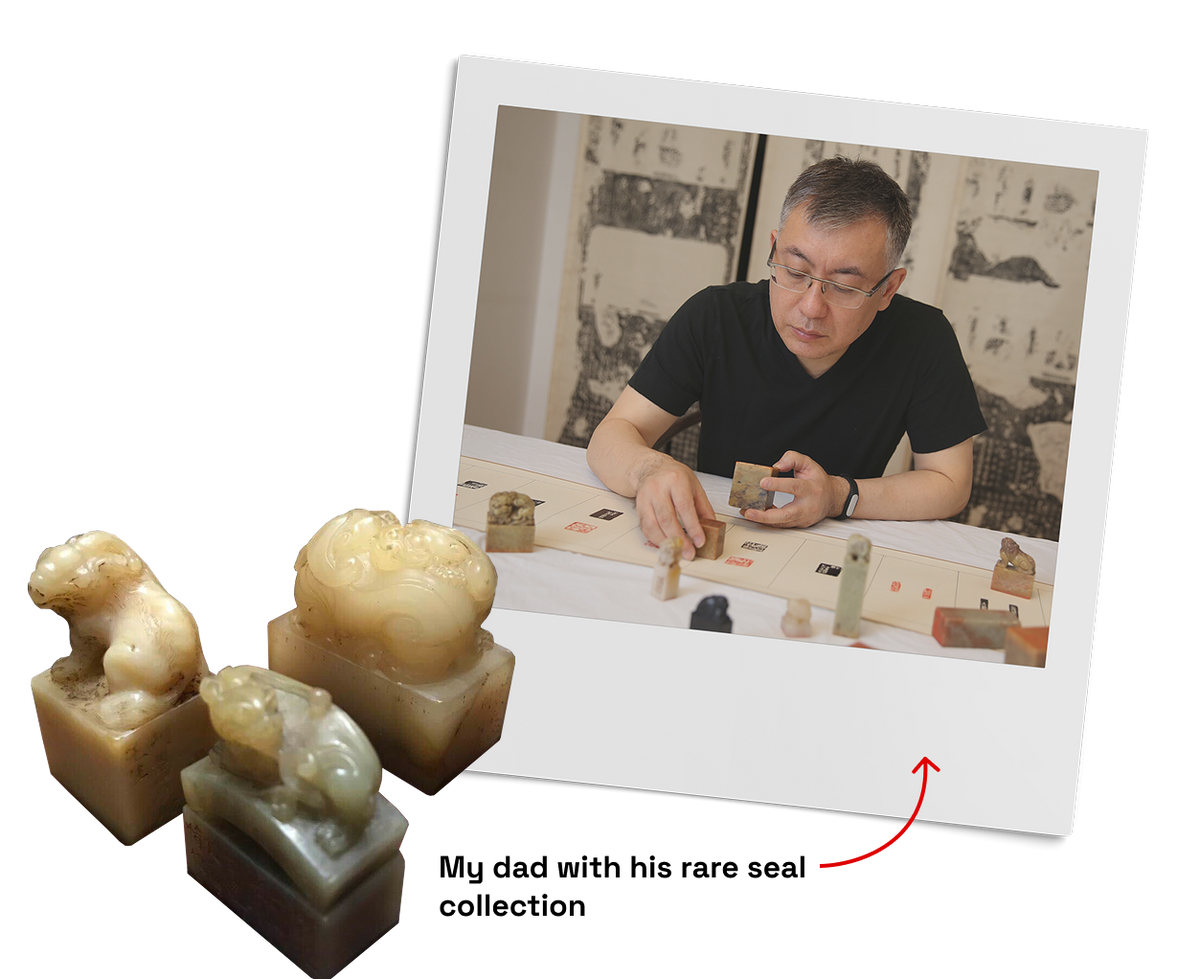
In his late twenties, Wang began asking more about his family's Shanghai lineage. He learned that his grandmother, Jin Qifen, had worked as a cinematographer and was known for Hibiscus Town, an award-winning film set during the Cultural Revolution. His great-grandfather had been a landscape painter. His father had spent decades collecting carved seals, documenting their provenance and publishing their stories even when few people paid attention. Across generations, the family kept returning to the same quiet assignment: preserve the work, explain why it matters, and keep going long enough for others to notice.
A craving with a balance sheet
Wang met Jennifer Liao on a ski slope. She made the first move, by the couple's account. They then endured four years of bi-coastal long distance, connected by winter sports, nerdy jokes, and what they cheerfully describe as good and bad decision-making. One of those decisions was starting a food business while still dating.
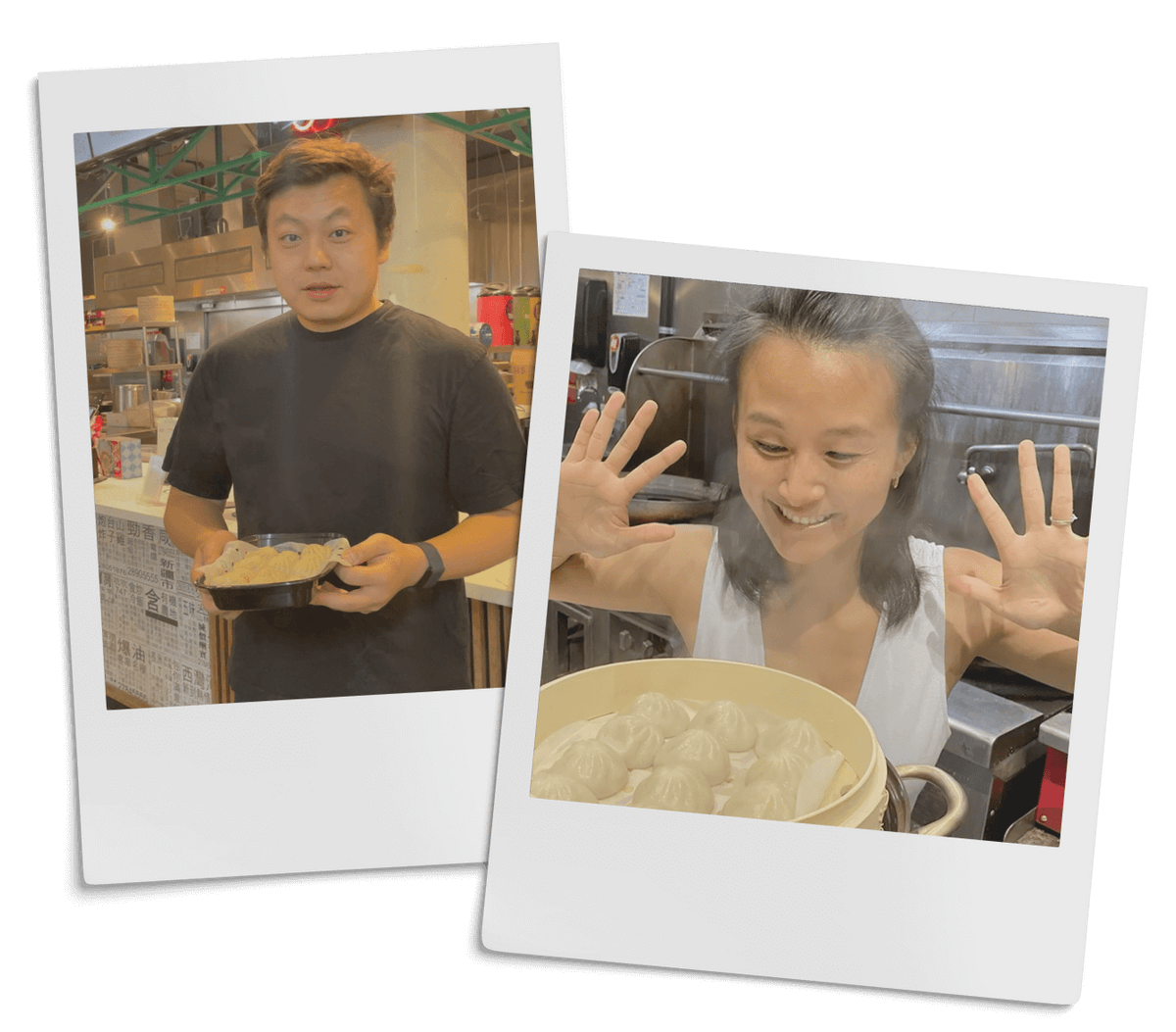
The original motive was pleasingly selfish. Wang and Liao, both second-generation Chinese Americans, wanted regional foods they remembered from trips to China and could not readily find around Bellevue. In 2018 they opened Xiao Chi Jie, a restaurant named for the Chinese phrase for a street-food avenue. The menu centered on the foods they wanted to eat, including xiao long bao and the crisp-bottomed sheng jian bao that had starred in Wang's walks with his grandfather.
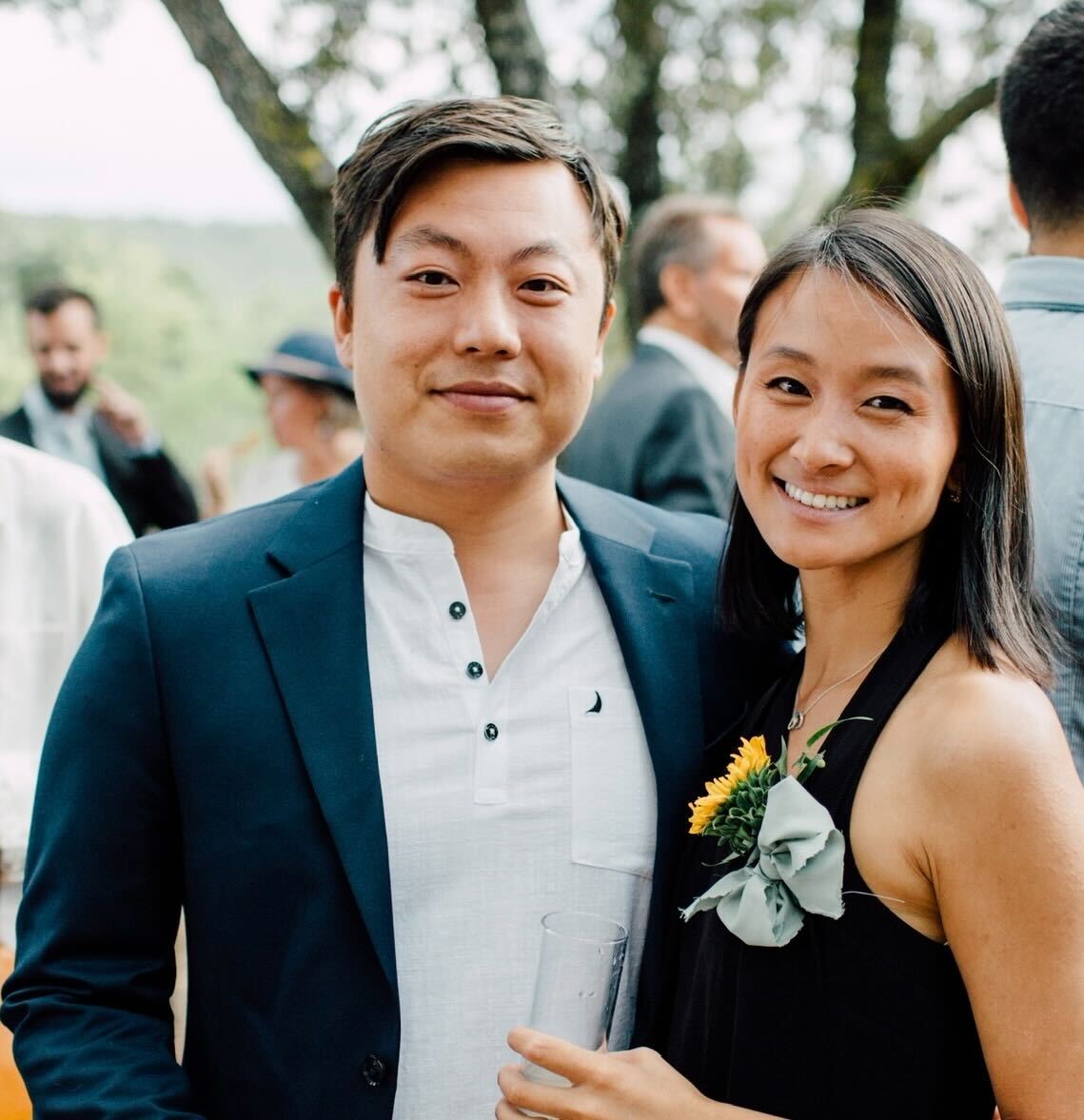
Restaurants are machines disguised as dining rooms, and Wang found a use for the side of his brain trained in finance. Reproducing a properly browned sheng jian bao meant sourcing specialty cast-iron pans from Shanghai and designing kitchen protocols that increased the number of fresh batches. Freezing xiao long bao at peak freshness meant puzzling over liquid nitrogen. Delivering them meant shortening warehouse time, watching carrier performance, and preparing for the customer who left a box on the porch or misread the steaming instructions.
He was not escaping numbers. He was giving them flavor.
The restaurant becomes a network
When the pandemic closed the dining room, the team experimented with frozen soup dumplings. Liao's mother assembled a WeChat group. A Google Form and PayPal link served as the early storefront. Local orders appeared, then requests came from beyond the delivery radius. The founders tested other ideas, including a boba kit, but the signal kept returning to dumplings. Customers wanted a difficult restaurant dish in a form that could wait in the freezer and steam at home in minutes.
One freezer at a time
2018
2020
2020 onward
2023
reported 2025
The product carried a useful contradiction. Soup dumplings look simple, but they are structurally fussy. The skin must be thin enough to feel delicate, strong enough to hold broth, and forgiving enough to survive freezing, freight, and a home cook's tongs. The available co-manufacturing network could not reliably meet MìLà's specifications for dough, filling, or cost. So the company kept production in-house and built a vertically integrated operation around a food that resists shortcuts.
That choice raised the difficulty and gave Wang a defensible answer to a founder's favorite question: what is hard to copy? A flavor can be imitated. A manufacturing system, trained team, cold chain, recipe library, and accumulated error log take longer.
Culture as an operating system
In 2023, Xiao Chi Jie became MìLà. The shorter name paired ideas of honey and spice while opening room for more than the restaurant's original menu. The company moved into noodles, sauces, potstickers, ice cream, and collaborations. Actor Simu Liu joined as chief content officer and a strategic partner. Seattle institution Phở Bắc helped create a pho beef soup dumpling. Pastry chef Dominique Ansel collaborated on a black sesame chocolate dessert dumpling.
For Wang, the cultural work is neither decoration nor a claim that food must remain fixed. MìLà's founders describe Chinese identity as evolving, and their products act accordingly. A dumpling can preserve a technique while carrying a Hong Kong creamy corn soup memory, Vietnamese American pho flavors, or a pastry chef's black sesame chocolate filling. Authenticity here means an honest relationship to origin, craft, and the people whose memories enter the recipe.
That approach echoes his father's seals. Provenance matters, but preservation is active. An object survives because someone records it, shares it, and gives the next person a reason to care. Wang's medium happens to be edible, perishable, and governed by freezer temperature.
The freezer's invisible machinery
Wang's public conversations become especially animated when the subject turns to unit economics. He wants a direct-to-consumer order to make money on the first purchase, rather than depending on a distant lifetime-value promise. That requires attention to average order value, product cost, frozen shipping, customer acquisition, and contribution margin. Retail changes the arithmetic: lower net revenue per unit, fewer direct shipping and marketing costs, longer payment cycles, and a fierce weekly contest for velocity against everything else behind the freezer door.
The retail door changed width
Behind this was a sprawling planning workbook known internally as “the beast.” It pulled demand from each channel, adjusted for seasonality, divided inventory among fulfillment centers, informed production, and then cascaded into purchasing. Wang once said the spreadsheet became complicated enough to break Excel. The joke is funny because the problem is serious: rapid growth converts pantry ingredients into working capital, and a forecast error can become a warehouse full of expensive evidence.
The finance background did not prevent mistakes. Wang has spoken about underestimating the people, systems, and cadence required to run a growing company. An inventory concern he thought had been communicated was not shared uniformly across the organization. The lesson was humbling and operational: analysis trapped in one person's head is not infrastructure. A business needs an explicit source of truth and a rhythm for using it.
Marriage on both sides of the meeting
Wang and Liao's partnership works in part because their skills are distinct. He covers much of finance, operations, supply chain, and revenue. She brings strengths in product, marketing, and company strategy, along with experience scaling a high-growth technology company. Their trust lets them divide the map without pretending the borders never move.
The arrangement also means work can occupy every hour. Wang has admitted that his idea of quality time once included discussing business strategy. Liao vetoed the definition. They learned to put phones away at dinner and create deliberate family time. In a Father's Day interview, Wang described setting aside periods when his son receives his complete attention. It is an ordinary boundary, which is precisely why founders so often struggle to defend it.
What the customer carries home
By 2025, MìLà had moved from roughly 450 retail doors to more than 5,000, while widening its frozen range with noodle kits. Another report counted more than 30 million dumplings shipped and placement in Whole Foods, Target, Sprouts, and Costco. The numbers measure reach. They do not fully describe what traveled.
Inside each bag is Wang's unusual combination: a childhood snack, a restaurant standard, a finance model, and the archival instinct he recognized in his family. The customer sees dinner in about eleven minutes. Wang sees the cast-iron pan, the liquid nitrogen, the warehouse dwell time, the first-order margin, and a long line of people preserving culture through patient craft.
That is the clever modesty of the dumpling. It can hold soup without looking like a vessel. It can carry history without delivering a lecture. It asks only for steam, a little care, and a place at the table.