Guillaume Pfefer arrived in Mexico with a senior job and a beginner’s problem. He was taking charge of a Sanofi Pasteur affiliate. At an event with his new colleagues, he was expected to speak Spanish. He did not yet speak the language. The organizational chart had given him authority; it had neglected to provide a vocabulary.
He later recalled asking for help as he learned to belong to the team. It is an unusually useful opening to an executive’s story. It begins with a familiar discomfort: having to ask for help while everyone is looking to you for direction. There is someone with considerable experience standing before people whose everyday knowledge he needs. A new appointment can make you more senior and less competent at precisely the same moment.
Today, Pfefer is based in Boston and leads NextBio, a firm offering executive support to biotech companies. Between Mexico and this latest venture lie several changes of company, country and scale. His career includes Sanofi, Kala Pharmaceuticals, GSK, Flagship Pioneering, Senda Biosciences and Sail Biomedicines. Read as a sequence of titles, it sounds orderly. Read through his own accounts of managing people, it becomes a story about learning how to begin again.
Three ways of looking at a problem
Pfefer’s education makes a small argument against the idea that a career must fit inside one academic department. He earned a master’s degree in chemical engineering at the National School for Chemical Engineering in Nancy, France, a doctorate in materials science through France’s CNRS, and an MBA at Wharton. His LinkedIn profile identifies finance and entrepreneurship as his MBA majors.
Those subjects ask different questions. Engineering concerns itself with how something can be made to work. Finance asks what it will cost and how resources should be committed. Entrepreneurship asks whether an organization can be built around the opportunity. A business has to accommodate all three questions, preferably before the money has been spent.
His early executive experience included Rhône-Poulenc and Aventis. At Sanofi Pasteur, his responsibilities ranged from corporate strategy to global business leadership and, eventually, management of the Mexican affiliate. These were jobs with different vantage points: the plan seen from the center, the business seen across markets, and the operation seen from the place where decisions have to be carried out.
The breadth matters more than a parade of titles. It helps explain why his subsequent career moves have repeatedly brought him into the space between an idea and the organization required to pursue it. That space has budgets, colleagues, investors and deadlines. It rarely supplies a single correct answer.
Different disciplines. One career spent bringing expertise into an operating company.
Changing the size of the room
On July 12, 2012, Kala Pharmaceuticals appointed Pfefer president, chief executive and a member of its board. He arrived from Sanofi Pasteur Mexico, after nine years at Sanofi Pasteur. The move brought an executive accustomed to a multinational organization into an early-stage company in Massachusetts.
A smaller company puts different demands on experience. Responsibilities sit closer together. The leader may have to move quickly between the commercial question, the financing question and the question somebody has just brought through the door. There is less distance between a decision and the people who feel its effects.
Pfefer subsequently returned to a large organization at GSK, where he held a senior vice president role with global responsibilities. In July 2020, he joined Flagship Pioneering as a CEO-Partner. He also took charge of Kintai Therapeutics, the business that became part of his Senda chapter. The path crosses company sizes more than once. It gives the familiar phrase “career progression” a rather misleading straight line.
When explaining his move to Flagship, Pfefer emphasized the appeal of its surrounding network and the combination of partner and company leader. The position offered access to other people, companies and capabilities while retaining responsibility for running a business. It was an arrangement that made connections part of the job.
The CEO who works for his colleagues
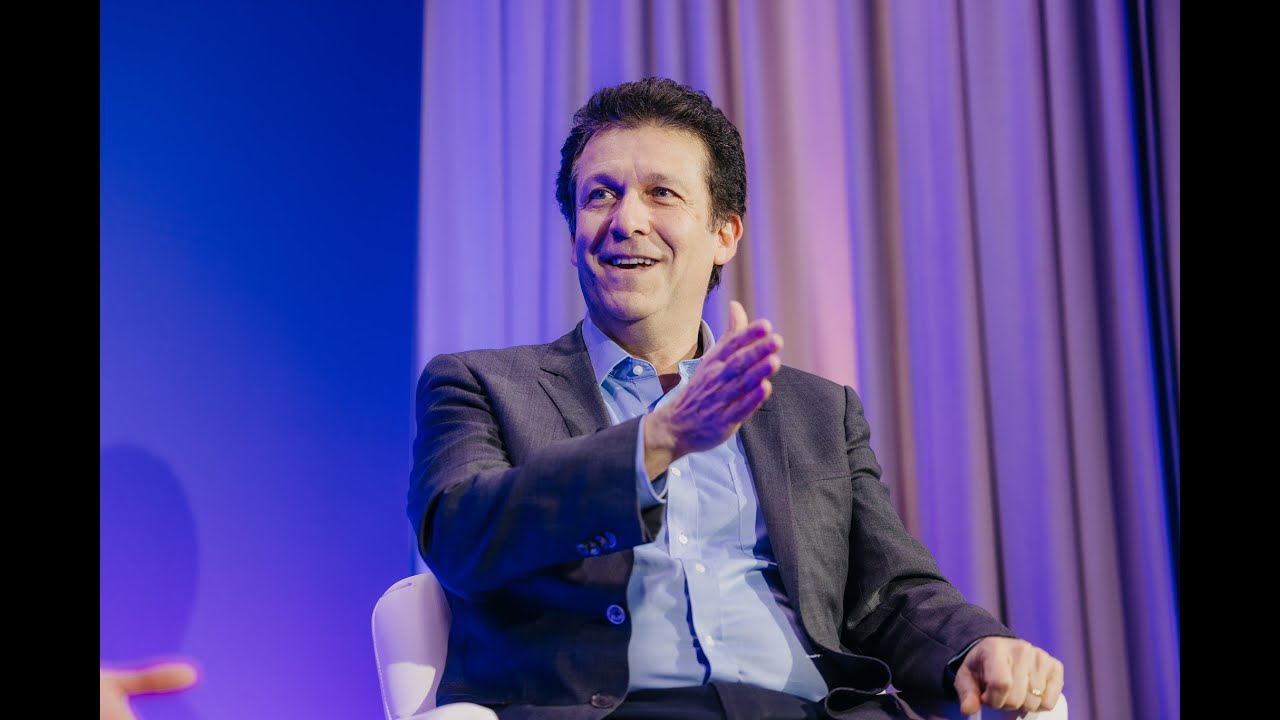
In 2021, Pfefer described his leadership style with a short phrase: “I work for you.” It puts the chief executive in a position of service, with a duty to help colleagues recognize and use their potential. There is also a demanding implication. A person who works for a team has to be available to it.
He has spoken about a mentor’s advice to avoid using rank in interactions with colleagues or people outside the company. His account connects that habit with trust and more candid communication. Anyone can print a title. Getting an honest answer requires a different sort of investment.
One example was especially practical. When senior hiring was taking longer than expected, he invited two younger professionals to take on the responsibilities of the people who would eventually become their bosses. He supported and mentored them. The situation offered an occasion to develop leaders inside the company while work still needed to be done.
There is a recognizable tension here. Companies ask for experience, yet somebody must first give a person the opportunity to acquire it. Pfefer’s example makes the senior leader responsible for helping that transition happen. The work is real, and the support has to be real as well. Leaving a vacancy untouched is also a decision, though it is rarely introduced with a speech.
“I work for you.”
Guillaume Pfefer on his leadership approach, 2021
When two companies become one job
In October 2023, Flagship announced the combination of Senda Biosciences and Laronde to form Sail Biomedicines. Pfefer became chief executive and a board member. John Mendlein became executive chairman. The announcement placed Pfefer in charge of a company assembled from two existing organizations, each bringing its own work and people.
A merger has a wonderfully economical public vocabulary: combine, integrate, appoint. The work those verbs describe is considerably less compact. Decisions have to be made about responsibilities, priorities and how the organization will function. People need to understand where their experience belongs in the new arrangement. The announcement establishes a company on paper; its colleagues establish it in practice.
For Pfefer, the appointment continued a career concerned with bringing different kinds of expertise together. It also changed the scope of the task. A leader of one organization now had responsibility for a combined business. The larger set of possibilities came with the everyday obligation to make the combination usable.
That is why this chapter belongs in a personal profile as well as a corporate history. A chief executive’s biography can conceal the experience of changing the organization around him. Here, the change itself became the job.
- 2012President & CEO
Kala Pharmaceuticals - 2020CEO-Partner
Flagship Pioneering - 2023Founding CEO
Sail Biomedicines - NowExecutive leadership
NextBio
An impatient person takes a pause
Pfefer has described himself as a “relatively impatient human being.” The admission gives some personality to a career otherwise expressed in formal appointments. It also makes his departure from Sail an interesting decision. After almost five years leading Senda and then Sail, he announced that he was stepping down and leaving his CEO-Partner role at Flagship.
In his public message, he said the decision had been difficult. He looked forward to time with family and an opportunity to reflect before deciding what would follow. The pause had a purpose of its own. It gave him room to consider what he had learned.
That moment changes the rhythm of the story. A résumé normally moves briskly from one position to the next, with the gaps discreetly ironed flat. Pfefer chose to describe the interval. It is an ordinary human wish, expressed by someone whose working life has involved a considerable amount of urgency.
Experience, available when needed
NextBio’s company profile dates its founding to 2025. Its website now lists Pfefer as CEO, leading a team that provides board and management support to biotech companies. The proposition is access to experienced executive leadership when a business needs strategic, operational or transactional help.
This latest chapter changes how leadership is supplied. Instead of every company recruiting an entire executive team through the traditional process, NextBio offers a team that can be deployed for an engagement. Its public roster includes expertise in finance, corporate development, strategy and business operations. The company presents flexibility and speed as central to the service.
For Pfefer, the connection to his earlier work is clear. He has managed within a global company, led an emerging business, worked within a venture-building network and taken responsibility for a merger. NextBio puts that experience into a different arrangement, alongside colleagues with their own professional histories.
The proposal raises a practical question about what a company needs at a particular moment. It might need judgment before it needs a permanent appointment. It might need several disciplines working together before it can sensibly decide how to build its internal team. NextBio’s model addresses those choices through shared executive capacity.
Pfefer’s story ends, for now, with another beginning. The titles have changed, and so have the organizations. The need to learn from other people remains. In Mexico, that need was immediate and impossible to disguise. At NextBio, it is built into the idea of the business: bring people with different experience together, give them work that matters, and help them do it.