The awkward part of addiction treatment is that a medical appointment happens inside a life. There may be a job to keep, a ride that falls through, or nowhere reliable to sleep. Groups Recover Together has built its business around that awkwardness. Medication belongs in the model. So does the machinery that helps someone return next week.
- Outpatient opioid treatment pairs medication with a weekly, counselor-led group.
- Health-plan contracts help pay for care beyond the prescription.
- Its reported results are encouraging. Reading them properly requires watching who stays in the data.
The prescription had company
The first Groups clinic opened in Claremont, New Hampshire, in March 2014. Co-founder Jeff De Flavio was a Dartmouth medical student watching a treatment-access problem close to campus. Alongside co-founders Joy Sun and Silas Howland, he helped build a service for places and people poorly served by existing options.
The company’s own origin story turns on a patient who initially improved, then struggled with other substances. De Flavio concluded that physical symptom relief needed a wider circle of support. That account explains the design: medication, a community of peers, and help with social needs. The company name is unusually literal.
Members today meet a counselor or recovery consultant and a physician during intake. When clinically appropriate, a prescription follows. Buprenorphine-based treatment addresses opioid withdrawal and cravings; weekly groups offer a place to discuss difficulties with people facing similar problems. Practical support addresses needs such as housing and employment.
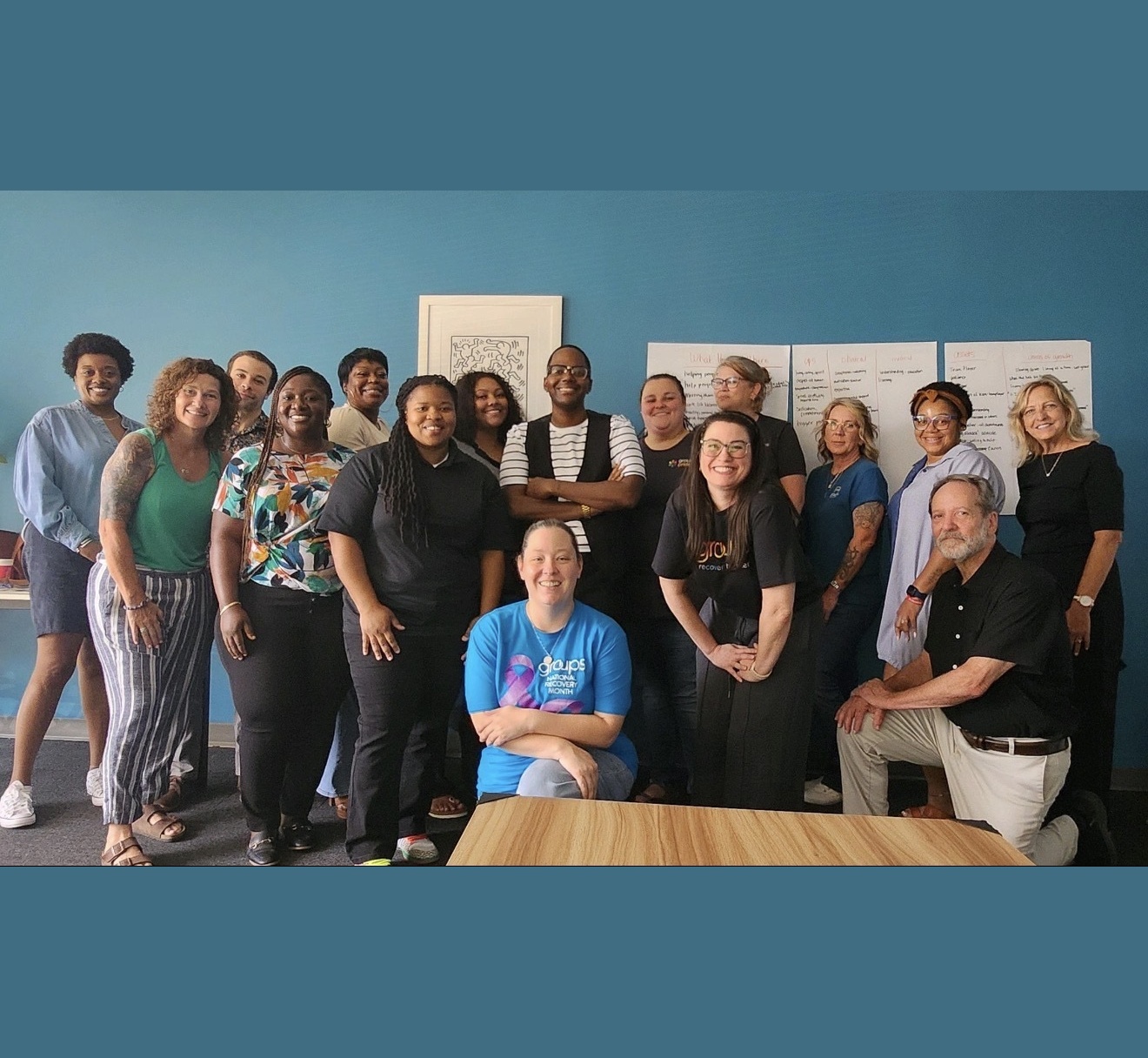
The offering occupies a useful middle ground: ongoing outpatient care delivered through local offices and a phone app. Members can attend online or in person. Evening and weekend options accommodate ordinary schedules. This is a clinical service with prescribing and counseling, so downloading the app begins a care relationship rather than a self-directed wellness routine.
The business between appointments
A weekly group sounds inexpensive until someone must arrange it, staff it, follow up after an absence, and solve the problem that caused the absence. The business model matters because those tasks consume time even when they produce no tidy, standalone medical procedure.
Groups uses value-based contracts with health plans: reimbursement is linked to outcomes and the broader cost of care. That creates room to fund counseling and support together. Insurers and public programs are the paying side of the relationship; members are the people the service must work for. Its expertise spans addiction medicine, counseling, care coordination, and payer contracting.
There are two prices to keep separate. In 2017, Inc. reported a $65 weekly program fee. That is a historical price. Today, Groups accepts Medicaid, Medicare, and many commercial plans, with self-pay options in eligible states. A prospective member needs a coverage check and an individual cost explanation before treating any old number as a quote.
The expansion itself required capital. In May 2021, Groups raised $60 million in a Series C led by Oak HC/FT. The financing supported geographic growth and a better digital experience following its pandemic move to virtual care. The subsequent hybrid approach kept local offices in the picture.
Count who stays. Then ask why.
Groups’ 2026 outcomes report records 21,315 people scheduling intake appointments in 2025, with a median wait of one business day from first call. Those are scheduled appointments, not 21,315 completed treatments. The distinction matters because getting through the front door and remaining in care are different achievements.
Company-reported retention 180 days after starting care. Insurance cohorts describe different populations; this chart does not establish a causal comparison.
Across those insurance cohorts, the report puts six-month retention between 62% and 67%. It also reports near-universal remission among members retained for at least 180 days, defining remission through 90 consecutive days without illicit opioid use confirmed by testing. That denominator excludes early departures. It cannot tell a new member that their own probability of recovery approaches 100%.
An independent view is more restrained. In September 2025, the Peterson Health Technology Institute reviewed virtual opioid-treatment solutions, including Groups. Across medication-focused offerings, outcomes were comparable to usual care, with some modest retention improvements. Its category assessment did not establish sweeping cost savings. That is useful context, rather than a verdict on every Groups clinic.
There is also friction the company has tried to fix. Its latest report describes targeted outreach after missed groups and practical barriers. It says 40% of missed first groups were successfully rescheduled. The lesson is portable: give someone responsibility for the failed handoff. Sending another reminder is only useful if the underlying obstacle can be addressed.
“Our mission is to change lives.”Groups Recover Together
Compassion has operational consequences. A 2017 account described a member discharged after continued opioid use, then readmitted. Current Groups policy says positive drug screens are not punished. The public record does not establish what prompted that change. It does show why a recovery provider’s response to difficulty deserves as much attention as its welcome message.
A bigger circle, a harder operating job
Under CEO Cooper Zelnick, Groups completed its first acquisition, Better Life Partners, on March 31, 2026. Reporting in July said the deal roughly doubled weekly New England membership, from about 3,000 to more than 6,000. It also brought mental-health and virtual primary-care capabilities. The purchase price was undisclosed.
Groups competes alongside providers such as Bicycle Health, Boulder Care, and Workit Health. Its recognizable combination is local infrastructure, recurring groups, medication, and outcome-linked contracting. Availability still depends on geography, coverage, and clinical fit. Its own terms exclude emergencies; outpatient participation also requires ongoing engagement. A convenient meeting cannot meet every level of need.
The idea readers can borrow is precise: build around the next successful interaction. Groups makes that an operating problem involving schedules, clinicians, peers, and follow-up. For a company selling continued care, the revealing product is what happens when someone nearly disappears.