The Profile
Nick Gulino
He advised governors. Then he crossed the table and started selling them a better way to treat addiction.
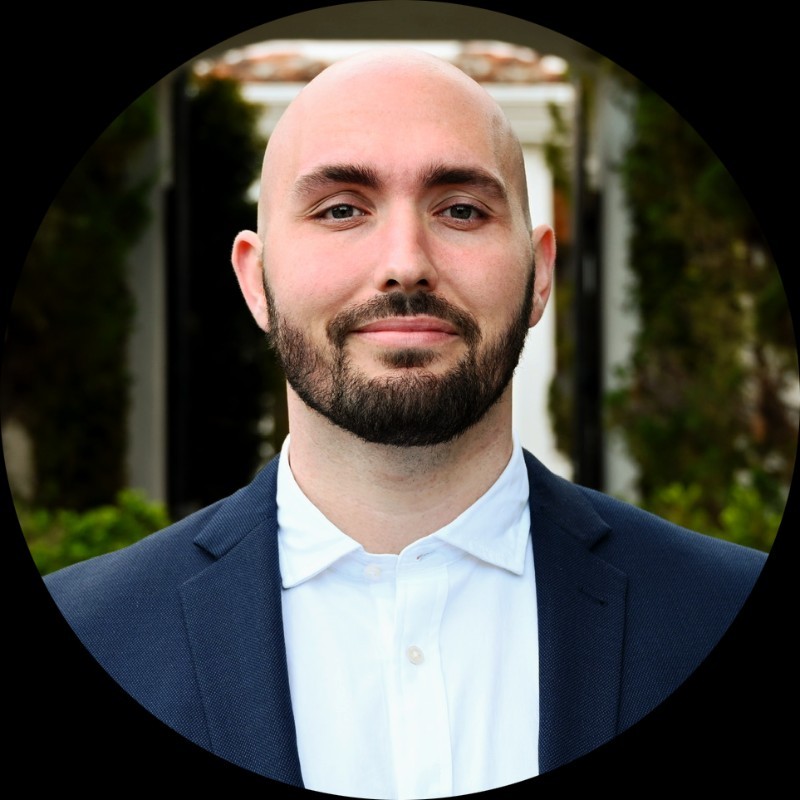
He advised governors. Then he crossed the table and started selling them a better way to treat addiction.
Nick Gulino runs Recover, a telehealth company that treats addiction in partnership with state and county governments. The pitch is not sympathy. It is arithmetic.
Most companies that sell to governments start as outsiders trying to get in. Gulino went the other way. He spent roughly a decade inside the public sector - a leadership role in McKinsey & Company's government practice, time advising multiple state governors, and a stint serving in the White House - and then walked out the front door to build a company that sells back to it. He knows where the budget lines sit. He knows which promises agencies have heard a hundred times. That fluency is the product as much as the technology is.
Recover, the company he founded in 2021 and steered through Y Combinator's Winter 2021 batch, delivers evidence-based addiction treatment over telehealth. Its stated mission is plain to the point of stubbornness: "provide best-in-class treatment to anyone who needs it, wherever they need it, whenever they need it." The harder part is making that real for the people the system usually misses - low-income and underserved patients who can not absorb the price of a traditional program.
So Gulino built the company around a number. Recover's approach costs roughly a tenth of what conventional rehab runs. When the buyer is a county trying to stretch a public-health budget across thousands of residents, a 90% cut is not a feature. It is the whole conversation.
Most rehab is sold on hope. Recover is sold on the spreadsheet - and on what happens after the patient logs off.
- The Recover thesis, in one lineGulino's resume reads like it belongs to two different people. One of them attended a "last chance" high school and started higher education at a community college. The other graduated from UC Berkeley and then Yale Law School, class of 2018. They are the same person, and that distance is the point. He has stood at both ends of the American opportunity ladder, which is a useful vantage when your customers are the people most likely to fall off it.
The legal training did not send him toward a courtroom. It sent him toward policy, then toward consulting, then toward the operational machinery of government - the rooms where treatment programs are funded, designed, and quietly judged by whether they work. By the time he started Recover, he had spent years watching addiction services from the inside, learning which interventions hold up and which ones only look good in a brochure.
The conventional addiction-treatment business has a structural problem: many programs are built to bill, not to fix. Marketing budgets are large, clinical results are murky, and patients churn through expensive cycles. Gulino's bet is that evidence and economics, pointed in the same direction, can outcompete that. Treatment delivered over telehealth removes geography as a barrier. Government partnerships remove price as a barrier. Data keeps the focus on outcomes rather than optics.
It is a quietly radical idea for the sector: that the cheapest version of care could also be the most effective, because effectiveness is what reduces the costly downstream events that governments actually pay for. By 2024, Recover reported around $3.3M in revenue with a team of roughly two dozen - small numbers that hint at a model finding its footing rather than a company chasing scale for its own sake.
Gulino is not pitching a wellness app or a lifestyle brand. He is trying to move a stubborn, deadly, underfunded corner of public health by making the math impossible to argue with. The work is unglamorous - integrations with county systems, clinical protocols, the slow grind of public-sector procurement - and that may be exactly why it suits him. He has spent his career in those rooms. He simply decided to show up to them with a company instead of a slide deck.
What makes him unusual is not any single credential. Plenty of founders have a Yale degree or a McKinsey stint or a YC stamp. Far fewer have the full arc - last-chance high school to the White House to the founder's chair - aimed at a single, unfashionable mission and held there. The story is not the climb. The story is what he chose to do once he reached the top of it.
His schooling runs from a "last chance" high school all the way to Yale Law. Same person, opposite ends of the ladder.
He has worn nearly every hat in the policy world - consultant, gubernatorial advisor, White House staffer - before ever becoming a founder.
Recover is run out of Del Mar, a small beach town just north of San Diego. Not exactly Silicon Valley.
The company's whole edge is a number: treatment at roughly 10% of the cost of traditional rehab.
His customers are governments - the same institutions he spent a decade working inside before he sold a thing.
Recover went through Y Combinator's Winter 2021 batch, the same program behind Airbnb, Stripe, and Coinbase.