In April 2026, Greg Solano announced a promotion of sorts that sounded very much like a return. He was leaving the chief executive's desk at Yuga Labs, the company he had helped create, and becoming chairman of its board. Michael Figge would run the day-to-day business. Solano, who had spent two years steering a company associated with grinning cartoon apes through a much less cheerful market, said he could concentrate again on "creative direction, writing, and figuring out insane ideas." It was an unusually clear description of a founder's preferred habitat.
The desk he was leaving had never been the obvious destination. Solano studied poetry. He worked in book publishing. His friendship with future co-founder Wylie Aronow began, by their telling, with an argument about David Foster Wallace at a Miami dive bar. A literary quarrel seems an improbable origin for a technology company, although the internet has produced stranger things. The more useful point is that these two were already practiced at inventing worlds and arguing over what made them convincing.
When they made Bored Ape Yacht Club in 2021, they gave people more than a picture of an animal. There was a swampy fictional club, a shared joke about newly rich crypto traders, and enough empty space for owners to fill in the rest. Solano's path from poetry to NFTs looks less like a sudden conversion when seen through that lens. He had been working with characters and audiences all along.
The editor at the dive bar
Solano grew up in a Cuban American family in Miami. He has said he wanted to write from the age of 11. After New York University, he studied for an MFA in poetry at the University of Virginia. He later called those years the best of his life: time to write, fast friendships, and an encounter with the woman he would marry, who first approached him because she liked his poems. Those details are small compared with the dollar figures that later surrounded Yuga, but they explain the shape of his attention.
Publishing gave him a more practical education. At a small house he worked on licensed material, including Harry Potter coloring books and World of Warcraft manuals. He liked the fact that, at the end of the process, there was a physical book. The irony was easy to spot after BAYC made his name: his best-known work lived on a blockchain, and people argued endlessly about whether a digital image could be said to live anywhere at all. Solano saw the point. He also wanted the club to spill into ordinary life.
He and Aronow met while each was studying creative writing. Aronow remembers being a David Foster Wallace admirer, with Solano taking the opposing position. Literature supplied the icebreaker; a disagreement supplied the energy. Years later, in February 2021, Solano texted his friend a compact proposal: "Hey, you want to make an NFT?" There was no grand manifesto in that line. It is the sort of message a person can send before the implications arrive.
A club before there were members
The first idea was a shared digital canvas where buyers could leave their mark. Someone pointed out that such a canvas would quickly attract crude drawings. Aronow wondered where that behavior belonged. A dive bar bathroom wall was an answer, and the question shifted from image to setting: who would go to this place? Their imagined patrons were crypto traders who had made fortunes and remained, despite the money, bored enough to spend their hours online. Aronow sent Solano a long account of the premise. In it was a name that made the whole thing click: Bored Ape Yacht Club.
Solano and Aronow handled the creative side; engineer co-founders Zeshan Ali and Kerem Atalay built the technical side. Artists, including lead designer Seneca, gave the characters their visual form. That division matters. The apes were not drawn by the two writers, and the collection was never a solo act. Its unusual force came from fitting art, code, setting, and an invitation to participate into a product that could be understood at a glance.
The collection launched in April 2021 with 10,000 distinct ape NFTs. A buyer acquired a character and access to an online club, along with broad commercial use rights for that particular ape. A photograph is good at documenting a person; an avatar is good at letting someone perform one. BAYC allowed its owners to put a face on a screen and then make that face do things elsewhere, from merchandise to restaurants. Solano has recalled the surprise of seeing hundreds of holder-made businesses develop around the characters. The club's strongest trick was that members could contribute to its folklore.
The financial frenzy that followed was real, and so was the whiplash. Ape owners appeared on television and in music videos. Prices rose to levels that made the portraits look like tiny stock certificates with teeth. Then the NFT market cooled, and the company faced the hard question that follows any cultural flash: what should exist after the excitement? A world invented in a rush had to become a place worth revisiting.
When Gargamel had to introduce himself
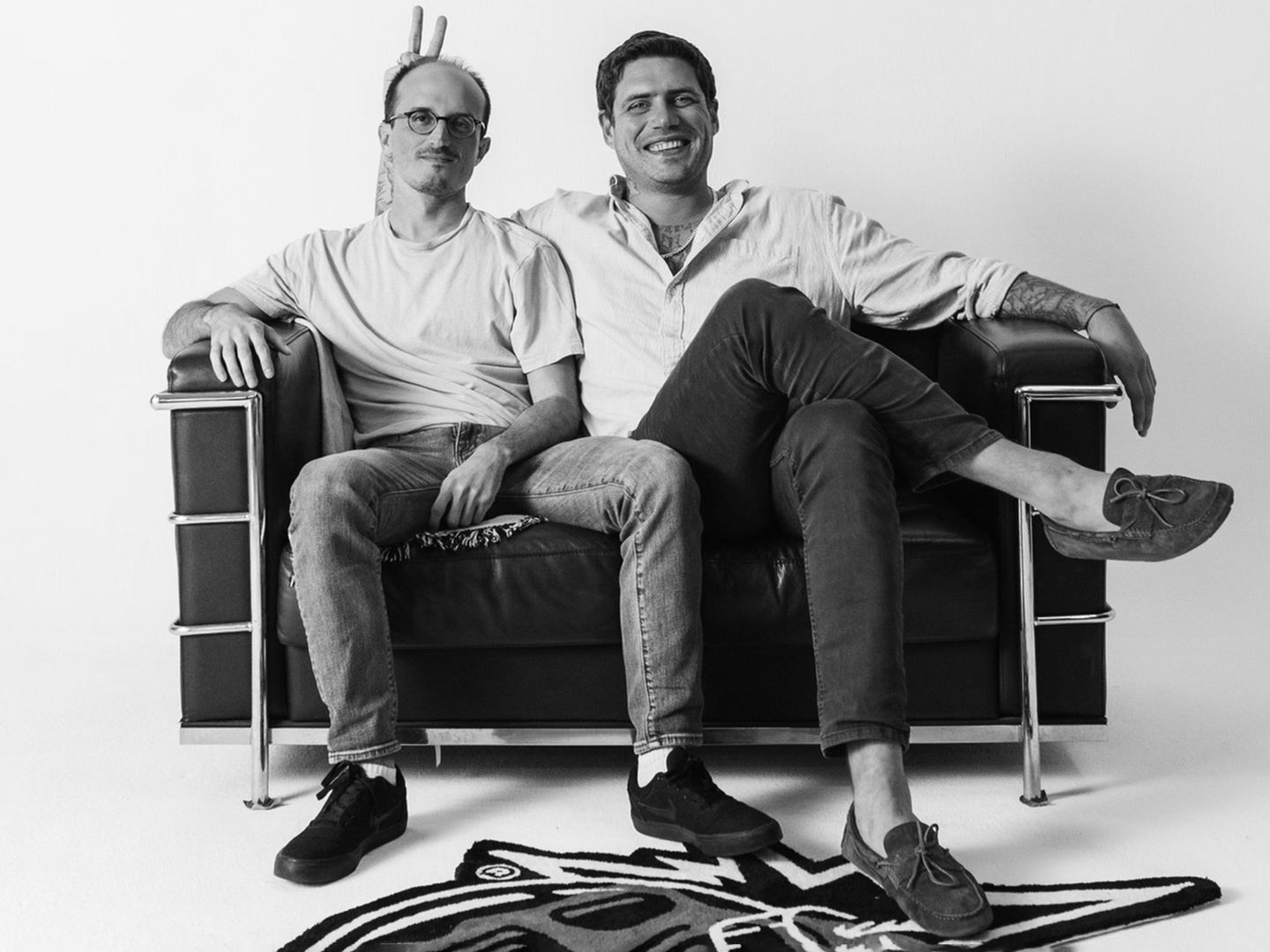
At first, Solano was better known as Gargamel, a name borrowed from the Smurfs' villain. Aronow was Gordon Goner. Their ape avatars stood in for their faces, an arrangement ordinary enough in crypto to feel natural inside the community and strange to outsiders watching a valuable company grow. In February 2022, a BuzzFeed News report identified the two men. Solano and Aronow then posted photographs of themselves. One of their first tasks was to tell family what, exactly, they had built.
Solano recalled having to explain the project to his father, who knew that his son worked in NFTs but had not been told the scope. He had kept quiet partly because he expected his father to tell everyone, right down to the woman at a neighborhood coffee shop. The story has a distinctly human scale: behind a pseudonym attached to a celebrated crypto collection was a son managing his dad's enthusiasm. For a while, anonymity had let the creators walk through their own gatherings as strangers. That privilege ended.
The reveal also altered the public bargain. A pseudonymous avatar is a character, and a founder is a person who must answer for decisions. Solano had to occupy both roles at once. His public interviews from the period show someone who could speak fluently about the playful premise while also talking about execution, ownership rights, and the expectations of a community whose assets could be traded every minute. The job had become larger than a writer's room.
"I never would have thought by making monkey JPEGs that all of a sudden you'd have businesses all across the world."Greg Solano, speaking in a 2024 interview
The CEO years
Yuga expanded the original club into related collections and a proposed social game world called Otherside. Its ambition was easy to understand: owners who already had characters and a shared story might want somewhere to meet and build. Turning that notion into a working product demanded engineering, money, and patience. The crypto market supplied enthusiasm in uneven amounts. The company also had to decide which projects deserved its attention.
In February 2024, Solano took the CEO role from Daniel Alegre. He described a need for a more crypto-native focus. The following months brought a restructuring, a smaller team, and decisions to place some gaming brands with partner Faraway. He talked about Yuga as a "product studio," with content and tools as its two recurring jobs. That description is revealing: even when running an organization, he framed its purpose around things people could use and stories they could enter.
The decisions were not weightless. Layoffs meant colleagues lost jobs. The sale of game properties showed that Yuga could not pursue every idea under one roof. In 2025, Solano was still defending the long horizon for Otherside, saying the company had sufficient cash to keep developing it for several years. The claim was about resources, not proof that the world would attract the audience its builders hoped for. A company can finance a destination; it cannot order people to love spending time there.
Otherside nevertheless clarifies the continuity in Solano's work. BAYC began with a club people could imagine joining. Otherside tries to turn participation into an actual shared space, with tools for builders and things to do together. The distance between a fictional bathroom wall and a multiplayer world is huge technically. As a creative proposition, it is a short walk: hand people a setting, then see what they make inside it.
- Before 2021Poetry, book editing, and licensed publishing work
- 2021Yuga Labs forms; Bored Ape Yacht Club launches
- 2022The founder known as Gargamel becomes publicly identified
- 2024Solano returns as Yuga Labs CEO
- 2026Michael Figge becomes CEO; Solano moves to board chair
A new seat, an old instinct
The April 2026 handoff put Figge, a Yuga veteran involved with Otherside, in charge of the next operational phase. Solano praised his eye for product quality and his ability to make a vision real. He also sounded relieved to have time for the work he considered his own. "Creative direction, writing, and figuring out insane ideas is still where I do my best work," he wrote. Coming from a chairman, that is a remarkably uncorporate job description. Coming from a former poetry student, it is entirely consistent.
There is a temptation to tell this story as a fable about the writer who stumbled into technology and found a fortune. That flattens the interesting part. Solano's literary training was part of the machinery. It helped make the first BAYC proposition legible and gave the collection a voice people could repeat. His book-publishing years taught him what it means for a character to leave the page and enter a larger world. The internet supplied new tools and an audience willing to treat ownership as participation.
He is now chair of a company still trying to build the world that its early fiction promised. Whether Otherside becomes a durable social place is a question for players, builders, and time. Solano's own direction is simpler. After a spell spent deciding which ideas the company could afford to pursue, he has returned to imagining what might be worth pursuing in the first place. For someone who once dreamed of being a writer, the next chapter comes with an unusually literal assignment.