At about three in the morning on May 1, 2021, Kerem Atalay called his fellow developer Zeshan Ali. Ali thought something had broken. The two had spent weeks putting together the technical parts of a new project called Bored Ape Yacht Club, and a late-night call from the person building it with you rarely sounds like good news. Instead, Atalay had news they could watch unfold: the ape collection was selling out. The website was up. The contracts worked. People were arriving.
There is a certain comedy in that scene. Four friends had created a fictional club for cartoon apes whose imaginary owners had become bored after getting rich. The project then made its founders confront a very real problem: how to serve thousands of eager buyers in one burst. For Atalay, the moment was less about a picture on a screen than about the system behind it holding together.
A club needed a door
The popular telling of Bored Ape Yacht Club often begins with Greg Solano and Wylie Aronow. They imagined the setting, the voice and the strange social invitation of the club. Both were drawn to the online communities that had formed around cryptocurrency. Solano was an editor; Aronow had a taste for elaborate stories. They had a premise and a name. Then they needed someone to make the thing work.
Solano called Atalay, a friend he had known during their time at the University of Virginia. Atalay knew Ali from studying computer science at the University of Maryland. Solano’s opening technical question concerned JavaScript. It was an understandable question from a writer entering a new medium, but blockchain contracts called for a different language. Atalay and Ali learned Solidity. Atalay later described that part as the easiest.
The difficult work sat between the pieces. A buyer had to encounter the site, purchase a token and find a community space that recognized ownership. Those steps involve different tools and different ways for software to fail. A smart contract alone was not a clubhouse. A lively Discord server alone was not a mint. The two developers had to connect an experience that could feel simple to a buyer precisely because it was complicated behind the scenes.
This was a young team learning as it built. The ERC-721 standard for non-fungible tokens already existed, giving the developers a starting point. But the surrounding product had to be assembled for this particular collection. Its technical design served a social promise: ownership of one of 10,000 ape portraits would double as membership in a digital club. The code had to know who held the key.
The tomato in the room
Atalay’s working name was Emperor Tomato Ketchup, borrowed from a Stereolab album. It is a wonderfully uncorporate signature for a company that would soon be discussed in boardrooms, courtrooms and culture pages. Solano went by Gargamel, Aronow by Gordon Goner, and Ali by No Sass. The handles belonged to the online setting in which the project was born, where an avatar might be better known than the person who owned it.
Atalay’s family background was less fanciful. His parents came from Turkey, and he described growing up mostly around Washington, D.C., as a normal suburban childhood. The computer science connection mattered more to BAYC’s beginnings than any origin myth. He had met Ali at Maryland; he had known Solano from Virginia. The founding team came together through actual friendships, with different skills close enough to call upon.
That division of labor deserves its own line in the story. Solano and Aronow developed the imaginative frame. Artists, led by Seneca on the original collection, created the apes. Atalay and Ali handled the engineering. None of those jobs could substitute for another. The visual gag needed characters. The characters needed a place to live. The place needed a way to admit members.
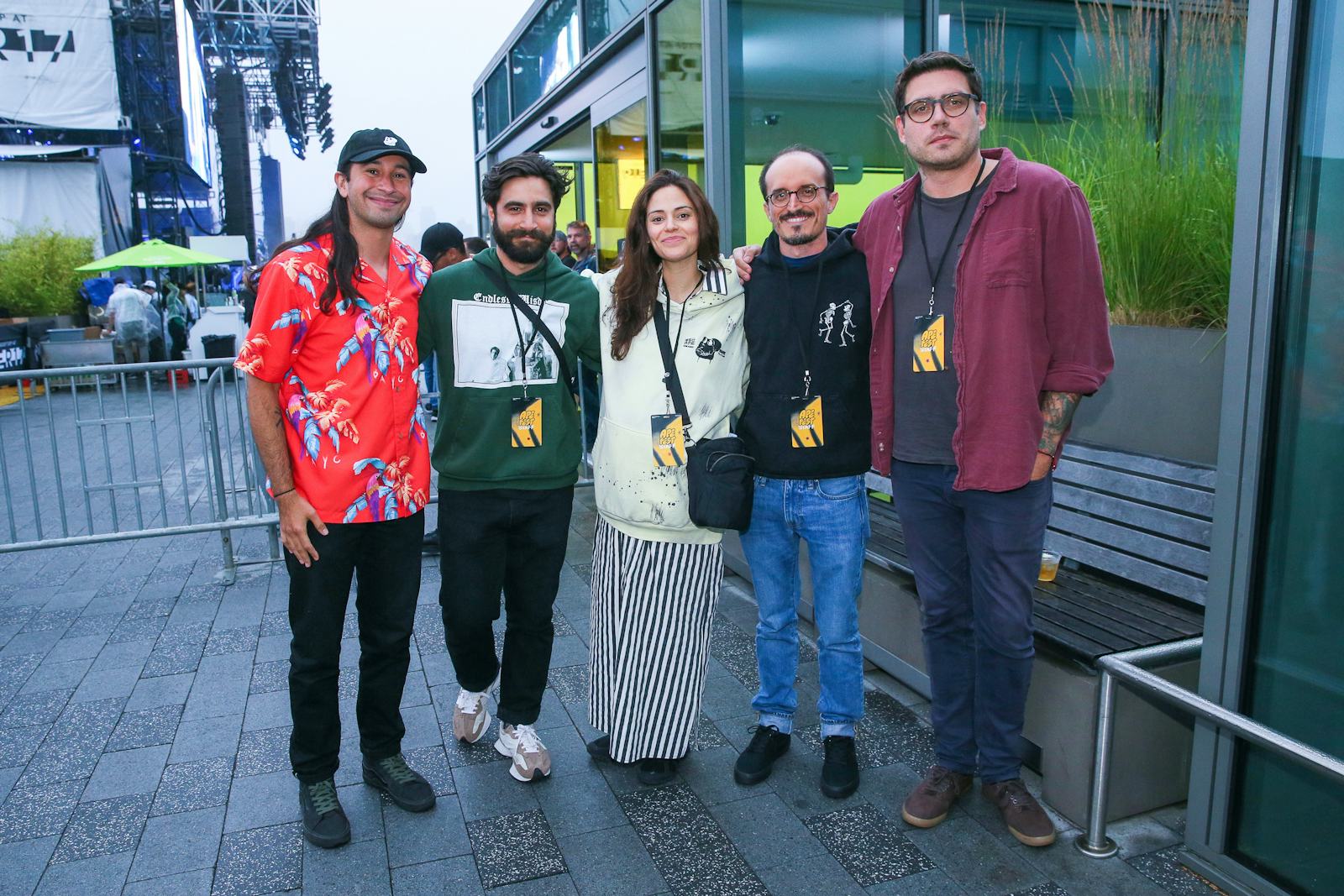
The collection’s presale and mint began in late April 2021. When the portraits were revealed, their initial price was about $200 each. Atalay’s call to Ali came as the supply disappeared. The surprise was shared. They had helped produce a real product, and the audience found it quickly. Soon all four founders were working at Yuga Labs full time.
A very public private club
The Bored Ape Yacht Club grew in ways a small founding group could not have treated as routine. The initial collection was followed by companion dogs in June 2021 and Mutant Apes that August. Owners used their ape pictures as profile images, and the club’s language traveled with them. The characters could be licensed by their holders, which encouraged new projects around individual apes. What had begun as a purchase flow and a Discord promise acquired the habits of a sprawling fan culture.
Fame brought another change: the founders’ online names no longer kept their identities out of public discussion. In February 2022, reporting identified Solano and Aronow. A few days later, Atalay and Ali posted their own names and photographs. Atalay said he wanted some control over the reveal’s tone, to make it celebratory. His post paired his face with his ape avatar and introduced Kerem to people who already knew Tomato.
The side-by-side image was a neat account of the period. One half belonged to a person sitting on grass in a blue shirt and cap; the other, to a tuxedoed cartoon ape. The club had made avatars familiar, then required the humans behind them to decide how visible they wanted to be. Atalay’s introduction kept the wit of the project while stepping into a different kind of accountability.
That summer, an ApeFest program even billed Atalay and Ali for live Solidity debugging. A software session among musical performances was an odd entertainment choice, unless the audience had followed the project closely enough to care about the machinery. Atalay joked online that people could watch them speedrun CryptoZombies, a coding tutorial. The joke worked because the club’s culture had room for both spectacle and highly specific developer humor.
From four founders to a company
The scale around Atalay’s work changed sharply. In March 2022, Yuga Labs announced a $450 million funding round at a reported $4 billion valuation. It acquired the intellectual property for CryptoPunks and Meebits. Its Otherside project pushed toward a shared digital world. None of those developments can be assigned to one engineer, but they show how far the organisation had moved from the first site that Atalay and Ali wired together.
The contrast is almost architectural. At first, the task was to open a club on the internet and let 10,000 portraits serve as passes. Later, the company had multiple collections, events, licensing questions and game ambitions. Each new layer asked different things of its technology team. The person who built an early system was now working within a larger organisation that could hire specialists with careers in established game companies.
In 2023, Mike Seavers was announced as Yuga Labs’ incoming chief technology officer. Atalay, who held the title, would stay on as a strategic adviser. The change acknowledged a new phase for the company and changed Atalay’s place in it. Public reporting establishes the announced transition; it does not turn the adviser title into a detailed account of his daily work. What remains clear is the sequence: early developer, CTO, then adviser.
It also offers a more useful way to think about a founder than a permanent job title. Startup roles are often temporary answers to a specific moment. In 2021, the answer was two computer scientists who could learn an unfamiliar stack and connect the parts before launch. By 2023, the question had changed. Atalay’s place in the story did not depend on occupying the same office forever.
What stays in the picture
The ape images remain the most portable part of BAYC. They fit in a profile circle, on a screen at a party, or in a headline. Atalay’s contribution is harder to reduce to a square. It lies in the join between a picture, a purchase and a place to gather. That kind of work rarely makes a good avatar. It becomes visible when it fails, and almost disappears when it succeeds.
Return to Ali at three in the morning, expecting trouble when Atalay called. The reaction was reasonable. They had spent the launch solving unfamiliar problems and there were many ways for a digital club to keep its guests outside. The news instead was that people were getting in. Their odd little clubhouse had a working door, and the internet was walking through it.