The awkward building is usually the interesting one. A tired two-family needs a gut renovation. A Main Street block has tenants downstairs and bare studs upstairs. A buyer has a signed contract, a credible plan and a closing date that does not care how many committees sit inside a bank. Grand Coast Capital Group built its company around that awkwardness.
The Cohasset, Massachusetts firm is a direct private lender and capital adviser for experienced real estate investors, operators and developers. Its renovation and construction loans generally run from $100,000 to $4 million; bridge loans stretch to $5 million. Published terms are commonly 12 to 18 months. These are business-purpose loans to real estate companies, not mortgages for someone buying a home.
That distinction explains the economics. Grand Coast is not trying to beat a bank on price. It is selling a scarce combination of speed, certainty and a structure that fits a property while it is changing. The borrower buys, repairs or stabilizes the asset, then exits by selling it or refinancing into cheaper long-term debt. Grand Coast gets its principal back, recycles the capital and starts again.
Those are company-published cumulative figures, last updated on its site in 2023. They make the strategy legible: this is a repetition business. Grand Coast does not need one skyline-defining trophy. It needs many sensibly margined loans, each secured by a real asset, each small enough that a single bad address does not swallow the portfolio.
The insight was under $2 million
Jeff Carter saw the opening in 2010. He had worked in real estate private equity and development, including acquisitions, fundraising, permitting and construction. The post-crisis banking system had become slower and more constrained. Small real estate loans - then defined by Carter as values below $2 million - demanded plenty of underwriting work but produced modest fees for a large institution. Investors still needed them. Banks simply disliked the ratio of paperwork to payoff.
Carter spent more than two years researching the niche and the right fund structure. Fairway America helped shape an open-ended mortgage pool. In 2013, Carter launched Grand Coast alongside managing directors Paul Esajian, Than Merrill and Konrad Sopielnikow. The young fund raised $3.5 million in its first month, deployed it, and reported another $2 million committed. The company said commitments passed $5 million by November.
“We have raised over $3,500,000 in our first month of operations, effectively deployed all of this capital into quality deals.”Jeff Carter, at the launch of Fund I in 2013
What changed Carter's mind from studying the market to entering it was not a clever piece of software. It was proof of unmet demand, access to deal flow and a structure that aligned the manager with investors. The founding group brought more than 40 years of combined real estate, lending, development and commercial investment experience. Three of the principals were associated with A&E's Flip This House, which made the borrower world less theoretical.
Money is the input. Time is the product.
Consider a 47,000-square-foot mixed-use building in downtown Manchester, New Hampshire. It was fully occupied. The buyer was experienced. Grand Coast had already lent to the sponsor. The requirement was speed, so the firm supplied a $3.5 million bridge loan at 75 percent of the purchase price. Or take the nearly complete 42,000-square-foot historic redevelopment in Maine: $4 million to refinance debt, execute tax credits and finish 25 apartments above commercial space.
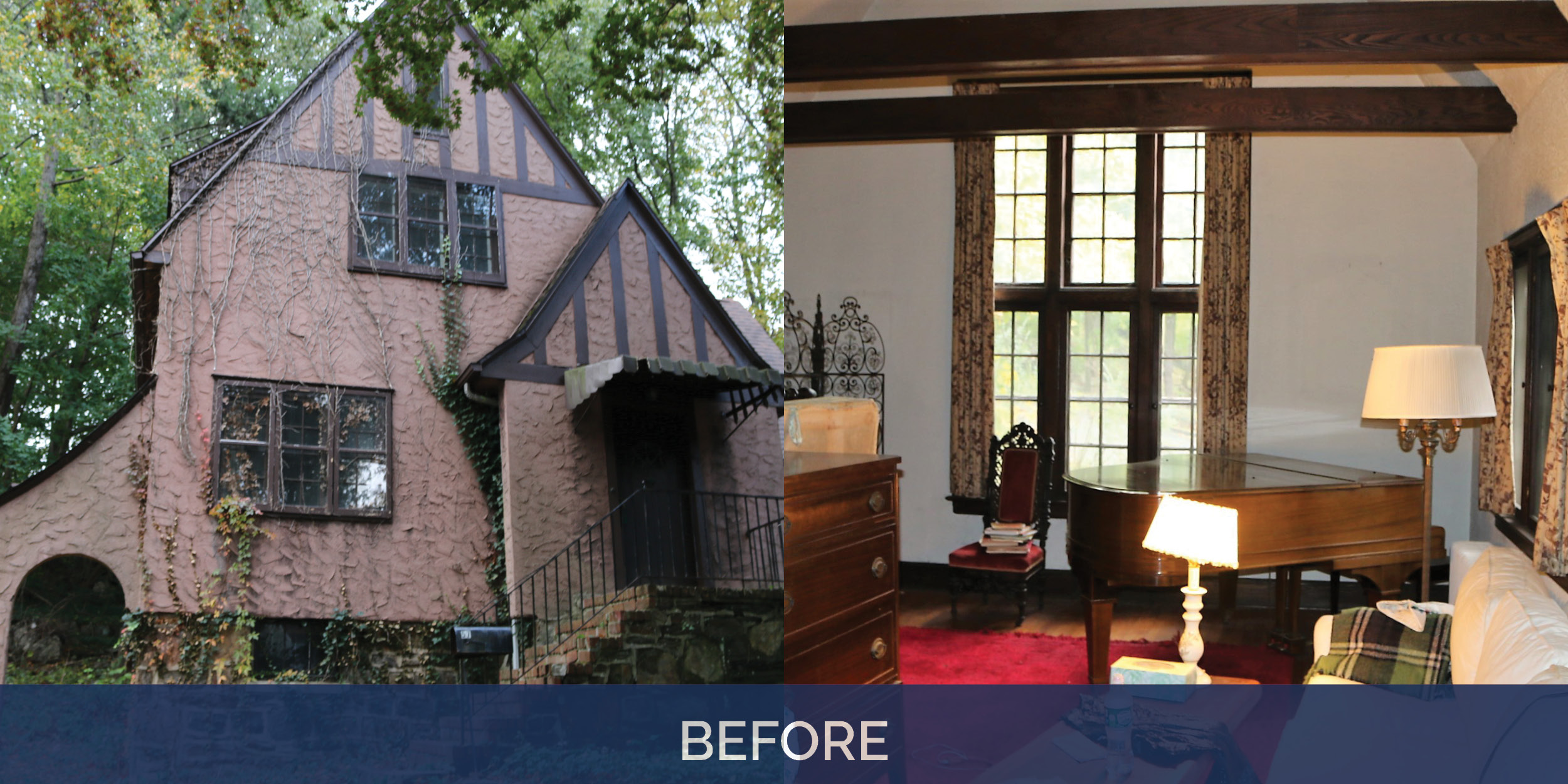
At the smaller end, a first-time Grand Coast borrower took a $481,000, six-month renovation loan on a 1929 Tudor in Old Greenwich, Connecticut. The plan added a bedroom and bathroom and opened the living space. These projects differ in scale, but they share the same shape: an asset in transition, a short clock and an identifiable second financing event.
Grand Coast makes that path visible because uncertainty is expensive. A bidder with reliable capital can negotiate differently from one waiting for a committee. This is also why repeat borrowers matter. Happy Sands Home Solutions said Grand Coast funded more than half of its first 20-plus rehab purchases over three years. Familiarity can remove discovery work from the next transaction, though it should never remove underwriting.
The first failure is usually the optimistic spreadsheet
In renovation lending, the earliest crack often appears in the assumptions: repairs cost more, the after-repair value comes in lower, permits take longer or the refinance lender dislikes the finished income. Grand Coast's answer is a stack of boundaries. Its published renovation program requires meaningful borrower equity, generally caps leverage at 85 percent of total cost and 70 percent of after-repair value, and asks for minimum credit scores. Bridge deals need debt coverage and a plausible route to refinance or sale.
Three guardrails, not promises
*A historical small-balance portfolio snapshot published by placement adviser Castle Placement. Program maximums and actual terms vary by loan.On the investor side, the language reverses the usual sales pitch. The website says to evaluate risk first and return second. Capital preservation begins with cost basis and downside protection; current income reduces basis; smaller deal sizes provide more opportunities to diversify. Fund I was described as holding first-position mortgages. It accepts accredited investors, a reminder that private funds are neither bank deposits nor liquid public bonds.
This two-sided model is the quiet machinery beneath the loan products. Borrowers want short-duration capital with enough flexibility to tolerate demolition dust, changing rent rolls and a building that looks worse before it looks better. Investors want income, collateral and a manager capable of saying no. Grand Coast stands between them, originating the loan, reviewing the asset, servicing the payment stream and managing the portfolio. The company earns through interest and loan-related fees while its funds put private capital to work. A loan that pays off creates both cash for investors and room for the next borrower.
That also locates Grand Coast in the market. Below it are individual hard-money lenders, often fast but limited in capacity. Beside it are regional debt funds and mortgage brokers. Above it are national platforms such as Kiavi, Lima One, RCN Capital and CoreVest, plus banks willing to lend once a property is stable. Grand Coast's advantage is not scale for its own sake. It is the combination of direct money, New England deal knowledge and a team trained across acquisitions, construction, appraisal, underwriting and asset management. A broker finds a lender. A direct lender must live with the decision.
What did it cost? For borrowers, Grand Coast does not publish a universal interest rate or fee schedule, so the honest answer is deal-specific. The visible costs are structural: borrower cash in the project, short maturities, interest during construction and a refinance or sale that must happen on schedule. Grand Coast advertises no upfront fees, but fast private capital is typically chosen for execution, not cheapness. The right comparison is not simply private rate versus bank rate. It is private rate versus losing the property, missing a construction window or carrying an unfinished asset.
What to steal - and when it breaks
The copyable lesson is broader than lending. First, find a job that large incumbents find operationally annoying. Second, narrow the customer: Grand Coast targets seasoned real estate businesses, not anyone with a hammer and a television habit. Third, turn speed into a documented process rather than improvisation. Fourth, make the customer's next step explicit. The best bridge product is designed backward from the other side.
The differentiation is human and local. National platforms can advertise instant quotes and broad coverage; banks can offer lower rates to stabilized properties. Grand Coast sits between them with direct capital, flexible deal structures and judgment accumulated across renovation, development, underwriting and asset management. Its current footprint is described chiefly as New England, even though historical deals and announcements reached farther across the country.
Its hiring history reinforces the point. In 2017, Grand Coast added commercial originators, a processor-closer, an underwriter and an asset manager; by its own account, it had grown from one person to nearly 20. The titles are less glamorous than “growth hacker,” and more revealing. Origination brings a deal in. Processing makes it closeable. Underwriting tries to break the assumptions. Asset management watches what happens after the wire lands. Private credit is a chain, and the culture Grand Coast describes - reliability, timely execution, risk before return - assigns an adult to each link.
When this does not work
Private bridge debt is a poor tool when the exit depends on heroic appreciation, the borrower lacks contingency cash, permits are speculative, the rehab budget has no cushion or the stabilized property will not support permanent debt. It also loses its advantage when a conventional loan can close comfortably before the deadline. Speed is valuable only when the underlying deal survives being late, wrong or both.
There is no mystery in Grand Coast's public numbers. A $470 million lending record was built address by address, inspection by inspection, payoff by payoff. The company occupies the messy middle because the middle repeats: buildings are forever becoming something else, and their owners regularly need capital before the transformation is complete.
That is the useful observation. Grand Coast did not invent the bridge loan. It chose a specific corner where reliability changes a buyer's odds, wrapped experienced judgment around private capital, and made the transition itself the market. In finance, boring repayment is the achievement. Four hundred million dollars of published payoffs suggests the bridge has carried quite a lot of traffic.