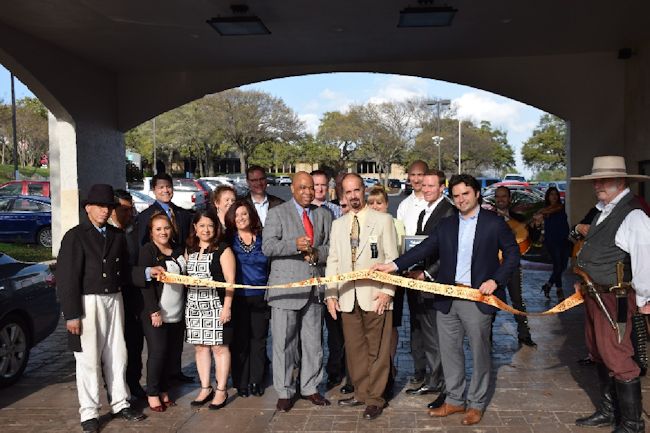
A hotel ribbon-cutting is an unusually cheerful way to photograph a financial transaction. There is a ribbon, of course, and the people who have earned the right to stand near it. At the Embassy Suites in San Antonio in 2017, Michael Collier stood among hotel staff, executives, and business partners after an eleven-month renovation. The scissors could do their work in seconds. The investment had taken rather longer.
That difference in time runs through Collier’s career. A guest needs a room tonight. An owner needs a plan that survives years. As founder and CEO of Hotel Capital, he has worked on both the money that keeps a property moving and the decisions that change what the property becomes. His hotels have acquired new furniture, new brands, new partners, and, sometimes, a quite different purpose.
A business born before the lobby was ready
The initial idea for Hotel Capital dates to 2008. During the Great Recession, hotel owners Collier knew were facing defaults and foreclosures with few financing alternatives. Some were friends. The practical problem was speed: a property under pressure might need money before a conventional process could deliver it. Hotel Capital’s early approach was to raise investor funds for bridge loans.
The company’s formal founding followed in 2010. Its work expanded into subordinate debt and mezzanine lending, with loans serviced in-house. As banks auctioned hotel loan notes, the firm also financed owners who could buy back their debt at a discount. The owner needed enough capital to close the purchase; a reduced debt burden offered a route to retaining the property.
By 2012, the business had begun acquiring hotels for its own equity portfolio. The firm’s account of that period describes properties needing operational improvements, renovations, or both. Collier’s job had widened. Supplying money to an owner and becoming the owner bring different responsibilities, even when they begin with the same conviction that a hotel has another useful chapter ahead.
Scissors, suites, and seven million dollars
San Antonio made that work visible. Hotel Capital and ORIX Real Estate Americas were involved in the Embassy Suites renovation celebrated in March 2017. The project cost $7 million and reached across the building: guest accommodations, the atrium, the bar, restaurant, and meeting facilities. It was an eleven-month undertaking, rather than a weekend change of cushions.
All 216 suites received new furnishings and finishes. Four family-style suites were created, and the eighth floor became a premium suite level. The redesigned atrium gave guests places to work, eat, and sit together. The changes were specific enough to matter to people who would never read the investment announcement.
In the ribbon-cutting photograph, Collier is one member of a group. That is a fair picture of this kind of ownership. Capital partners, hotel management, staff, and brand executives all have a part. A spreadsheet can describe an improvement budget. It takes considerably more people to turn that budget into a room someone wants to book.
The hotel that went back to its first idea
In Cincinnati, the proposed second life involved a return to the first. The building at 2 Garfield Place had been constructed in 1981 with apartments and retail space, then converted into an all-suites hotel in 1990. Hotel Capital and partners bought the Garfield Suites Hotel in 2013. By 2015, the company had bought out its partners and was planning another conversion.
The 153-key hotel was still operating profitably. Even so, the plan was to turn it into an apartment community because the company expected the new use to produce better investment returns. Collier described the intended apartments as upscale, with rents not significantly above the market. At the announcement stage, construction was expected to begin in early 2016.
The proposal gives his work a different dimension. Preserving a building’s value can require reconsidering the business inside it. Here, the building already had an apartment history. The future being discussed had a familiar floor plan, at least in principle. It was a proposed change of use, with the outcome still ahead of the announcement.
Why the road led through Orlando and Metairie
Collier is based in Newport Beach, while Hotel Capital’s company profile identifies Indianapolis as its headquarters. The firm’s activity has reached well beyond either city. In December 2017, it announced an Orlando office, alongside its Indianapolis headquarters and an existing San Diego satellite office.
Collier said a Florida office had been a goal for years. His explanation centered on Orlando’s hotel demand, employment growth, and pool of hospitality workers. He also wanted to build an investment team there. For a financing business, geography can mean both a market to invest in and a place to find the people who understand it.
That same year, Hotel Capital acquired the 181-room Sheraton in Metairie, near New Orleans. HP Hotels received the management contract, and a substantial renovation was planned. Collier’s account of the attraction was geographical again: a corporate corridor between the airport and downtown. The location mattered to his investment argument before any proposed improvement had been made. Ownership, management, and the surrounding city each had a role in the plan.
A brand change with a very long calendar
The Dallas Holiday Inn Market Center brought another constraint into view. Hotel Capital announced its acquisition in April 2018, with a plan to renovate and convert the hotel to Marriott’s Delta brand. Collier said the firm had looked for a Dallas investment for years before finding this deal.
The intended changes included a redesigned lobby and food-and-beverage areas, guest-facing improvements, and ten additional rooms. The projected total cost of the fully renovated project was about $25 million. These were plans at acquisition, rather than completed results.
The awkward detail was the timing. A limited remaining term on the Holiday Inn license, combined with a wait of almost two years before the Marriott renovations could begin, made the financing difficult, Collier explained. A prospective owner had to account for the hotel it was buying and the hotel it hoped eventually to operate.
Brand names make tidy signs. Their agreements can make less tidy calendars. This purchase illustrates the coordination required before a rebranding proposal can become a working business: the money and the schedule have to agree with each other.
Chicago made it personal
In June 2018, Hotel Capital announced that it had acquired the Tremont Chicago from Marriott, together with the property associated with Mike Ditka’s steakhouse. Collier described owning a hotel in downtown Chicago as a lifelong dream. Here was an acquisition with a personal ambition attached to it.
He also emphasized the existing relationships around the transaction: a repeat lender, capital and business partners, lawyers, brokers, and Marriott, already a franchisor on other hotels in the portfolio. His intended next step was a renovation into an independent upscale boutique hotel. The familiar participants mattered alongside the unfamiliar opportunity.
The restaurant added its own negotiations. In October 2019, Ditka’s received a lease extension allowing it to remain open another year. Collier expressed a wish to keep it in place. A hotel buyer had acquired a building whose restaurant already meant something to its patrons.
“We have great respect for the coach and the restaurant and we would like them to stay.”
Michael Collier, October 2019
A restaurant lease is a reminder that a property arrives with relationships as well as rooms. An investor may have a new plan. The people already attached to the place have plans of their own.
Colorado supplied a completed chapter
The DoubleTree Denver-Westminster offered a clearer account of a plan carried through. A Hotel Capital and ORIX joint venture sold the 186-room hotel to an Encore Hospitality affiliate in January 2019. Collier described an acquisition made roughly four years earlier, in a location his team believed was improving.
The building had needed cosmetic attention. A renovation in 2016 helped increase business and income, and the property sold within the team’s target price range. Collier’s description followed the investment from purchase through work on the building to the eventual exit. The announcement did not disclose the sale price.
He credited the advisers involved in the sale, including Joe Corcoran and Robert Wiemer. Even the completed chapter had several authors. The useful detail is the sequence: the condition of a building at purchase, the improvements made, and the business performance that followed. That sequence gives substance to a word like repositioning, which otherwise has a remarkable ability to sound useful without saying very much.
After the photographs, the creditors
Other chapters became harder. In May 2023, the San Antonio Embassy Suites was reported to be scheduled for foreclosure auction after a loan default. It was the same hotel whose renovation had been celebrated six years earlier. Improving the property had not removed its exposure to financial pressure.
Chicago also became complicated. The former Tremont was leased to Selina in 2021. Collier later said the operator owed millions in rent; Selina disputed that account and said Hotel Capital had failed to meet obligations concerning the property’s condition. Those were opposing claims, rather than an agreed explanation.
By May 2024, the property venture had entered Chapter 11, pausing a lender’s foreclosure action. The building was temporarily being used by the city as a shelter. Collier said he was working to improve creditor outcomes while continuing that arrangement.
A March 2026 account described a subsequent sale to new buyers and a dispute involving those buyers and another investor. The Chicago ambition had passed into another ownership chapter. Collier’s career leaves a practical question at each address: what can this building become, and what will its financing allow?