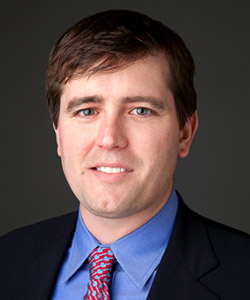
The expensive thing in a real estate deal is often not the building. It is Tuesday. Tuesday is when the contract says the money must arrive, the contractor says the crew can start, and a conventional lender says the committee meets next Thursday. Jeff Carter built a career in that gap between a sound property plan and a slow clock. Before he became the founder of Grand Coast Capital Group, he had seen capital from several useful angles: as an analyst allocating it, an acquisitions executive deploying it, and a developer discovering how quickly a tidy model becomes muddy on a job site.
Carter did not begin with the romance of renovation dust. His early work was in portfolio analysis at Bank of America, focused on investment and asset allocation for high-net-worth individuals and institutions. The setting teaches a particular grammar: risk belongs in columns, assumptions need names, and every return has a less charming companion called downside. He later served as regional director of acquisitions for a Boston-based real estate private equity firm that bought and managed net-leased industrial properties across the country.
Then the view moved closer to the bricks. As a principal and managing partner at Triad Alpha Partners, Carter focused on multifamily development and commercial investment around Greater Boston. Acquisitions, fundraising, permitting, construction and management all entered the same frame. A property could be persuasive in Excel and stubborn in person. He had learned the allocator's insistence on discipline and the developer's impatience with delay. Private lending would eventually ask him to use both.
One question, four vantage points
analysis
acquisitions
development
lending
He treated the market gap like a research assignment
The origin story has a wonderfully uncinematic number in it: two years. That is how long Carter said he spent researching the private-lending niche before Grand Coast opened. For roughly a year and a half, he looked around the East Coast for people who understood the open-ended fund structure he wanted. This was not the fabled sketch on a napkin. It was closer to a notebook with many crossed-out assumptions.
“My strength is in strategy and executing the strategy.”Jeff Carter, on differentiation
The opening he saw was in small-balance real estate finance. Traditional banks could be poorly matched to operators who needed short-term acquisition, bridge, renovation or construction money. The opportunity was not permission to be careless. It was an invitation to make a clear decision faster. A private lender still had to review the asset, the borrower's equity, the renovation budget, the exit plan and the unhappy version of the future. Speed without underwriting is merely haste wearing a tie.
Grand Coast Capital Group was formed in 2013. Carter led the Boston operation alongside partners Paul Esajian, Than Merrill and Konrad Sopielnikow in San Diego. In its first month, the first fund raised more than $3.5 million and deployed the capital into deals, with another $2 million described as committed for the following 30 to 60 days. The launch was fast because the preparation had been slow.
Carter's early comments repeatedly returned to alignment. The fund structure needed to make the manager's interests and the investors' interests travel together. It is an ordinary-sounding principle that becomes interesting when money is moving quickly. A lending platform is a machine for saying yes and no under pressure. Incentives determine what the machine notices.
The spreadsheet met the construction schedule
Carter's professional biography credits him with involvement in real estate acquisitions exceeding $400 million in total value. Grand Coast's public company profile says the firm has funded more than $200 million in real estate loans, raised more than $100 million in capital and acquired more than $50 million in real estate in the United States and abroad. The numbers describe scale. The more revealing detail is the range of situations behind them: acquisition, development, refinancing and rehabilitation.
A renovation loan is a compact argument about the future. The present building may be tired, half-empty or unsuitable. The borrower has a plan to alter that reality. The lender must decide which assumptions deserve belief, how much equity creates a margin of safety, and whether the borrower can survive the inevitable surprise behind the wall. Carter's background meant he had sat with both the allocation question and the execution question. He knew why a committee asks for another sensitivity analysis. He also knew why a contractor cannot pause a crew indefinitely while finance admires its own caution.
The firm also became an investor in properties. In Ireland, Grand Coast acquired interests in commercial and mixed-use assets, including Skerries Point and Swords Plaza. Carter described the work in the unglamorous verbs of active management: lease up space, work with local operators, improve the asset and protect current income. Real estate enjoys grand renderings; returns are often made by the person who notices an empty unit and calls the broker again.
By 2017, Carter said Grand Coast had grown from a one-person operation to nearly 20 employees. The company moved from Hingham into 7,500 square feet in Quincy Center, taking an ownership interest in the building as well. The new office had floor-to-ceiling windows, collaborative workspaces, full-wall whiteboards and a custom ping-pong table. The table is a delightful artifact of mid-2010s office optimism. The whiteboards were probably more consequential.
He kept hiring for the parts of risk that cannot be automated
As lending activity increased, Grand Coast hired specialists in origination, underwriting, asset management and loan servicing. Carter's public comments about those appointments are strikingly consistent. He emphasized market knowledge, project-management experience, response time and the ability to serve borrowers while maintaining a thorough review. These are not decorative hires. In private credit, a weak handoff between originator and underwriter can turn enthusiasm into a bad loan. A weak handoff between closing and asset management can make the problem arrive late.
This helps explain another thread in Carter's career: teaching. He previously taught real estate finance at Suffolk University, where he earned a master's degree in finance, and his biography says he has taught commercial real estate investing to students around the country. His undergraduate years were at Vanderbilt University, where his profile lists a BS, lacrosse captaincy, the presidency of the Squash Club and an officer role in Phi Kappa Psi. The combination suggests that he has rarely objected to a room containing both a whiteboard and a score.
Teaching finance is a useful test of an investor's thinking. It is easy to gesture toward “risk-adjusted returns.” It is harder to show where risk lives in a cash-flow model, why leverage improves one outcome while making another more brittle, and how an exit cap rate can quietly turn confidence into fiction. One former student remembered Carter's class as demanding and advised future students to brush up on Excel. It is difficult to imagine a more affectionate warning from real estate finance.
A private lender's product is not simply capital. It is a decision that arrives while the decision still matters.The operating idea behind the gap
How does capital reach a property without losing its discipline?
Carter's résumé can look like several careers stacked together: analyst, acquisitions executive, developer, fund manager, lender and teacher. Read another way, it is one question viewed from progressively closer distances. At Bank of America, capital was allocated across portfolios. In industrial acquisitions, it was attached to specific buildings around the country. In Boston development, it met permits and construction. At Grand Coast, Carter built the vehicle intended to connect capital and operators on a shorter timetable.
His writing on real estate transactions has stressed the value of arrangements that work for all parties. Buyers and sellers need credible terms. Brokers need confidence that an introduction will not be wasted. Borrowers need clarity and timing. Investors need underwriting and downside protection. The lender sits in the middle, where optimism arrives from every direction and must be converted into a price, a structure and sometimes a polite refusal.
Grand Coast remains based in Cohasset, south of Boston. Carter is listed as its president and CEO and as a Massachusetts investment adviser representative who passed the Series 65 examination. The firm's work still occupies the territory named at its founding: private real estate loans and strategic property investments. The market around it has changed through cycles, rate moves and shifting bank appetites. The useful gap is still temporal. A good deal has a clock. Good diligence needs one too.
There is a founder lesson here that survives the finance jargon. Carter did not confuse urgency with improvisation. He studied the structure, found people who understood it, and only then accelerated. The result was a business designed around a specific inconvenience in the market. Tuesday kept arriving. Grand Coast intended to have an answer before Thursday's committee meeting.