Graham Neray had an unusual reason to admire a database company: strangers said hello to him. At developer gatherings around North America, people spotted the MongoDB logo on his shirt or backpack and approached him simply to acknowledge it. A useful piece of software had apparently earned the kind of affection normally reserved for a band. Somewhere between the database and the merchandise, an engineering decision had become a human connection.
That stayed with him. Neray wanted to start a company for developers, one that removed enough friction to earn a similar response. He eventually left MongoDB after its 2017 public offering, despite advice to stay. His daughter was about a year old. The prospect of starting over came with responsibilities considerably less abstract than a pitch deck.
He and Sam Scott, a cryptographer who became his co-founder, discussed putting security into developers’ hands over coffee in Bryant Park. They brought different skills: Scott’s technical and security background, Neray’s commercial experience. Their early task was finding a way to work together. Their longer task was finding something people wanted to buy.
An apprenticeship with a departure date
Neray’s route into infrastructure ran through political science at Brown University and a business analyst job at Cartesian. His education did not arrive with a predetermined destination in access control. At MongoDB, he worked on marketing and sales enablement before becoming chief of staff to the chief executive. The job placed him close to the decisions he hoped eventually to make himself.
He describes that period as an apprenticeship. He wanted to learn how to build and run a company, and the work gave him a view across the business. His time there included the launch of MongoDB Atlas, the company’s managed cloud database, and its move into the public markets. There was an appealing curriculum: product, people, financing, and the consequences when those subjects collided.
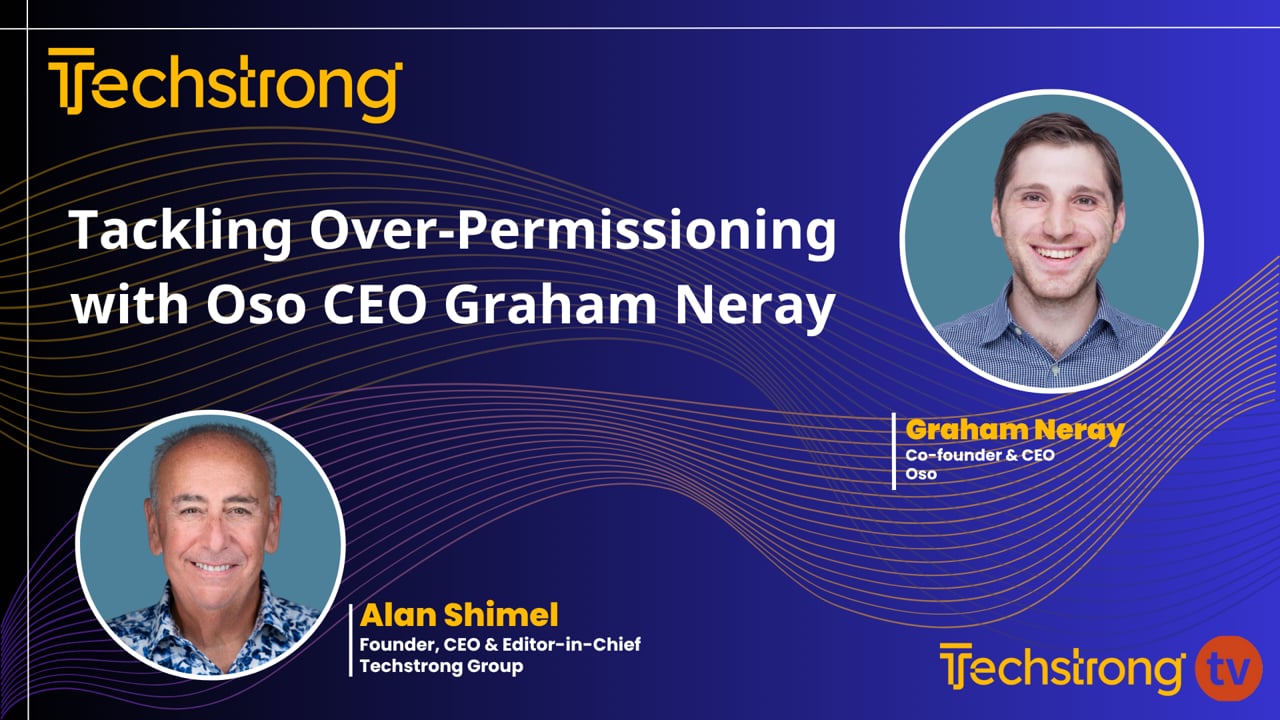
His father, Phil Neray, also worked in technology and security. Years later, an interview with Alan Shimel began with the host explaining that he knew Phil. The encounter briefly made enterprise software feel like a small town. Graham could acknowledge the family connection while describing a professional ambition of his own: demanding work, exacting colleagues, and a chance to compete.
The product customers kept asking for
Oso began in 2018 with a broader infrastructure-security idea. The founders built an early product, then took it back to prospective users. The response was inconvenient. People wanted to talk about the months they had spent rebuilding application authorization. More conversations returned to the same subject. A different problem kept interrupting the sales pitch.
The founders discarded their codebase and changed direction. The resulting Oso offered an open-source authorization library, with a policy language called Polar and tools to help developers express and enforce permissions. A person’s role, relationship to a resource, or membership in an organization could help determine which action was allowed. That logic needed somewhere coherent to live.
In March 2021, Neray announced an $8.2 million Series A led by Sequoia, alongside Authorization Academy, a free set of technical guides. Teaching belonged alongside building. Engineers needed help deciding how to model rules, where to enforce them, and how to test them. A company selling a relatively unfamiliar category also had to make the category understandable. The first discarded product had supplied an expensive lesson in listening.
found Oso
led by Sequoia
led by Felicis
A business hidden inside a permission check
Authorization can sound like a minor administrative detail until an application grows. Consider a shared project: its owner can invite colleagues, an editor can change it, and a viewer can read it. Add departments, contractors, nested folders, and customers who need their own rules. Each additional relationship gives the original tidy design another opportunity to become untidy.
Neray’s commercial argument was that engineering time spent repeatedly rebuilding this machinery had a cost. In January 2024, he laid out reasons to build an authorization system internally as well as reasons to buy one. A simple application might be perfectly well served by a few checks and a roles table. More elaborate systems brought maintenance, testing, procurement, and questions about control. The decision depended on where a team needed to spend its attention.
The examples made the argument tangible. Neray described Intercom centralizing permissions that had been spread through an older application. He pointed to Productboard’s need for finer access controls as it expanded into enterprise accounts. Permissions could influence what a customer was willing to purchase, as well as what a user was allowed to open. The sales conversation and the architecture conversation were sharing a table.
In June 2023, Oso announced another $15 million in funding, led by Felicis. Neray said the team had spoken with more than 1,000 engineering teams. Oso Cloud turned authorization into a managed service, while Polar supplied a way to describe the details of a customer’s domain. The ambition was to spare developers a recurring assignment: reconstructing the same essential machinery at the next company.
Getting there still required a difficult transition. In 2025, Neray introduced Oso Migrate, tools for comparing existing authorization behavior with a replacement. The challenge was often discovering what the old system actually did. Permissions had accumulated across services, middleware, and database queries. Selling a cleaner future required a practical route out of the present. A replacement could be elegant on a whiteboard and still fail at the first unexpected exception.
The vegetables become interesting
By February 2026, Neray had found a culinary description for his career: “trying to sell people vegetables.” Relatives responded to explanations of permissions with courteous nods and a change of subject. Security buyers agreed that the problem mattered, without necessarily doing anything about it. Necessary work can be surprisingly difficult to make urgent.
AI agents changed the conversation. Software that acts on someone’s behalf needs access to actual systems to accomplish anything useful. Give it every permission its human operator possesses, however, and the inherited access may extend well beyond the assignment. Neray argued that the old arrangements had depended partly on human restraint and human speed. Neither was a sensible control to assume when software began taking actions.
His sense of humor survived the change in audience. In a 2025 conversation about how Oso found its focus, he remarked, “As most men in their thirties do, I fell in love with permissions.” There are easier subjects to bring to dinner. His description of fulfillment was more direct: he liked hard problems and wanted to work with people who cared deeply about execution.
“As most men in their thirties do, I fell in love with permissions.”
Graham Neray · October 2025
A wager with his hair attached
Neray also wanted evidence. He told his team he would shave his head if his hypothesis about excessive access proved wrong. Together with Cyera, Oso examined 2.4 million workers and 3.6 billion application permissions. The March 2026 findings gave the conversation a number: 96 percent of the permissions in the study went unused during a 90-day window.
The measurement deserves its boundaries. It describes the studied permissions over that observation period; it does not establish that every unused permission was unnecessary or that every business has the same pattern. Even with those limits, the gap between available access and observed use was a useful starting point. Neray could ask customers to examine a measurable difference rather than agree with a general concern.
His proposed response became increasingly specific. In March, he described a tension among capability, autonomy, and permissions, borrowing the initials CAP for an agent-focused framework. He explicitly presented it as a model for discussion rather than a formal theorem. Constant approval requests could obstruct useful work; broad access could expose more than the task required. Better infrastructure, he argued, could improve that tradeoff.
By April, his writing emphasized permissions that narrow as an agent’s activity unfolds. What it has already done matters to what it should be allowed to do next. A useful control would distinguish a legitimate task from a dangerous sequence of actions without reducing every operation to another approval prompt. The problem that began with application roles had acquired a moving subject.
of permissions went unused
The next room has a different name
October 2026 brought another change in the company’s shape. Neray announced that Tiny had acquired Oso Cloud, with the service continuing to operate and receive investment. Separately, Oso team members joined Temporal to work on authorization for AI agents. Customers’ existing application permissions and the team’s next engineering assignment were heading into different organizational homes.
Temporal supplied a particular setting for the work. Its execution platform preserves workflow state through crashes and retries. Authorization has to survive those interruptions too: a rejected action should remain rejected when a workflow resumes. The arrival of the Oso team was intended to accelerate security work already in development. The announcement described work ahead, with no immediate change to Temporal’s available product.
Neray’s own reaction was brief: “I did not have this on my bingo card.” He thanked customers, colleagues, investors, and his father, and promised future coffees or beers to people who had helped. Even the exit announcement returned to the social scale of the original ambition: people who had done something useful for one another.
His personal website offers a similarly compact introduction: founder, former chief of staff, amateur boxer, husband, dad. The biography remains unfinished because work and family have his attention. It is a small, amusing admission from someone whose professional subject is deciding how attention and access should be allocated. The website can wait. Somewhere, an agent is asking to open another door.