The donate button is the easy part. Behind it sits a less photogenic operation: checking that an organization exists, deciding whether it qualifies, moving money and keeping the records straight. Goodstack has made that administrative territory its business. Its customers include companies whose products millions of people recognize. The company doing the checking can remain almost entirely out of sight.
That suits the job. Google uses Goodstack to verify organizations applying for Google for Nonprofits. TikTok uses its infrastructure to support fundraising inside the app. One interaction begins with an application; another might begin with a creator’s video. Both need someone to establish who is on the receiving end.
Goodstack sells software and financial infrastructure to businesses running social-impact programs. For nonprofits, the result can be access to donated technology or another route to funding. For corporate teams, the attraction is more prosaic: fewer separate systems, less repeated checking and a clearer record of what happened.
A football club, then a much bigger fixture
Henry Ludlam and Stefan Greer began with an idea to help a local football club raise money, according to investor General Catalyst. They came to see a wider use for the infrastructure. The company, originally called Percent, developed into a supplier of verification and giving tools for businesses.
By November 2024, Goodstack had announced a $28 million Series A led by General Catalyst, with Morpheus Ventures and Repeat participating. That financing backed a company selling the machinery of giving to corporate customers. The attraction for an investor is understandable: the same underlying checks and payment connections can serve multiple programs.
Even the original name needed attention. Naming agency Tanj says Percent faced trademark and brand-perception issues. Its team worked with the founders over several weeks on a replacement that could accommodate the company’s ambitions. “Goodstack” connected the mission to the layers of technology underneath it. The name changed as the business sought a broader role.
Free software has an admissions desk
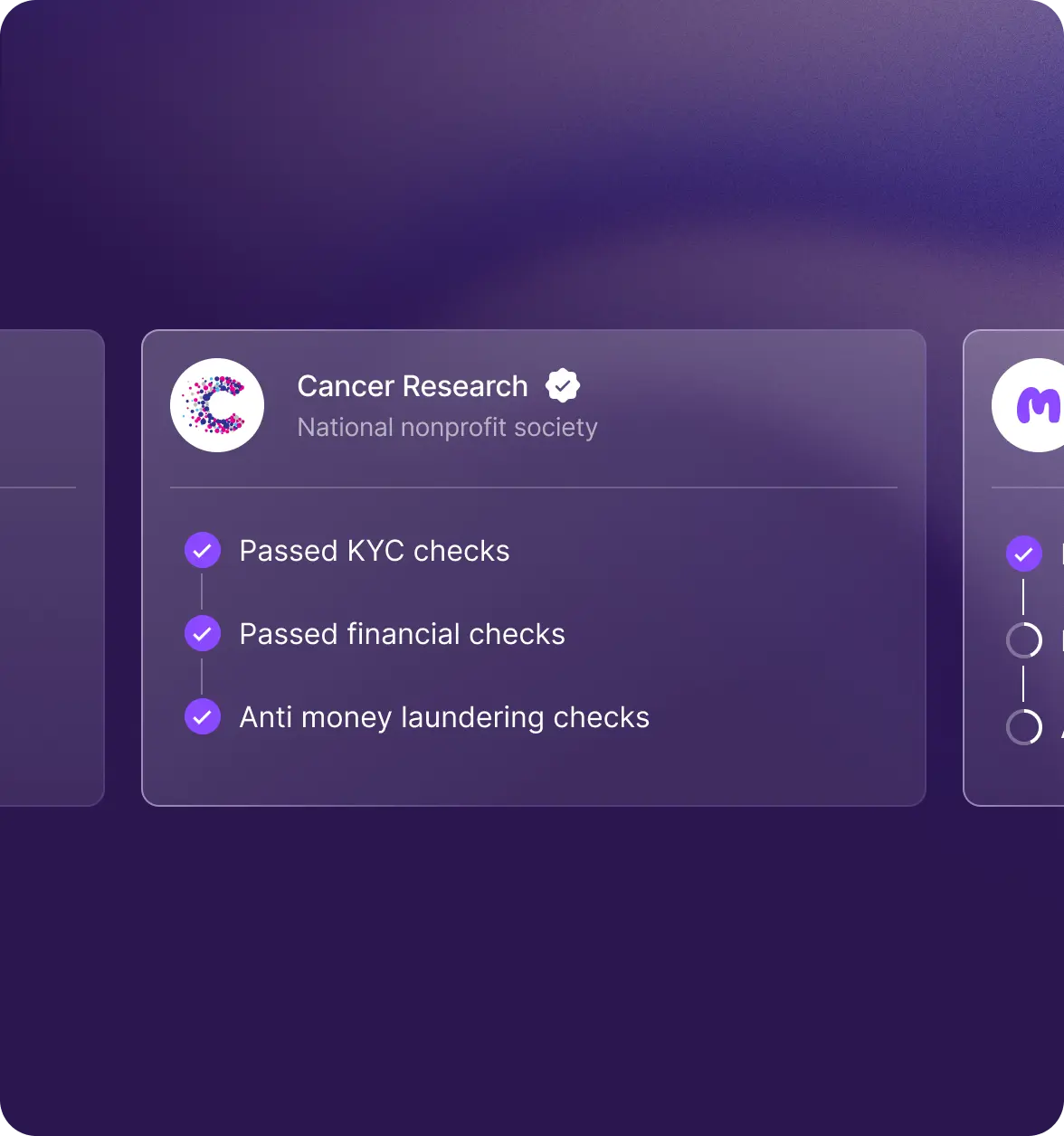
A software company offering nonprofit discounts needs a defensible answer to an awkward question: who gets in? Goodstack checks organizations against the relevant requirements, helping vendors administer those programs. It is a specialized job with consequences on both sides. Loose checks invite abuse; cumbersome ones make legitimate applicants wait.
Asana supplies a concrete example. In a testimonial published by Goodstack, its nonprofit and education leader Jaime Coleman reports that introducing the validation API reduced customer response time by 11 days and increased conversion by 10%. Those are customer-reported results, not a forecast for every deployment. Still, they explain the commercial appeal more clearly than a general promise to increase impact.
Hootsuite offers another illustration. Its HootGiving program uses Goodstack verification as part of providing eligible nonprofits and registered charities with discounts of up to 60% on specified plans. The value here is access to a useful working tool. A small organization can put the resulting savings toward other needs.
In May 2026, Goodstack described its work with New Relic’s Observability for Good program. New Relic supplies tools for monitoring software performance; Goodstack handles nonprofit verification. The division of labor lets the vendor concentrate on its product and program while outsourcing a repeatable administrative function.
One stack, several front doors
Goodstack’s suite groups four activities: product discounts and donations, employee giving and volunteering, grants, and customer giving. These are different experiences for the people using them. An employee might request a donation match; a nonprofit might apply for a grant; a shopper might round up a purchase.
The company’s proposition is to support those experiences with common infrastructure and reporting. Its donation offering includes APIs, software development kits and a hosted gateway, giving customers choices about how much of the experience to build themselves. Payment tracking, disbursement and automated receipts sit behind the visible interface.
- 01 / FINDSelect a cause
- 02 / CHECKConfirm eligibility
- 03 / MOVERoute the donation
- 04 / RECORDTrack and report
TikTok demonstrates why a platform would buy that infrastructure. Users can support causes through profile links, video donation stickers and live fundraising. Goodstack’s March 2026 account describes cause discovery and donation flows embedded through an API. TikTok supplies the audience and creative context; Goodstack supplies the underlying giving services.
The same capabilities can also serve businesses that already sell fundraising software. Goodstack markets its donation infrastructure to fundraising platforms and names Millie, Catalyser and Selflessly on that offering’s page. It can therefore supply part of another company’s product as well as sell a corporate team its own suite.
The big numbers need separate columns
Goodstack’s January 2026 retrospective reported more than $5 billion in donations facilitated. Its account emphasized donated technology and access to software alongside giving programs. Readers should treat that as the company’s reported donation-value measure. It is not Goodstack’s revenue, and it should not casually be described as cash passing through a bank account.
Two other figures describe different things again. The company’s About page lists a nonprofit database of 13.5 million. In August 2026, it announced 7.5 million nonprofit verifications. A database count and a count of checks are not interchangeable measures of customers, recipients or distinct organizations served.
Company-reported measures. Different populations, different jobs.
That August announcement also introduced “KYNP,” short for Know Your Nonprofit. Goodstack’s argument is that conventional business checks do not map neatly onto charities: registries differ between countries, governance differs from corporate ownership and operations can cross borders. Its process combines initial checks with deeper specialist review where risk warrants it.
The company says screening extends across more than 240 countries and territories, with continuing monitoring and periodic review. This is a diligence service, however, not a universal quality score. Establishing that a nonprofit is real and eligible does not establish how much good every dollar it receives will accomplish.
The arithmetic of generosity
Goodstack’s business combines enterprise software with payment-related services. Corporate buyers are directed toward a sales conversation. For donation processing, however, its public pricing page offers actual numbers: domestic US cards are listed at 2.9% plus $0.30 per donation, with additional charges in specified international or currency-conversion circumstances.
On a $100 domestic US card donation, that published base rate amounts to $3.20, leaving $96.80 after the processing charge. Goodstack says partners sometimes cover the fee, in which case the nonprofit receives the full donation. Who pays is therefore part of the program design, not a rounding error to ignore.
The pricing page’s free-signup language should also be read in context. Goodstack’s nonprofit portal terms allow charges for certain optional tools. Donation processing, additional tools and enterprise contracts are distinct purchases. A buyer comparing providers needs to specify the service and transaction pattern before comparing the bill.
A local network still matters
In November 2025, Goodstack acquired Good2Give, expanding its presence in Australia, New Zealand and the wider Asia-Pacific region. The announcement paired Goodstack’s technology with Good2Give’s regional workplace-giving experience. That is a useful corrective to the idea that an international API makes local knowledge unnecessary.
Goodstack also applies its workplace-giving pitch internally. Its careers page advertises four volunteering days each year, donation matching of up to £250 and an annual £1,000 education budget. These are specific published benefits, rather than evidence of what every working day feels like. They do, at least, put resources behind the mission.
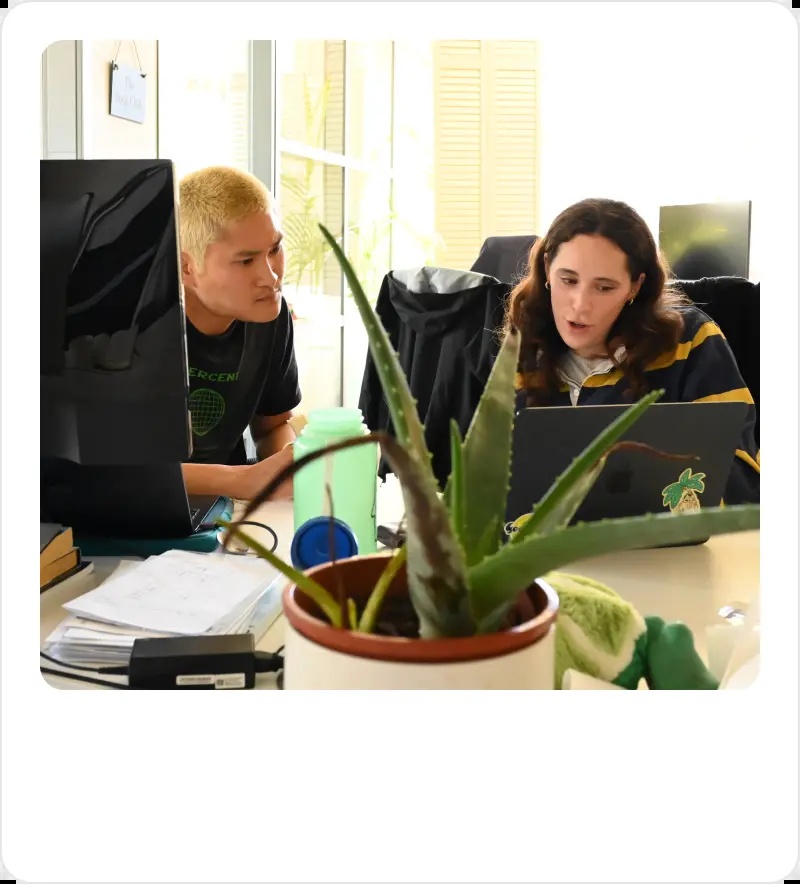
“Do things with a lemon twist”
A stated Goodstack company value
Another stated value stresses candor delivered kindly. The citrus is memorable; the volunteering allowance is easier to evaluate. Together, they show how a company selling employee engagement chooses to describe its own workplace.
Buy the missing capability
Goodstack competes in corporate social-impact software, where Benevity also offers employee giving, volunteering, grants and reporting. An integrated suite is therefore not an exclusive claim. Goodstack’s particular pitch combines that suite with a verification business and infrastructure that can sit inside somebody else’s product.
The practical lesson is to identify the repeated work before buying another campaign tool. If the problem is checking applicants across countries, verification deserves attention. If employees already have a giving interface but international disbursements are difficult, payment infrastructure may be the missing piece. If programs cannot report together, the suite becomes more relevant.
For a nonprofit applying through Google, the immediate task is simpler: submit accurate organizational information and evidence of affiliation, then watch for Goodstack’s request for documents. Google says most verification requests are reviewed within three to five business days. Its products must then be activated separately; verification is one step in the process.
A small, domestic program with a handful of known recipients may need less infrastructure. Nor can software create a giving budget, make an ineligible organization eligible or guarantee a donation. Goodstack’s value is clearest when administrative work is already consuming time across multiple programs. The good deed still needs willing people. They may simply need fewer spreadsheets.
Follow the work
Explore Goodstack’s products, donation pricing and company updates. Follow LinkedIn or X.
Further reading: the $28 million funding announcement, the naming story and Google’s verification guide.