Mike Gianoni is the youngest of seven children, a distinction he holds by three minutes. His fraternal twin got there first. In a family that large, even the bottom of the birth order apparently required a photo finish. It is a memorable footnote to a career usually told through job titles, appointments and the names of software companies.
He grew up in Bristol, Connecticut. His father had arrived from Italy through Ellis Island at fifteen. An older neighbor who became an engineer helped stir his interest in the subject; classes at school gave that interest somewhere to go. His first college qualification was a two-year electrical engineering degree. The route to the executive suite began with learning how things worked.
Today, Gianoni is president, CEO and vice chairman of Blackbaud, the Charleston-based software business serving nonprofits, schools and corporate giving programs. It is an unusual destination for someone whose previous customers included banks and investment firms. Yet the work has a recognizable continuity: people want to do something with their money, and a great deal of machinery stands between the intention and the result.
His career invites a practical question about generosity. What happens after someone decides to help? A gift must be processed. A relationship must be remembered. A volunteer needs a way in. The cause may supply the inspiration; somebody still has to make the forms work. Gianoni has made a business of attending to that less photogenic half of the transaction.
An engineer takes the long route
Gianoni accumulated an education alongside a working life. After Waterbury State Technical College came a bachelor’s degree with a business concentration from Charter Oak State College and an MBA from the University of New Haven. He has described taking his business studies at night. That sequence matters: the commercial education was added to technical experience already under way.
His early employers included Canberra Industries, U.S. Design Corporation, Wang Laboratories, Sequent Computer Systems and Applications Systems Group. The names belong to different chapters of the computing business, but collectively they place him in an industry being repeatedly remade. He moved from engineering toward product management and engineering leadership, then into the management of larger software operations.
At DST Systems, where he spent eleven years, he worked on new platforms and operational controls. Financial software is a useful school for this kind of executive. An elegant demonstration is pleasant; reliable daily operation is what customers actually purchase. The back office rarely gets a standing ovation. It does, however, receive immediate attention when something goes wrong.
He went on to CheckFree Investment Services and then Fiserv following its acquisition of CheckFree. At Fiserv he led the Investment Services division before becoming executive vice president and group president of the Financial Institutions Group. Product, technology, sales, finance, operations and strategy all fell within his experience. By the time Blackbaud called, he had spent years seeing how the parts of a software business fit together.
- EngineeringWaterbury State Technical College
- Financial systemsDST · CheckFree · Fiserv
- 2014Blackbaud president & CEO
- 2024Vice chairman of Blackbaud
The money changes direction
Blackbaud announced his appointment in November 2013; he started on January 13, 2014. The board wanted experience in product development, operations and the move toward software delivered as a service. This was a specific assignment at an established business. Blackbaud had been serving its market for decades before Gianoni arrived.
The attraction, he has explained, was the chance to apply his technology experience to organizations working in the nonprofit and social impact sector. The destination of the money changed. Many of the operating questions remained familiar. How do you organize information, make a complicated process usable and keep the system dependable as more people rely on it?
Blackbaud’s products now cover fundraising, digital giving, nonprofit finance, education management, grantmaking and corporate responsibility. A donor database and a school’s administrative system have different users and obligations. Putting them in the same company creates a demanding brief: understand the particular work well enough that the software earns its place in someone’s day.
The company says more than $100 billion is raised, granted or managed through its platforms annually, with users in more than 100 countries. Those are measures of activity passing through Blackbaud’s systems. The distinction matters. A software company can count transactions; the purpose of the transaction belongs to the people and organizations using it.
A larger total can hide a smaller crowd
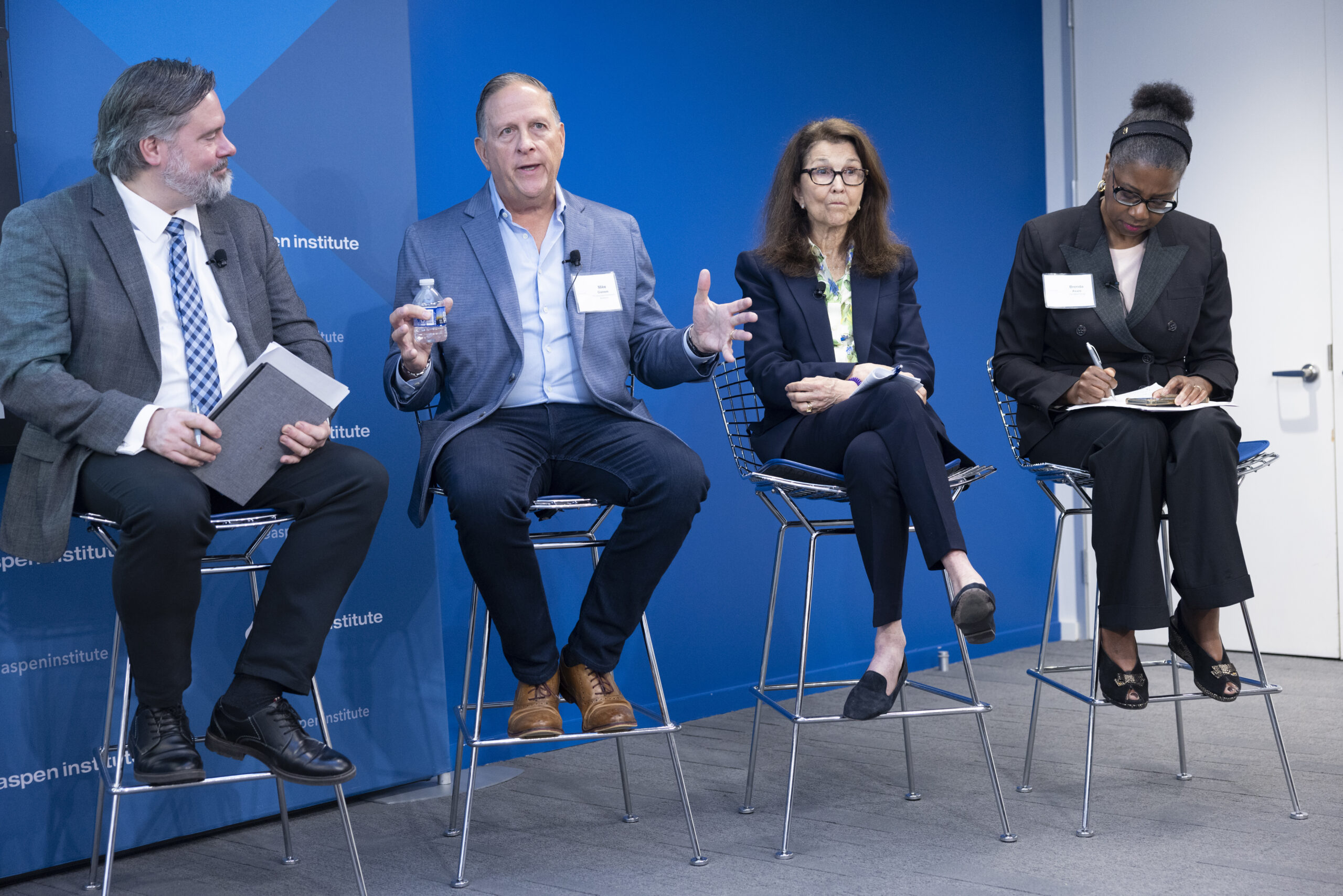
Gianoni’s work with the Generosity Commission moves the story beyond software. He co-chaired the project with Jane Wales of the Aspen Institute. An independent initiative of The Giving Institute and Giving USA Foundation, it began in 2021 and published its final report in September 2024. Its concern was participation: fewer people giving to and volunteering with nonprofits.
That creates an awkward possibility for anyone impressed by large totals. Charitable dollars can grow while the number of people contributing shrinks. A society might raise more money and still have fewer citizens involved in the organizations around them. The two measures answer different questions. One asks how much arrived. The other asks who took part.
The commission organized nine recommendations across research, culture, practice and policy. Among them were taking young givers seriously, improving data about generosity, encouraging public figures to discuss their own participation and strengthening the role of businesses in employee giving and volunteering. Its scope reached well beyond the checkout screen.
This is a revealing extension of Gianoni’s day job. Better software can reduce the effort required to participate. It cannot supply every reason for participating. Community habits, workplace practices and the example of other people also matter. The commission’s approach gives those influences a place beside the technology, rather than expecting a convenient button to do all the work.
The dogs get a vote
In Charleston, the argument becomes pleasantly concrete. Gianoni and his wife appeared in an adoption advocacy video for pit bulls. He is a pit bull owner himself. In January 2020, Charleston Animal Society presented Blackbaud with its Community Ambassador Award at an annual meeting held at the company’s headquarters. Here was corporate citizenship with actual dogs in the picture.
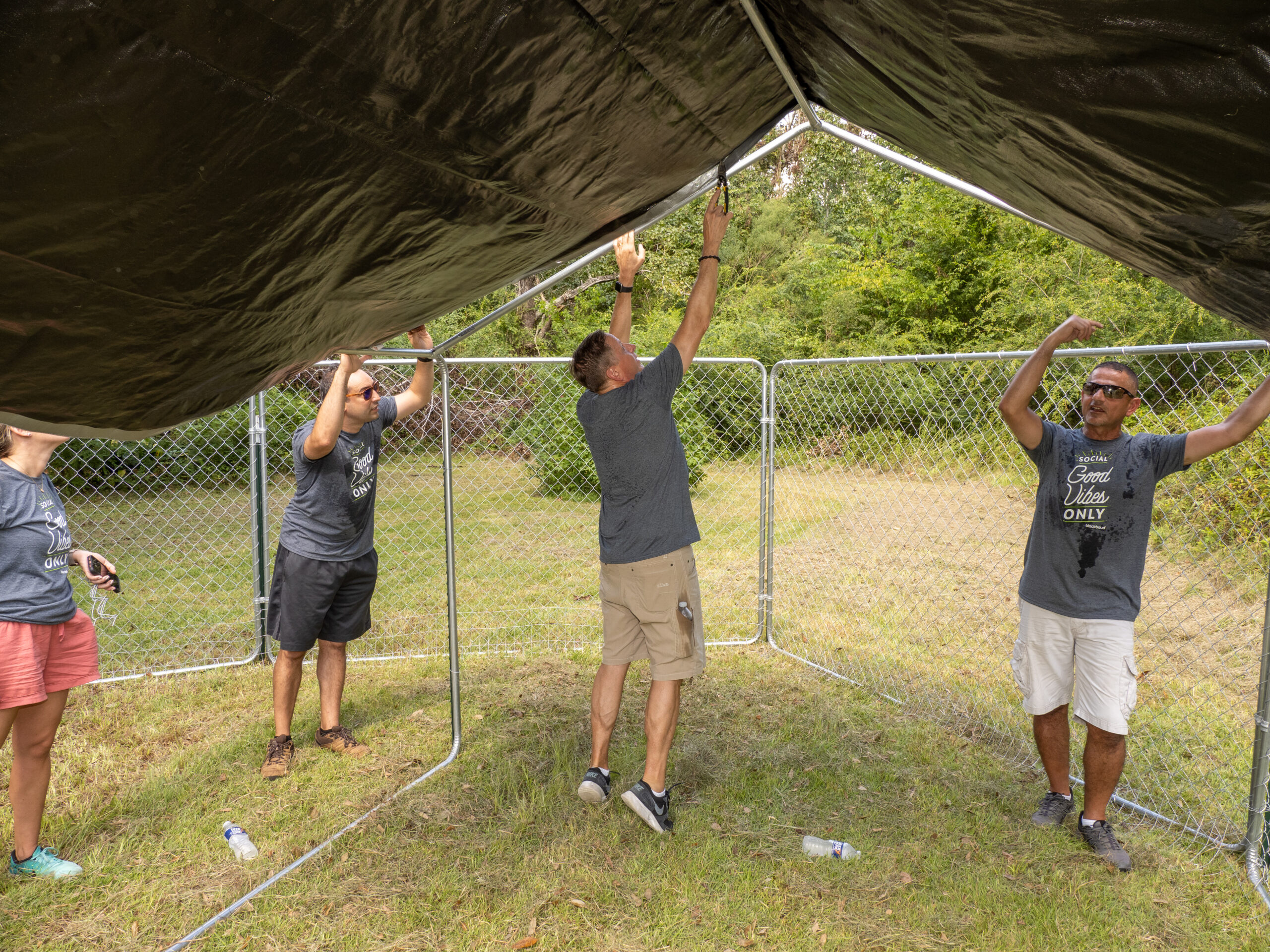
The recognition also covered employees’ work through the society’s Pets for Life program. Blackbaud sponsored a fence for a family’s dogs on Edisto Island, and more than a dozen volunteers helped build it. A fence offers a refreshing standard of completion. The posts are either in the ground or they are not. No amount of mission-statement polishing will keep a dog in the yard.
His interest in sailing connects to another part of his community work. He supports Warrior Sailing, and he and Blackbaud support the Charleston Ocean Racing Association’s Military Salute Regatta. Away from work, he enjoys exploring the American coastline by sailboat. The same recreation that gets him away from a screen also gives him a way to join other people on the water.
Gianoni has also served on the board of Charleston’s International African American Museum. Blackbaud contributed $1 million in 2016 toward its Digital Media Lab. Alongside the regatta and animal welfare work, it suggests the range of institutions that can matter within one city. A global software business still has neighbors.
Running a company without the daily commute
Inside Blackbaud, Gianoni has overseen a change in where work happens. The company formally adopted a remote-first model in November 2021. By March 2024 it was reporting broader access to talent and an increase of more than 50 percent in applications over the preceding four years. Geography had become less of a gatekeeper in recruitment.
The choice raises an obvious management question: how do people build shared experience when they do not arrive at the same building? In a June 2025 conversation about corporate purpose, Gianoni described volunteering together, through virtual events or regional gatherings, as one way employees build relationships. Since nonprofits are customers too, those experiences can also help staff understand the people using their products.
He pointed to Camp Blackbaud, where volunteers undertake science and engineering projects with students through Charleston Promise Neighborhood. Employee involvement also includes nonprofit board service and grant programs. His view of culture has a practical emphasis: give people something to do together and an opportunity to choose causes that matter to them. A calendar invitation, on its own, is a thin substitute for common purpose.
Asked about leadership, he has reduced his approach to three words: “vision, empathy, and action.” The combination leaves room for disagreement as well as decisions. Listening takes time; an organization still needs someone to choose a course. It is an apt tension for an engineer who became an operator: understand the problem, hear the people working on it, then make the thing run.
“vision, empathy, and action.”
Mike Gianoni · On his approach to leadership, 2024
The next system has to understand the gift
Gianoni’s other boardroom offers a parallel view of the technology industry. He joined Teradata’s board in 2015 and became its nonexecutive chairman in February 2020. The role places him alongside another business concerned with how organizations use data. At Blackbaud, the current question is how to turn that data experience into useful artificial intelligence for fundraising.
On September 29, 2026, Blackbaud announced Lantern at bbcon in Columbus, Ohio, developed through a collaboration with Databricks. The company describes it as a language model designed for fundraising. It plans to bring Lantern into selected Raiser’s Edge NXT and Agents for Good capabilities in 2027. This is a stated product direction with a future delivery schedule.
The design premise is that fundraising has its own relationships, decisions and rhythms. A donor’s continuing commitment to a cause gives the system a different context from an ordinary purchase. The test will be whether that understanding helps the people doing the work. A product announcement can describe the intended destination; customers will discover how useful the journey is.
Gianoni’s path has carried him from an electrical engineering qualification to financial platforms, nonprofit software and research into generosity itself. The recurring interest is in the arrangements that let people accomplish something together. On Edisto Island, that arrangement involved a fence. In a fundraising office, it may involve a database. The scale changes. Someone still has to attend to the details.
Continue the conversation
- Mike Gianoni’s website
- Blackbaud leadership biography
- X / Twitter
- YouTube
- SoundCloud
- Leadership Matters: full conversation
- LEADERS: 2024 interview
- Watch: U.S. giving trends
- The Generosity Commission report
- Charleston Animal Society: the 2020 award
- Blackbaud’s remote-first approach
- Corporate purpose conversation
- Lantern: September 2026 announcement
- Teradata board biography