In 1991, at a barbecue restaurant in Denison, Texas, Jimmy Ray sketched an aircraft telephone system on a napkin. It is a wonderfully earthbound beginning for a company now selling connections to satellites. The problem was modest: someone in a private airplane wanted to make a call. Thirty-five years later, the problem has multiplied. Everybody wants to connect, all at once, and nobody wants to think about the airplane.
- Gogo connects business aircraft and government fleets through ground towers and satellites.
- Its $400 million airline-business sale in 2020 changed its focus.
- Galileo adds global LEO connectivity. Certification and installation determine who can actually use it.
01 The company you remember left the cabin
For many travelers, Gogo means an airline Wi-Fi login. That memory now points to a different business. In December 2020, Gogo sold its commercial aviation operation to Intelsat for $400 million in cash. The remaining public company concentrated on business aviation, its air-to-ground network and its spectrum rights. The sale reduced net debt and gave it room to invest.
Then the map became the constraint. Ground towers serve aircraft over covered territory; they cannot follow a jet across an ocean. In December 2024, Gogo bought Satcom Direct, adding satellite services, international sales and support, and military and government customers. Chris Moore, Satcom Direct’s president, became Gogo’s chief executive.
The purchase cost $375 million in cash and five million shares, with up to $225 million more tied to performance. Gogo subsequently paid a $40 million earnout in April 2026. Buying global reach required both a satellite portfolio and people who already understood the customers flying beyond the ground network.
02 Three routes to the same laptop
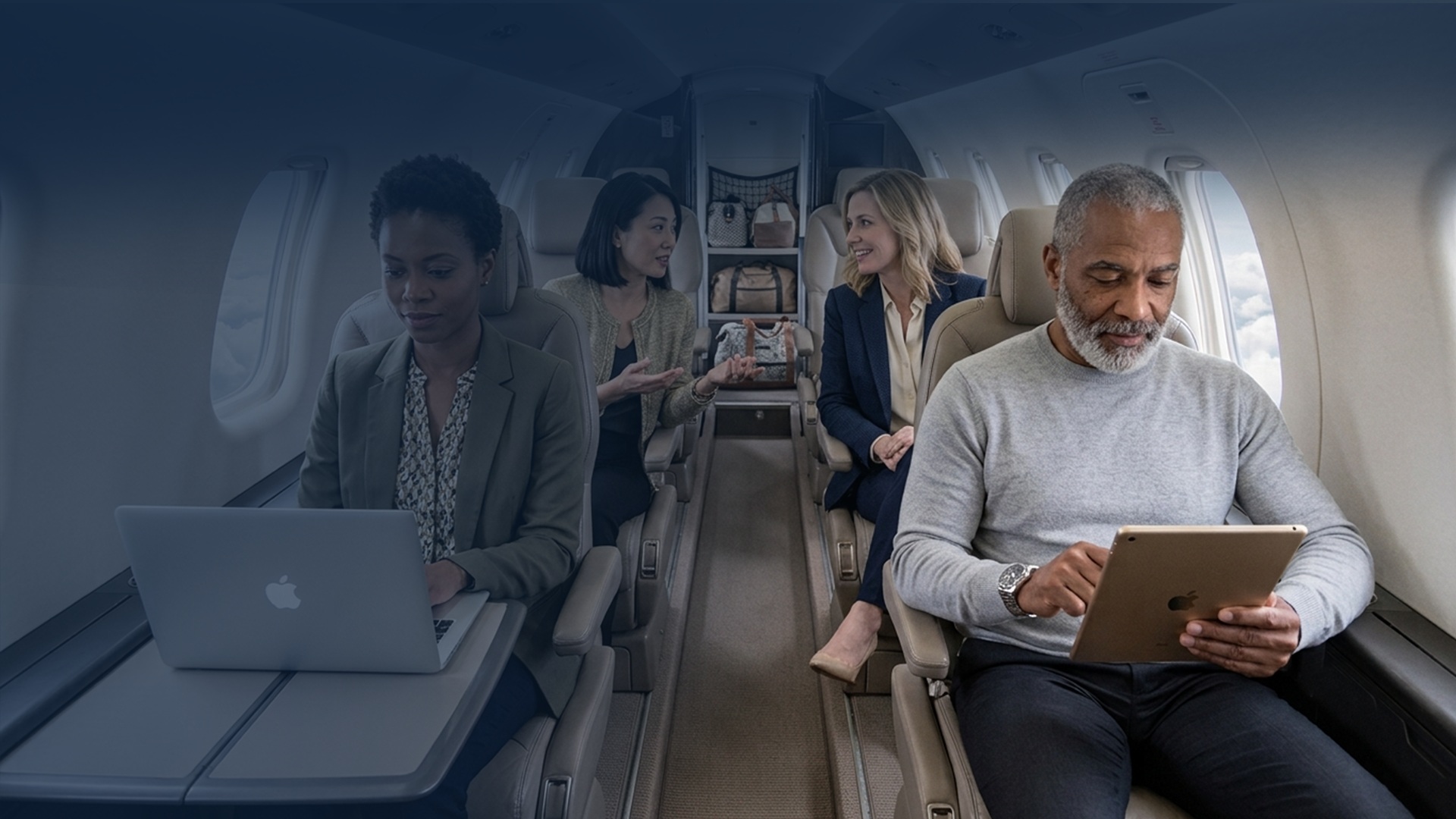
Gogo’s portfolio offers three ways home. Air-to-ground, or ATG, talks to towers in North America. Galileo talks to Eutelsat OneWeb’s low-Earth-orbit satellites. Geostationary services, including the Plane Simple antenna family brought in through Satcom Direct, supply another satellite route. A multi-orbit installation combines connections for additional capacity and redundancy.
Route illustration; availability depends on equipment, approvals and service coverage.
AVANCE is the onboard platform tying together connectivity, software and cabin services. Its over-the-air updates let operators change software and configurations remotely. Gogo Vision serves entertainment from an onboard media server, so watching a movie need not consume the internet allowance. That distinction matters when airborne gigabytes carry a bill.
The customers include aircraft owners, corporate flight departments, fractional operators, charter fleets and governments. NetJets has begun Galileo installations; Airshare selected HDX for its Phenom 300 fleet. At the other end of the mission spectrum, a $7.5 million NOAA contract covers satellite communications, cybersecurity and cockpit datalink software for hurricane-hunting aircraft.
Starlink is a direct satellite alternative. Gogo’s proposition rests on matching networks to aircraft and missions, with aviation installation expertise and ongoing support. It does not own OneWeb’s constellation. Its role includes integrating someone else’s space infrastructure into a service an aircraft operator can buy and maintain.
03 The expensive part is getting aboard
Galileo’s published overview lists the HDX antenna at $120,000 and FDX at $190,000. Those are antenna prices. Installation and the remaining system configuration cost extra. Published HDX service pricing includes a 25GB monthly plan at $3,500 with a three-year price lock, versus $5,000 with a one-year lock. Overage is listed at $215 per gigabyte.
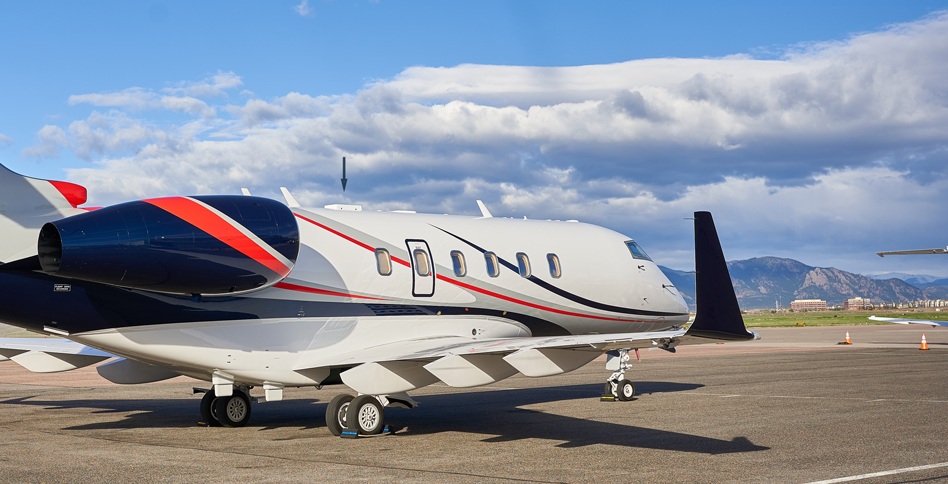
There is also paperwork. An aircraft modification needs approval for its particular installation. Gogo’s September 2026 account of an FDX certification describes engineers addressing mounting, heat, drag and birdstrike protection. A fairing around the antenna does rather more work than its smooth exterior suggests.
For an operator, the sensible buying sequence starts with the aircraft, routes, passenger demand and existing equipment. Check the approved installation, then price hardware, downtime, data and support together. An inexpensive service plan offers little comfort if the aircraft cannot accept the hardware or the desired route lacks usable coverage.
04 A chip can hold up a network
The 5G rollout supplied an awkward lesson in dependencies. Gogo disclosed that a design error in a non-5G component of its chip delayed launch. The component came through a subcontractor of its technology supplier. The bottleneck sat several steps away from the passenger trying to open a browser.
In December 2025, Gogo announced completed flight testing and its first paying 5G customer. Wider availability followed in early 2026. The delay illustrates something other businesses can copy into their planning: a product launch depends on the least-ready essential component, including the one supplied by somebody else.
“Having equipment on hand gives us greater flexibility to plan installations around our customers’ schedules.”Nate Klenke, Duncan Aviation, October 2026
05 The new fleet has to catch the old one
Gogo sells equipment, then earns recurring revenue from connectivity and related services. Services generated $774.4 million of its $910.5 million revenue in 2025. That installed relationship is the attraction. Maintaining it through a technology change is the test.
By June 2026, Galileo had 184 aircraft online, up from 111 in March. Meanwhile, ATG aircraft online fell 15% year over year to 5,731. These are separate network counts, not a census of unique customers. New connectivity was growing while the established base contracted.
October brought more concrete commitments. Duncan Aviation prepaid for 40 HDX systems. PlaneSense announced plans to equip all 71 aircraft in its current fleet, plus future deliveries, aiming to finish the fleet rollout by the end of 2027. Orders and plans still need installations and activations. Ray’s napkin has become a much larger diagram. The useful question remains small: can the person in that seat get connected?