The first obstacle was arithmetic. A Japanese life insurer wanted employees to sign their emails digitally, making the sender easier to verify. But its group had more than 10,000 people. Each needed a certificate. Someone would have to distribute them, manage them and keep them current. In GlobalSign’s account of the project, the proposal stalled over administration and cost. A sensible security idea had run into an ordinary office problem: too much work.
- GlobalSign supplies verified identities for websites, software, documents, email and devices.
- Its commercial pitch includes the machinery that keeps certificates usable.
- Shorter TLS lifetimes make that machinery harder to postpone.
A good identity needs a delivery system
The insurer reconsidered when GlobalSign proposed Certificate Automation Manager with Active Directory integration. Distribution and renewal could be automated. There would still be additional infrastructure costs, including a dedicated server. But certificates could also support stronger access authentication. That broader usefulness changed the calculation. The customer tested certificates, prepared its server and gave staff a short Outlook guide. Silent installation reduced support inquiries, according to the account.
There is a practical lesson here: evaluate the entire trip from issuing an identity to using it. A certificate sitting in an administrative portal does little for an employee who cannot install it. The useful product includes the last few feet.
The browser is trusting somebody
GlobalSign is a certificate authority, or CA. It issues digital credentials that bind identities to cryptographic keys. Its SSL/TLS certificates help authenticate websites; code-signing certificates identify software publishers; document signatures allow recipients to check identity and detect changes. S/MIME certificates bring signing and encryption to email. Its managed PKI services supply the infrastructure and controls behind those credentials.
The company began in Belgium in 1996. Its anniversary history recalls getting a root certificate into Netscape and Microsoft Windows 2000. That distribution mattered: a credential becomes useful when the receiving software already knows whom to trust. GlobalSign now belongs to GMO GlobalSign Holdings, within Japan’s GMO Internet Group, with operations across several regions.
Its customers include universities, public-sector software suppliers, enterprises and connected-device developers. At the University of Waterloo, the job included supporting departmental certificate issuance while retaining central approval controls. Engineering teams also used code-signing certificates for their software distribution tools. A campus needs both autonomy and rules; certificate management has to accommodate both.
That breadth reaches beyond office browsers. GlobalSign’s IoT offering addresses identities for connected devices, while its document portfolio includes qualified trust services for applicable European requirements. The expertise is in operating certificate infrastructure and fitting it into other systems. For a software team, that can mean consuming a signing API; for an enterprise administrator, it can mean applying issuance policies. Neither buyer is shopping for a decorative badge. Each needs an identity another system can check, with a process that remains manageable after the first successful test.
Then the calendar got smaller
A certificate expires. That design limits how long an old credential remains usable, but it creates an operational obligation. Under the published CA/Browser Forum schedule, maximum public TLS validity fell from 398 days to 200 in March 2026. Further reductions are scheduled for 100 days in March 2027 and 47 in March 2029. GlobalSign applies a 199-day limit for the current stage.
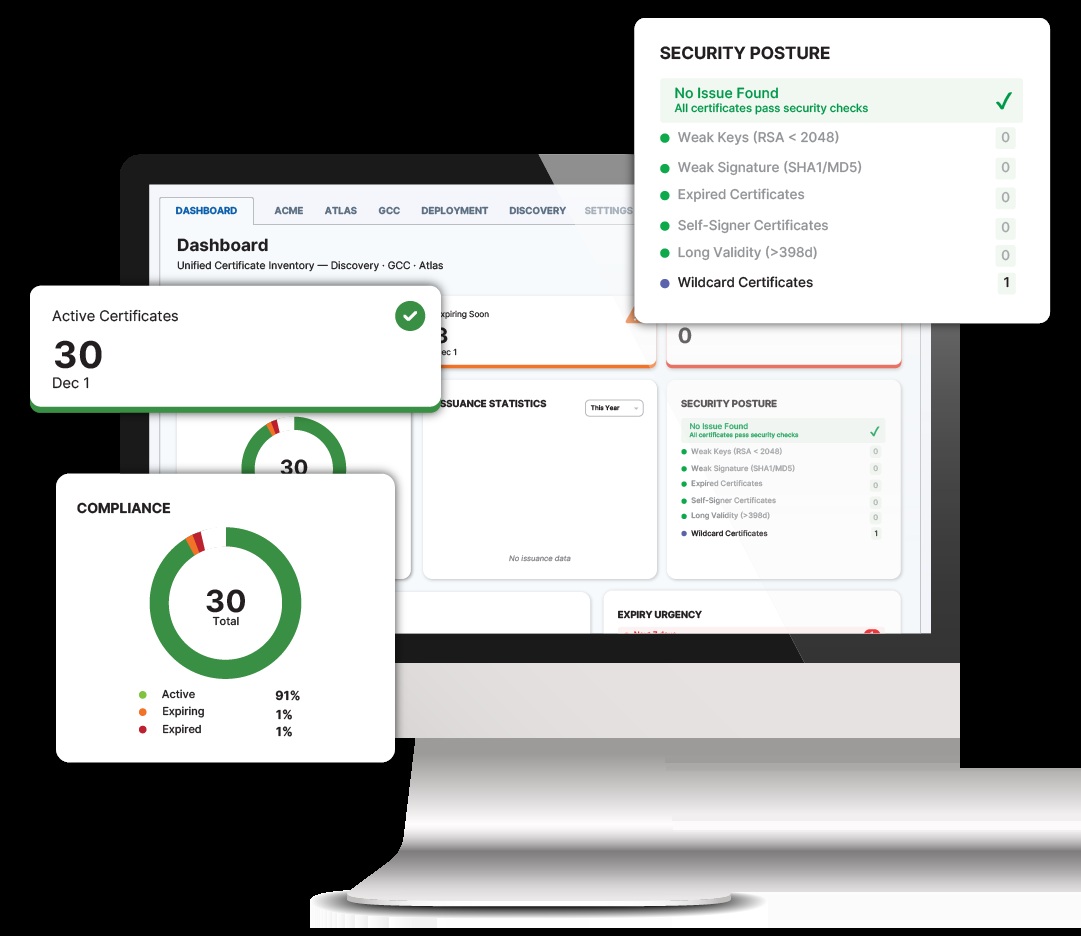
That is an awkward calendar for a small team managing renewals by hand. In April 2026, GlobalSign introduced TLS Connect, an on-premises certificate lifecycle tool for smaller businesses. It expanded availability to Asia Pacific and the Middle East in August. The product combines discovery, deployment and renewal; its current page describes a fit for organizations managing between one and 100 TLS certificates.
What are you paying for?
There is an obvious challenge to this business: Let’s Encrypt offers free, automated domain-validated certificates. A website that needs straightforward HTTPS may already have what it needs. Paying GlobalSign requires a reason beyond the existence of encryption.
The reason may be organization validation, commercial support, centralized management or a broader signing requirement. GlobalSign’s US shop lists one-year coverage at $249 for domain validation, $349 for organization validation and $599 for extended validation, checked in October 2026. Those prices describe different identity checks. They do not mean that a more expensive certificate automatically encrypts traffic more strongly. For applicable GCC orders, annual coverage includes two 199-day certificates.
GlobalSign competes with DigiCert and Sectigo in commercial certificates and management. Its distinctive combination is an established CA, managed PKI, developer interfaces and multiple identity uses under one supplier. Buyers should compare that combination with their actual workload. A small website and a government document platform have different purchasing problems.
The signature that stopped asking for help
Fivium, a UK public-sector software company, offers a revealing example. Its users had encountered documents whose signatures appeared invalid. The company wanted signatures recognized through Adobe’s Approved Trust List. It considered building the infrastructure itself, then chose GlobalSign’s Digital Signing Service, judging the hardware and key-management alternative more expensive.
The case study describes two months building a prototype and another three developing and implementing the solution. Integration used an API without external development support. Fivium reported that the signature-validity inquiries stopped. The lesson is less glamorous than a new feature: remove a recurring question from somebody else’s working day.
GlobalSign reported 6,136,107 DSS signatures, up from 4,624,412 in January 2025. Activity, rather than revenue or customer count.
Trust has several moving parts
On October 20, 2026, GlobalSign announced an EasyDMARC partnership connecting email authentication management with verified mark certificates. Those certificates can enable brand logos in supported inboxes. It is a useful admission from a certificate partner: the inbox depends on more than one layer.
“Email trust isn’t built by a single protocol or certificate.”
Gerasim Hovhannisyan · EasyDMARC co-founder
The same discipline applies before buying automation. Inventory the certificates. Check supported endpoints, ownership, validation and deployment permissions. Test a renewal all the way into the running service. A tool cannot fix an inaccessible server or an unassigned responsibility by itself. GlobalSign’s most persuasive customer stories begin with that mundane work. The identity matters. So does everything required to keep it working.