There is a peculiar detail in the design of Glassdoor’s former San Francisco headquarters. The company built around workplace transparency had a hidden room. A door disguised as a wall, reached through a phone room, opened into a speakeasy. Even the business of revealing office life apparently needed somewhere to disappear.
- Workers supply the knowledge: reviews, pay information and workplace conversations.
- Employers fund the business: branding, advertising and recruiting tools.
- The useful habit: look for repeated details before trusting an average score.
The room is an amusing footnote to a serious idea. A company knows a great deal about the person it might hire. A candidate knows the job description, the interview performance and whatever the recruiter chooses to disclose. Glassdoor gave that candidate another set of witnesses: people who had already worked there.
01 Nearly 3,300 reasons to share
Robert Hohman, Rich Barton and Tim Besse founded Glassdoor in 2007. Hohman and Barton had worked together at Expedia; Besse became the new company’s product and marketing chief. Their public beta opened on June 11, 2008, with nearly 3,300 reviews and salary reports covering more than 250 companies.
The early constraint was obvious. A review site without reviews offers very little to review. Glassdoor’s answer was a transaction without money: contribute information about your own employment before reading the full collection. Its “give-to-get” rule made the reader part of the supply chain.
Hohman called the ambition “the TripAdvisor of the workplace.” The comparison made sense. Both decisions involved inspecting a polished presentation and wondering what happened after you arrived. The employment version carried considerably more baggage than a disappointing hotel breakfast.
“the TripAdvisor of the workplace”
Robert Hohman / public launch, 2008
The practical lesson is worth copying: ask for a contribution closely related to the value someone wants. A salary researcher has salary knowledge. An employee investigating culture has experienced a culture. The exchange works only if people believe contributing is safe and the information they receive deserves their attention.
02 The companies in the reviews pay the bills
Glassdoor’s distinctive position sits between a job board and a professional community. LinkedIn centers professional identity and connections. Blind offers anonymous workplace discussion. Levels.fyi concentrates on compensation. Glassdoor brings company reputation, pay and job discovery into the same decision.
For workers, those tools can narrow an employer shortlist or sharpen a compensation conversation. For recruiting teams, the audience consists of people already investigating where to work. Employers can establish profiles, answer reviews and buy branding and advertising products. Employee-insight tools help them examine the feedback.
↓
↑
One audience wants the inside story. The other wants to be considered.
There is a useful distinction for employers here. A careers page describes the workplace management intends to offer. Reviews describe experiences people say they had. Reading the two together can expose a gap worth investigating. A thoughtful response should acknowledge the specific concern and explain what has changed, without trying to identify the writer.
That arrangement creates an unavoidable question: can the company being judged purchase a friendlier verdict? Glassdoor’s published policy forbids paid review removal, including in commercial customers’ contracts. It moderates content under its rules; it does not promise to arbitrate every factual disagreement. Selling visibility depends on maintaining that boundary.
Building the business took substantial capital. A $40 million financing in June 2016 brought cumulative funding to approximately $200 million. Recruit’s $1.2 billion all-cash acquisition announced in 2018 was a different transaction: a purchase of the company, rather than another venture round.
What Recruit agreed to pay for Glassdoor. Not venture funding.
03 When the hiring engine slowed
The business was vulnerable to the same labor market it helped people navigate. In his March 2023 employee memo, then-CEO Christian Sutherland-Wong reported falling revenue trends, a 33% year-over-year decline in US sponsored jobs across the strategic business unit, and weaker retention among employer branding customers.
Hiring pauses and cuts to programs, travel and events had proved insufficient. Glassdoor would eliminate around 140 roles, approximately 15% of its team. The commercial warning arrived in recruiting demand and customer retention. A large collection of useful reviews could not make employers keep spending.
Meanwhile, the product widened. Glassdoor announced its parent-backed Fishbowl acquisition in 2021, then introduced community features in July 2023. Industry, interest and company “bowls” offered somewhere to ask questions between job searches. Some conversations allowed a job title or employer identity instead of a full public name.
Today its Glassdoor Recruiter offering combines career preferences and company knowledge with Indeed’s job inventory. Glassdoor also describes itself as part of Indeed. The proposition has shifted toward helping someone find a fit, as well as investigate one.
04 The office with a secret door
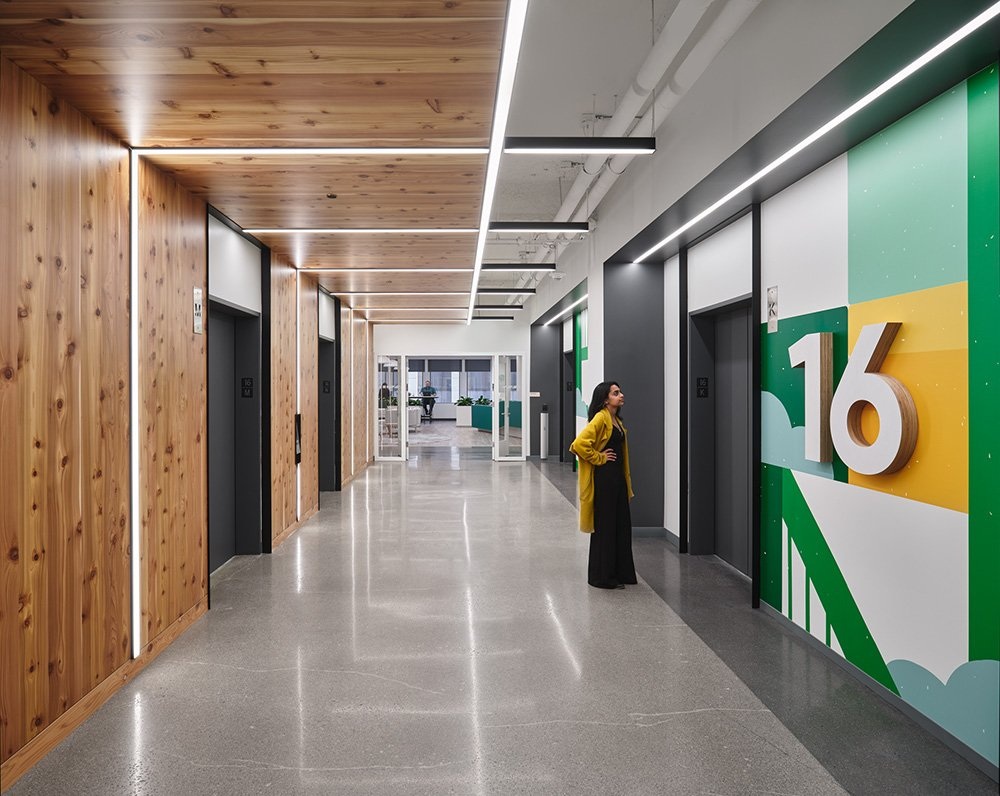
Glassdoor’s own workplace supplied a useful test of its willingness to listen. It opened the San Francisco headquarters in 2022 while allowing employees to choose remote, office or hybrid work. By 2024, it planned to close its remaining offices in San Francisco and Chicago, citing employee feedback and a workforce increasingly beyond commuting distance.
The building’s architects had already revised the design when the pandemic arrived during construction. Desks came out; lockers went in. The later decision went further. An attractive office, even one with a concealed bar, could not settle how employees wanted to work.
05 Read it like a detective
The sensible way to use Glassdoor is to investigate patterns. Compare recent accounts from the relevant function and location. Treat pay figures as context, checking seniority and geography. Turn recurring complaints into interview questions: how are promotions decided, how often does the team work late, who actually approves remote work?
Thin samples, old accounts and volunteer selection can mislead. Anonymity also has limits: Glassdoor says it defends reviewers’ identities, while acknowledging rare legal circumstances can force disclosure. Its usefulness rests on enough people contributing without assuming that every contribution represents everybody.
A complaint about one manager may say little about another team. A cheerful review from years ago cannot describe a recent reorganization. Ask a prospective colleague about the actual week ahead: meetings, deadlines, decisions and support. The point of outside research is to make that conversation more precise, rather than outsource the decision to a number.
That leaves a modest but valuable outcome. The candidate can arrive with better questions. The employer has an opportunity to answer them. And the next person considering the same desk has a little more to go on.