Before Silverline had hundreds of consultants, Gireesh Sonnad had a question of arithmetic. He and another independent consultant were combining their businesses. One brought a little more revenue; the other brought relationships. They could have spent their early days assigning a price to each advantage. Instead, they agreed to divide ownership equally.
In Sonnad’s account of the company’s beginnings, the arrangement helped them concentrate on building a combined business. Rich Resnick became his co-founder. Silverline started in New York in 2009. The original bargain has a pleasing lack of complication: half for each, then back to work. Anyone who has tried to divide a restaurant bill among ambitious people can appreciate the achievement.
That decision supplies a useful way into Sonnad’s career. He built a consulting business around work that requires people to rely on one another: clients explaining how their companies operate, specialists translating those needs into software, colleagues admitting when something needs to change. Trust would eventually appear among Silverline’s written values. First, it had a place in the ownership agreement.
The computer store came first
Sonnad’s interest in technology began well before the company. His parents opened a computer store when he was five. Years later, he recalled photographs of himself hanging around the machines. He grew up in the middle of Michigan, with an Indian father and an American mother, and described education and family as especially strong influences on his father’s side.
His cultural reference points included William Gibson’s Neuromancer, Star Wars, and the discovery of electronic music coming out of Detroit. These are his recollections, rather than a business curriculum. They leave room for a person who enjoyed the possibilities of technology before he had a corporate reason to explain them.
He studied computer science and computer information systems at the University of Michigan in Ann Arbor. His later technical background included application development and design across client/server, web, and cloud systems. That sequence matters to the work he would sell: software changes its surroundings, and a consultant has to understand the surroundings as well as the software.
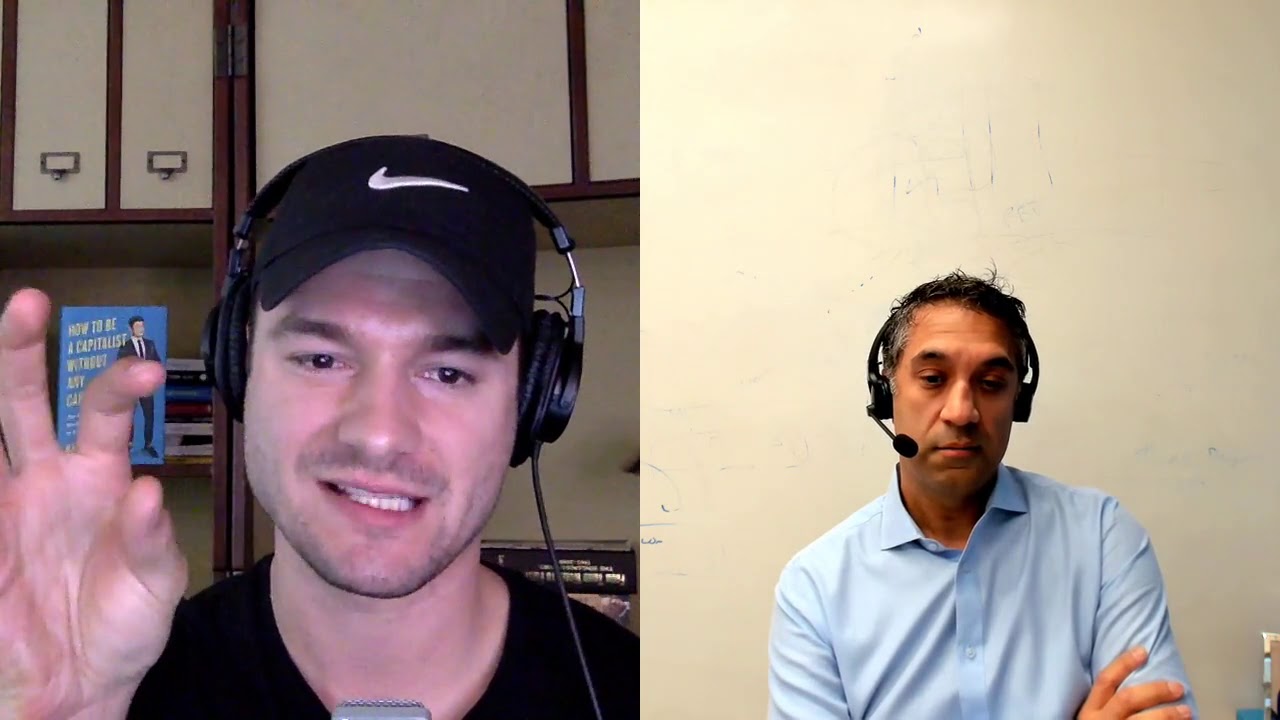 ▶ WATCH THE CONVERSATION
A bank has its own vocabulary
Silverline’s proposition depended on knowing particular kinds of customers. Financial services became a central focus. In a crowded market of Salesforce partners, industry knowledge offered a practical way to be remembered. A customer buying the same platform as another company could still have a very different set of problems to solve.
Take Stonebriar Commercial Finance. By Silverline’s tenth anniversary in 2019, Stonebriar’s technology chief, Steve Siler, described a relationship stretching back seven years. He valued the creative ideas and relationships alongside the work delivered. For a consultancy, that is a more revealing detail than the ceremony of winning an account. It describes being invited back.
There was also LEVIEV, the diamond business. Silverline began working with it in 2010 and built a Salesforce mobile application connecting its operations across boutiques in New York, London, Dubai, and Singapore. A sale of fine jewelry may end with a small, elegant box. Behind it sits a less photogenic requirement: accurate information available to the right people.
The application offered real-time updates and a shared view of the business. Sonnad appeared in the customer story alongside LEVIEV’s executives. It is a concrete example of the territory he occupied: between a platform’s general capabilities and the habits of an actual company. The useful work happened in that gap.
The questions could be anonymous
Growth brought a different translation problem inside Silverline. Sonnad described making a decision during a period of rapid expansion without communicating it properly to everyone affected. The team was unprepared for the change. His response was to pay closer attention to how announcements would land and to prepare a communication plan.
By 2018, he was describing office hours every other week. Employees could submit questions anonymously through the company intranet; answers went out to the whole company. The mechanism was simple enough to fit on a calendar. Its value depended on the person at the top continuing to show up.
“One of the best ways to foster trust and employee engagement is simply to listen and discuss feedback,” he said that year. Remote employees could tune in while colleagues gathered in the office. The arrangement gave a dispersed company a shared occasion for hearing the same answers.
David Masri, a data specialist who worked at Silverline, later thanked Sonnad, Resnick, and Eric Nelson in the acknowledgments to his book on Salesforce data migrations and integrations. He singled out an objectives and key results system that encouraged personal development alongside professional growth. A former colleague’s thanks adds something specific to the company language about learning: someone could connect that intention to a system he had actually used while doing the work.
Silverline also introduced learning and career programs called Synapse and PowerUp!, covering technical skills, consulting skills, and opportunities to share knowledge. In 2018, the company ranked first in Glassdoor’s small and medium company Best Places to Work list, and Sonnad received a Top CEO award in the U.S. small and medium business category. Those are dated achievements, earned during a particular chapter of the company’s life.
“Try to have fun.”
Gireesh Sonnad · Silverline’s values, 2017
The carefully chosen word “try”
In December 2017, Sonnad wrote out Silverline’s values. They included doing the right thing when it was difficult, challenging assumptions, learning, and working with transparency. One entry had an unusually modest verb: “Try to have fun.” He explained that “try” appeared there because enjoyable work could still involve hard stretches. A consulting firm was allowed to acknowledge the existence of Tuesday.
He also described celebrating attempts that failed, as well as successes. The point was to encourage people to test ideas and support one another in the effort. Read together, the values asked employees to contribute opinions, accept uncomfortable conversations, and continue learning. They set expectations for behavior when the answer was still being worked out.
At the tenth-anniversary summit in Santa Fe in 2019, the agenda gave those intentions some physical form. Sonnad’s all-hands presentation spent little time on an earnings slide and more on employees, achievements, and company stories. The founders sat for an interview during improvisation workshops. The team also packed more than 500 bags of materials for solar-powered cars for STEM Santa Fe and built 30 cars themselves. Naturally, there was a race. A roomful of consultants had found something refreshingly easy to measure.
More people at the table
Ownership changed as the business grew. In March 2018, Pamlico Capital announced a growth equity investment in Silverline. The founders and executive team would continue managing the firm. Sonnad described the partnership as a way to expand the team while continuing to help customers change their businesses through Salesforce.
It was a shift from the simplicity of the founding arrangement to the responsibilities of a larger enterprise. Pamlico brought experience investing in growing businesses. Silverline brought a practice already built around the platform and its customers. The announcement left the investment amount undisclosed; the operational intention was clear enough.
Salesforce Ventures was another backer. In November 2019, Sonnad described Silverline’s progress from Silver to Platinum partner status following its initial investment, with hundreds of consultants and more than 1,200 implementations. By then, the company’s reach extended beyond its New York headquarters to hubs elsewhere in the United States, India, and Ukraine.
The company appeared on the Inc. 5000 list every year from 2014 through 2021. The rankings moved from year to year; the repeated appearances document a stretch of growth across several stages of the business. For Sonnad, managing that expansion meant working with an organization whose size kept changing around its founding habits.
The business also widened its industry coverage. In 2021, Silverline completed its acquisition of Shift CRM and launched a media and entertainment practice led by Jonathon Millman. The addition brought consultants, analysts, and developers with experience serving media companies. Sonnad’s growth story now included joining an established specialist team to the organization he and Resnick had started.
- 2009Sonnad and Resnick co-found Silverline
- 2018Pamlico Capital invests
- 2021Shift CRM acquisition adds a media practice
- 2023Mphasis acquires Silverline
Fourteen years to a different kind of scale
On October 12, 2023, Mphasis acquired Sonnick Partners, the business operating as Silverline, along with its subsidiaries. The announced consideration was up to $132.5 million. That figure belonged to the corporate transaction; it was never a statement of Sonnad’s personal wealth.
At the acquisition announcement, Silverline had more than 400 specialists worldwide. Mphasis wanted its Salesforce capabilities, industry knowledge, and existing solutions. Nitin Rakesh, Mphasis’s chief executive, placed the purchase within a strategy involving customer experience, contact centers, and conversational AI. Silverline would enter a much larger organization with its own ambitions for those technologies.
“I am excited for our clients and our people,” Sonnad said. He described the acquisition as expanding both the range of Silverline’s capabilities and its global reach. His stated ambitions included opportunities for employees and further innovation involving data and AI. Fourteen years after two independent consultants joined forces, the question of whom to join had returned on a different scale.
Sonnad’s public life also includes service on Project Sunshine’s board. He and Silverline provided pro bono Salesforce support for volunteer and donor management. It was a way to contribute the same practical expertise the firm sold to commercial clients. Project Sunshine’s current board listing identifies him as a former Mphasis Silverline CEO; the co-founder’s history continues beyond the operating title.
The equal split at the beginning remains a useful detail to remember. It puts an everyday decision beside the later transaction, without pretending the two were inevitable companions. Sonnad and Resnick had to agree on something before they could build anything together. They chose an arrangement they could get on with. The rest required years of clients, colleagues, questions, and answers.