A consulting firm can get bigger in an afternoon. Sign a deal, change the ownership, add the names to a spreadsheet. Becoming one company takes longer. David Northington has spent much of his career in that interval, where the arithmetic looks splendid and the people still have questions. Who makes the decisions? Which habits survive? Will a customer in London get the same attention as a customer in Atlanta? Growth has a charming way of arriving dressed as opportunity and carrying a suitcase full of practical problems.
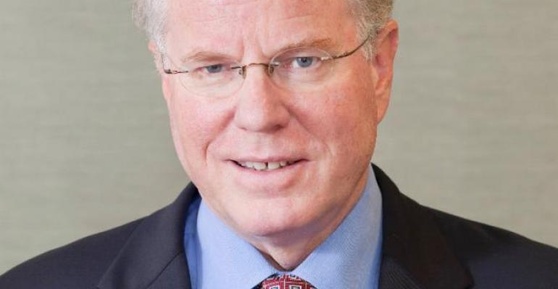
Northington is now chief executive of OSF Digital, a business based in Quebec City with an international Salesforce practice. His own base is Birmingham, Alabama. He took the CEO job in January 2025, after several years on the board. The appointment put an experienced operator beside a founder moving into a new role, just as artificial intelligence was becoming a central part of the company's offer. To understand that arrangement, it helps to go back to an earlier technology shift.
Two kinds of cloud, one company
In March 2012, GlobalOne and Cloud Sherpas combined under the Cloud Sherpas name. Northington, who had been GlobalOne's CEO, became chief executive of the merged business. Douglas Shepard, the previous Cloud Sherpas CEO, took charge of its Google business. Columbia Capital supplied $20 million in funding. The arrangement brought Salesforce expertise together with a team that helped companies use Google's business applications. Different specialties now shared an address on the corporate letterhead.
The commercial argument was straightforward. A company adopting online applications would still need somebody to make them work together. Moving software out of the building did not move every organizational difficulty with it. Northington saw room for a consultancy built around those newer applications, at a time when established services businesses had substantial commitments to traditional implementation and outsourcing work.
He brought experience from that older world. His previous roles included CEO of Plaut Consulting, COO of Adjoined Consulting, executive vice president of Kanbay and COO of Capgemini North America. Adjoined had passed through acquisitions by Kanbay and then Capgemini. His career had already put him close to the complicated business of combining professional services organizations. At Cloud Sherpas, the opportunity was to apply that experience to a different generation of software.
The hiring had to catch up
Money followed the opportunity. In December 2012, Cloud Sherpas announced a $40 million funding round with investors including Columbia Capital, Delta-v Capital, Greenspring Associates and Queensland Investment Corporation. It had more than 3,000 customers at the time. Such figures made the market look attractive. They also made the staffing question unavoidable. A consultancy sells work that actual people must be able to deliver.
By 2013, Northington was describing enterprise demand as the force pulling the business forward. His account of the response was practical: build leadership, marketing, architecture and sales capacity quickly enough to meet it. Bigger clients needed help, and the firm recruited to provide it. There is a pleasing absence of mystery here. An expanding market rewards a business that can answer the telephone and then do the work.
Cloud Sherpas also cultivated relationships with Google, Salesforce and ServiceNow. Its early enterprise customers included Coca-Cola, Oppenheimer and The Weather Company. Acquisitions added capabilities, while recruitment added people. Northington's account of the strategy was unusually economical: he put execution ahead of prolonged strategy work. The sentence has the appeal of a meeting that ends early because somebody has remembered there is a customer waiting.
Cloud Sherpas professionals expected to join Accenture when the acquisition was announced.
“We did a little strategizing and a lot of execution.”David Northington, 2014
What a CIO wanted to hear
Northington's descriptions of customers give the growth story a more human scale. In a 2015 conversation, he recalled that clients sometimes cheered when a cloud solution was presented. He was careful about the applause: the enthusiasm was for what the solution could do. Coming from enterprise resource planning, he found the response striking. A software presentation had briefly escaped its usual fate of being politely endured.
Behind that enthusiasm sat a less glamorous requirement: a defensible plan. Cloud Sherpas developed two-year cloud roadmaps through advisory engagements lasting roughly one or two months. The work helped a CIO decide where to begin and how to connect spending to business needs. The appeal was a sequence that could be understood before a large commitment was made.
That detail explains something about Northington's kind of consulting. The central character in his customer accounts is often an executive trying to reconcile competing demands. A new application needs to improve something people recognize, then fit into the rest of the organization. The technology may be fresh; the obligation to make a useful decision survives every product launch.
Growth changes the furniture
By the time Accenture agreed to buy Cloud Sherpas in September 2015, the firm had become a specialist in Google, Salesforce and ServiceNow services. Accenture expected more than 1,100 professionals to join its Cloud First Applications team, including another 500 Salesforce-certified professionals. The deal's terms were undisclosed. Its public rationale centered on people and capability, with the larger company providing reach across industries and markets.
Northington described the sale as a response to increasingly elaborate customer projects. Clients wanted to take solutions into more countries and more parts of their organizations. The consultancy had been changing rapidly itself. Acquisitions, recruitment and larger engagements meant processes needed regular revision. A business that keeps growing cannot assume yesterday's arrangements will stretch indefinitely, like a forgiving pair of trousers.
After the acquisition closed in October 2015, Northington became a managing director in Accenture Cloud First. His responsibilities included integrating Cloud Sherpas and helping grow the business. That continuation matters. Selling the company left him with the operational work of making the combination function. The signatures were one milestone; the customer still expected somebody competent to show up on Monday.
A culture that could travel
There is another side to the acquisition arithmetic. In 2015, entrepreneur Ryan Westwood described Northington's approach to a workforce spread across countries. Employees helped define the company's vision, mission and values. Westwood recounted decisions in which Northington accepted a less profitable option rather than contradict those commitments. Values acquire meaning when they are permitted to inconvenience the accounts.
The same account described a chief executive willing to join a representative on a customer call or travel to help with a difficult relationship. Cloud Sherpas had around 1,100 employees by then. Its size had not, in that telling, turned the CEO into a distant ceremonial figure. The company received a 2015 Glassdoor Employees' Choice Award, giving that discussion of culture a concrete point of reference.
Northington's professional recognition also accumulated. He won the technology category in EY's 2015 Southeast Entrepreneur Of The Year program. Cloud Sherpas appeared on the Inc. 500 list three times during his leadership and topped the Atlanta Business Chronicle's 2014 Pacesetter list. These were different measures of a business growing quickly. The more interesting question was how the organization would remain recognizable to the people inside it.
Taking the experience into the boardroom
In January 2018, Northington joined Contino's board. His explanation of the advisory role emphasized helping solve the problems that come with rapid growth. He urged the company to combine close client work, an energetic delivery team and a culture where learning could move in every direction. He even suggested making learning into a game. For someone associated with integration, it was a small reminder that seriousness need not require solemnity.
Lemongrass brought him onto its board in July 2020. Its work focused on SAP systems running on AWS, extending the pattern beyond his better-known Salesforce experience. He described the company's stage of development as his sweet spot
. The assignment again concerned international scale, customer expectations and keeping innovation moving while the business expanded.
His board connections also included ModuleQ, an AI company, and Rising Tide Digital, a Columbia Capital-backed holding company investing in supply-chain technology. UAB's Collat School of Business lists him on its dean's advisory board. Taken together, these affiliations show a career that moved between running services companies and advising them. The useful common ground is experience with the moment when a promising organization needs more structure.
The founder moves toward AI
OSF offered another version of that moment. Northington joined its board in 2020 and became chairman in 2021. When he took over as CEO on January 21, 2025, co-founder Gerard Szatvanyi became chief AI officer. The founder, who had led the company for more than two decades, would focus on AI strategy and implementation, including OSF's AllAI offering. The operating leadership moved to someone already familiar with the business.
The division of responsibilities gave the transition a specific shape. Northington would lead the company; Szatvanyi would concentrate on the technology direction. Their work met inside an organization with an established international footprint and a long Salesforce relationship. OSF had already grown through acquisitions before the handover. Northington was taking responsibility for a business with its own history, customers and ways of working.
His stated ambition at the appointment was to help bring AI to clients through OSF's Salesforce partnership, including Agentforce. That objective fits his earlier interest in making new platforms useful within existing companies. It also raises the familiar delivery question in a new form: can the organization turn a technical possibility into something a client can depend on?
- 2012GlobalOne + Cloud Sherpas
- 2015Cloud Sherpas + Accenture
- 2018 / 2020Contino / Lemongrass boards
- 2025OSF chairman becomes CEO
The next test is delivery
The direction became more concrete during 2026. In June, OSF joined Salesforce's Forward Deployed Engineering Partner Network. In September, it launched a global Agentforce Operations practice. The latter brought together compact specialist teams, implementation methods, governance and customer training. Its announced purpose was to move AI work from experiments into everyday enterprise operations. These are company developments under Northington's leadership, rather than individual inventions credited to him.
What makes the sequence interesting is its resemblance to his earlier work. A new technology creates appetite. Specialist knowledge becomes valuable. Teams need methods they can repeat, and customers need help absorbing the change. His public career keeps returning to those organizational questions, even as the product names change. Northington's next chapter at OSF will be judged in the ordinary places where consulting earns its keep: a team that can deliver, a process that works and a client willing to come back.
Follow the work
More on Northington’s career, the companies and the technology behind this story.
- OSF Digital
- David on LinkedIn
- The Cloud Sherpas acquisition
- The 2015 cloud strategy interview
- The Contino board appointment
- The Lemongrass board appointment
- OSF’s 2026 engineering network appointment
- OSF’s Agentforce Operations practice
- OSF videos on YouTube
The YouTube channel belongs to OSF Digital.