Geoff Gilmore likes a business with four quarters. He played basketball at Valparaiso University, and the arrangement still appeals to him: look at the score, adjust the plan, keep playing. Steel adds a few complications. Your opponents include the price of the material in your warehouse. And a timeout can involve German corporate law.
In June 2026, Worthington Steel completed its takeover offer for Klöckner & Co, securing a majority stake in the German metals processor. Gilmore, its president and chief executive, had reached a different sort of court. The business he joined as an inside sales representative in 1998 was pursuing a combination announced at roughly $9.5 billion in combined revenue. The offer implied a $2.4 billion enterprise value for Klöckner.
He could appreciate the absurdity of the education involved. After the closing, he joked about acquiring an enormous amount of knowledge he might never use again. Acquiring the company, meanwhile, left plenty of work that would require repeated use: integrating operations, reducing debt and getting people accustomed to one another. His career has supplied a long apprenticeship for that last task.
The guard from Michigan City
In 1991-92, Gilmore was a Valparaiso sophomore from Michigan City, Indiana. He stood six feet four and wore number 24. The previous season, he had worn 21. Those small details locate him before the executive biography begins: a young guard on an Indiana college basketball team, with a uniform rather than a business title.
Years later, talking about the Klöckner deal, he connected basketball with the encouragement teammates give one another through uneven stretches. He also enjoyed the calendar’s convenient resemblance to a game. “I like the fact that business has four quarters, just like basketball,” he said in January 2026.
The comparison is revealing because it allows for adjustment. A quarter supplies information; the next one supplies another chance to respond. That is a useful preference in an industry whose raw material changes price and whose customers face their own unpredictable demand. A game plan can be sound and still need revision. Steel offers frequent opportunities to discover this.
An education in both sides of the order
Gilmore entered Worthington Industries through sales. His early progression took him from inside sales to managing a territory and then to responsibility for automotive commercial business. By June 2006, he was director of automotive sales. It was a route into manufacturing that began with the people buying the output.
In April 2010, he became general manager of the Delta, Ohio, steel facility, responsible for manufacturing and sales. The next July brought the purchasing job, with responsibility across steel, commodities and original equipment manufacturer procurement. In August 2012, he became president of the steel business.
Read those appointments together and the preparation becomes unusually concrete. Sales meant dealing with customer requirements. Plant management added responsibility for making and shipping the material. Purchasing put him on the other side of the transaction. The same order could look very different from each desk. His promotions required him to learn those differences, rather than spend an entire career defending one department’s view.
- 1998Inside sales
- 2010Delta plant general manager
- 2011Purchasing vice president
- 2012Steel division president
- 2018Industries COO
- 2023Steel company CEO
The trouble with being ready
His responsibilities widened again in June 2016, when he took charge of Worthington Cylinder Corporation. In August 2018, he became executive vice president and chief operating officer of Worthington Industries. The company later credited his steel leadership with three record earnings years. In cylinders, he oversaw what was then Worthington’s largest acquisition, and the business achieved record earnings in his second year. Moving between businesses gave him more than additional lines on a résumé. It also exposed the limits of a leader’s own enthusiasm.
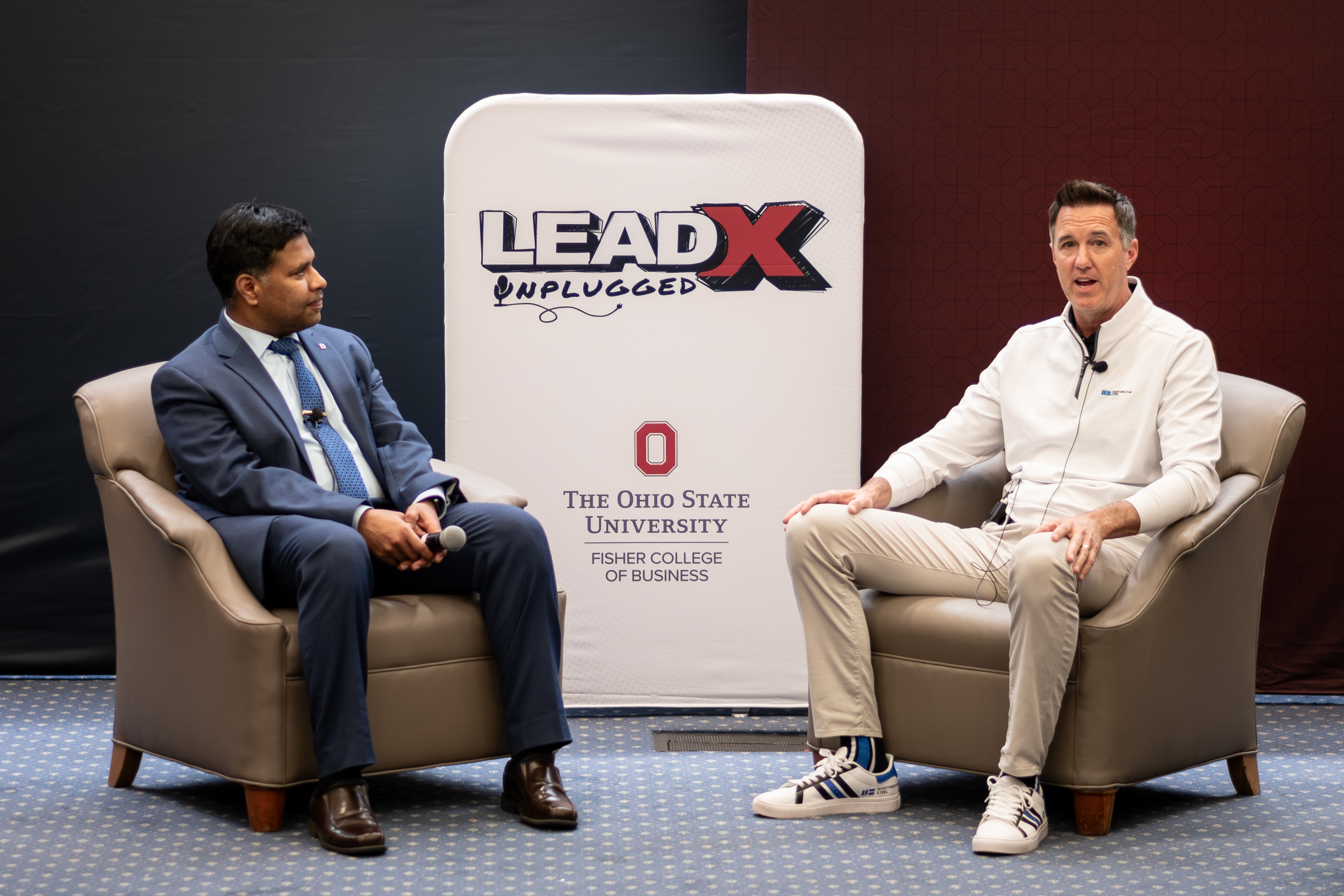
At an April 2026 student event, Gilmore recalled taking over a business assembled through acquisitions and trying to change it quickly. His readiness had exceeded the organization’s. The lesson he offered was disarmingly practical: “When you make big changes, your pace matters.” He had needed to build trust and prepare people for the changes he wanted.
“When you make big changes, your pace matters.”
Geoff Gilmore · LeadX: Unplugged, April 2026
There is a useful tension here. An executive is paid to see ahead, but the rest of the company still has to get there. A clear destination does little for employees who cannot see how their own work fits into the trip. Gilmore’s account gives the problem a recognizable human scale: the boss has been thinking about a decision much longer than the people first hearing it.
A familiar name gets its own ticker
On December 1, 2023, Worthington Steel became an independent public company, trading on the New York Stock Exchange as WS. Shareholders of the former parent received one Steel share for each parent share they held. Gilmore became the new company’s president and chief executive.
The name carried an older history. John H. McConnell had founded the steel processing business in 1955. The separation gave that business its own corporate future, while the other company became Worthington Enterprises. Both retained Columbus as their headquarters. Gilmore’s new assignment therefore combined institutional familiarity with a fresh set of public responsibilities.
It also sharpened what he would be asking investors to understand. Worthington processes metal to customers’ specifications and supplies products such as electrical steel laminations and tailor welded solutions. Its opportunities extend into vehicle manufacturing, electrical equipment and infrastructure. The appeal depends on the work performed on the metal, the usefulness of the finished product and the reliability of its delivery.
The geography of a bigger bet
The Klöckner agreement, announced on January 15, 2026, expanded the ambition. Klöckner brought roughly 110 locations across North America and Europe, together with capabilities in aluminum, stainless steel, plate and long products. Worthington identified approximately $150 million in anticipated annual synergies, targeted for full realization by the end of fiscal 2028. Those were management’s objectives, with the execution still ahead.
Gilmore’s explanation of the fit was geographical as well as financial. Worthington’s presence was concentrated in the Midwest and northern United States. Klöckner had a substantial southern presence through its American business. There was also overlap in Mexico. A broader footprint could make the combined offering more useful to customers with operations across regions.
He drew a similar connection between customer groups: Worthington’s automotive experience and Klöckner’s appliance exposure could create opportunities to share capabilities. This was an argument about what two organizations might do together. It would have to survive the practical questions of sales relationships, plant routines and who was responsible for what.
The closing on June 3 settled the takeover offer. Operating integration required further steps. The distinction matters to Gilmore’s story because it puts a limit on the cinematic version of dealmaking. There is no final handshake after which all the hard parts obligingly disappear.
A scoreboard with two columns
By October, the first quarterly results including Klöckner gave a view of the enlarged business. For the quarter ended August 31, 2026, net sales were $2.73 billion, compared with $872.9 million a year earlier. Operating income rose to $56 million from $48.3 million. The company also reported a $7 million net loss attributable to controlling interest.
A larger business. Work still ahead.
$56mOperating income
−$7mNet result attributable to controlling interest
Quarter ended August 31, 2026. Sales reflect the majority acquisition; the comparison does not represent organic growth.
Those figures resist a tidy victory lap. Adding a business changes the scale of sales immediately; earning the anticipated benefits is a separate assignment. The larger revenue total is a measure of the new perimeter. Profitability, financing costs and integration will help determine what that perimeter is worth.
The timetable remained consequential. Worthington signed a domination and profit and loss transfer agreement with Klöckner on September 8. Its effectiveness required shareholder approval and registration, and could occur no earlier than January 1, 2027. In an October 21 statement, Worthington confirmed an October 23 vote and said it would wait at least a year before seeking another vote if the required majority was not achieved. Until the agreement became effective, Klöckner would continue operating independently.
Still willing to be the student
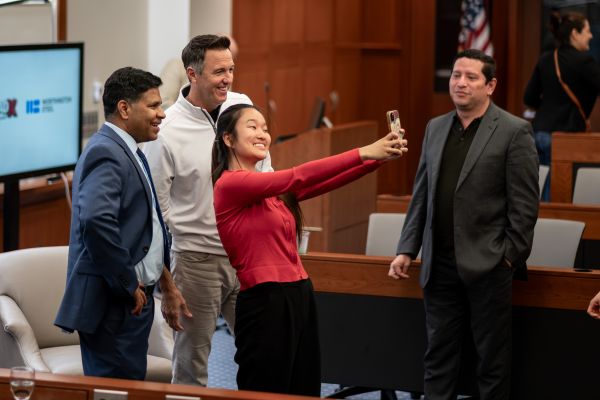
Gilmore’s education includes a bachelor’s degree from Valparaiso and an MBA from the University of Michigan. His connection to learning also runs through the people he employs. Worthington Steel has supported employees in Fisher’s Executive MBA program, and he has met with participants to discuss leadership. The investment gives his own route through the company a wider application: responsibility can grow when an employer makes room for it.
His approach to artificial intelligence has involved a similar willingness to learn in public. Discussing their podcast conversation, host Geoff Woods described a CEO who initially doubted AI’s place in steel manufacturing, then became an advocate for adoption. Worthington and the American Iron and Steel Institute subsequently shared the interview as an account of Gilmore learning firsthand before guiding others.
The company’s fiscal 2026 review placed AI and automation alongside electrical steel investment and acquisition preparation. Its new Burlington, Ontario, Tempel facility expanded transformer core manufacturing capacity, including amorphous core technology. Gilmore’s agenda reaches from software to physical equipment, from making decisions with better information to supplying the machinery of an expanding electrical grid.
For the former guard, the interesting part of the four-quarter comparison is what happens between them. You assess what worked, admit what failed and decide what the team can execute next. Gilmore now has a much larger business to account for, and a transaction whose legal and operating pieces follow different clocks. He has already explained the danger of assuming everyone is ready because the president is. The next stretch will give that lesson plenty of use.