A car door looks like a single decision. Choose a shape, stamp some steel, add paint. But the metal around a hinge has a different job from the broad expanse beneath a window. Making every inch equally thick would be convenient. It would also spend material, weight and money where the design might not need them. Worthington Steel has built a business around noticing such differences.
The short version / 30 seconds
- It turns mill-supplied metal into material manufacturers can actually use.
- TWB joins different sheets before stamping; Tempel makes electrical steel laminations.
- A 2026 majority investment in Kloeckner adds scale, while operating-control conditions remain.
The useful part happens in the middle
Worthington occupies the space between a steel mill and a finished machine. A coil arrives with possibilities. A customer needs a particular width, thickness, surface and behavior under a press. Worthington can pickle it, slit it, roll it, coat it or cut it into blanks. Its metallurgists help match the material and processing to the intended job. A grade on an order sheet is only the beginning.
This is a business for manufacturers: automakers and their suppliers, agricultural equipment makers, construction businesses and heavy-truck producers. The company served approximately 1,500 customers in fiscal 2026, before acquiring Kloeckner. Automotive was its largest market. Relationships with General Motors and John Deere show up in supplier awards, a useful indication that the work survives the customer's scrutiny.
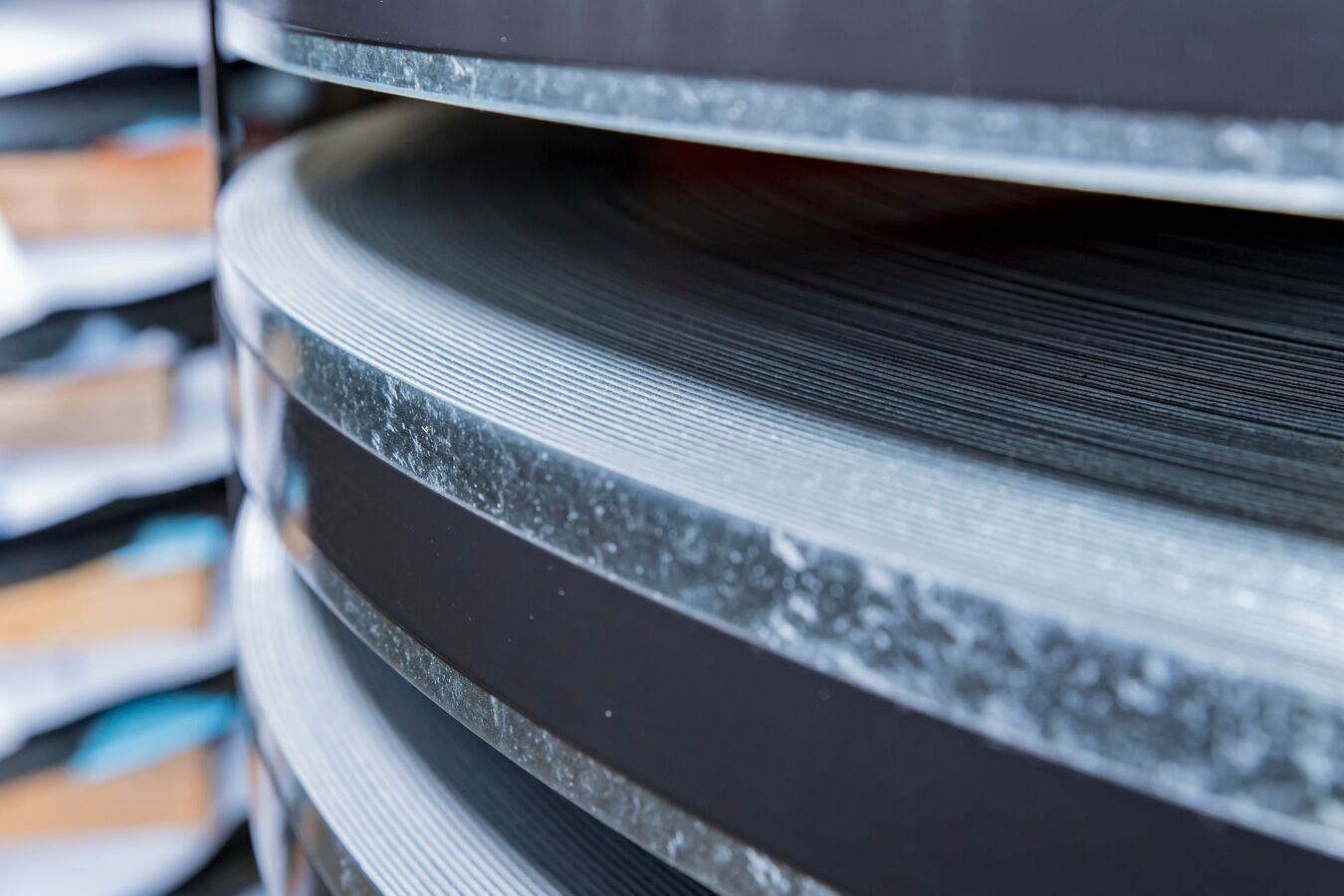
There are two principal ways to buy that help. In a direct sale, Worthington buys metal, processes it and sells the result. In toll processing, the customer owns the metal and pays for the work. A manufacturer can therefore hire capacity without buying another processing line. The useful comparison includes equipment, staffing, scrap and delivery, alongside the quoted price per ton.
Where the value gets added
A car door with a better material budget
TWB, Worthington's majority-owned joint venture with BAOSteel Tailored Blanks, takes the logic further. It laser welds sheets of different thicknesses, strengths or coatings into one blank before the customer stamps or forms it. The design can put stronger material in highly stressed areas while taking weight elsewhere out of the equation. Think of it as giving a panel a more discriminating shopping list.
The detail that matters can be very small. For certain hot-formed blanks, an aluminum-silicon coating must come off the weld edge. Leaving it there can compromise the weld. TWB licensed ArcelorMittal Tailored Blanks' ablation technology to handle that preparation. Here, innovation includes removing a troublesome layer before joining two useful ones.
“Without the customer and their need for our products and services we have nothing.”
Worthington's published philosophy
An $85 million bet on the grid
The electrical business follows a related principle: the customer needs an engineered component. Tempel produces precision electrical steel laminations for motors, transformers and generators. It also offers tooling, prototypes and engineering support. Worthington Industries, the predecessor company, bought Tempel in 2021 for an announced approximately $255 million, before final adjustments. In June 2025, Tempel added an approximately 52% stake in Italy's Sitem Group.
Then came the factory. In June 2026, Tempel opened a 250,000-square-foot facility in Burlington, Ontario. The approximately $85 million investment expands transformer-core and lamination manufacturing. Grid modernization and growing electricity use give that capacity a reason to exist. For an equipment maker, the attraction is tangible: a supplier investing in the components its production schedule requires.
Approximate investment in Tempel Canada's new facility
But demand has its own calendar. In its quarter ended May 31, 2026, Worthington recorded $94.5 million of electrical-steel goodwill and long-lived asset impairments. It cited weaker industrial-motor demand, increased foreign competition and delayed automotive program launches. Those charges do not establish that electrification has stopped. They show how an attractive market can deliver orders later, or less profitably, than a company's asset valuations assumed.
A majority stake, then another hurdle
The Kloeckner transaction changes the size of the experiment. Announced in January 2026 at €11 per share, the offer implied a $2.4 billion enterprise value. That figure describes the whole target's enterprise value, rather than the cash paid for the initial majority stake. Kloeckner brings a broader metals portfolio and a distribution and processing network across North America and Europe.
One early obstacle was the acceptance condition. The offer originally required 65% of shares. By March 9, Worthington had secured approximately 56.9%; it lowered the threshold to 57.5% and extended the deadline. The €11 price stayed put. The public record shows what management changed, without revealing its private deliberations. Settlement in June delivered a majority holding.
Ownership still leaves another gate. A September operating-control agreement requires shareholder approval and registration, with effectiveness no earlier than January 1, 2027. Worthington's October 21 statement said Kloeckner continues to operate independently pending effectiveness. If the October 23 vote fails, Worthington says it will wait at least a year before seeking another. The January forecast of $150 million in annual synergies therefore remains a forecast.
The detail worth borrowing
Worthington competes with service centers such as Reliance, Ryerson and Russel Metals, as well as other processors. Its particular combination of flat-rolled processing, tailored blanks and electrical laminations gives buyers several kinds of expertise. Price, quality and delivery still decide orders. The company's Golden Rule philosophy, profit sharing and preference for internal advancement are practices worth examining, rather than substitutes for those basics.
The corporate shape is relatively new. The steel operation traces its roots to John H. McConnell in 1955; today’s separate public company began trading in December 2023. That distinction matters when judging the expansion. Worthington has decades of processing experience, but a much shorter record allocating capital as an independent listed business. Adding geographic reach and product categories gives its sales teams more to offer. It also asks management to coordinate businesses with different customers and production requirements.
The lesson a reader can borrow is to specify the result before shopping for the material. Ask what the part must withstand, how it will be formed and what a missed delivery costs. External processing works when the supplier's capabilities and logistics fit that answer. When they do not, outsourcing adds another handoff. Worthington's opportunity lives in making that handoff useful.