Put a suitcase in the back of a car and an ordinary mirror develops a problem. It faithfully reflects the suitcase. Add passengers, headrests, perhaps a trailer, and the driver’s view becomes a committee of obstructions. Gentex’s Full Display Mirror offers a simple escape: flip a lever and the reflection becomes a camera feed. The suitcase stays where it is. The view moves outside.
- Gentex builds the electronics behind auto-dimming and digital rearview mirrors.
- Its buyers are mostly carmakers and their suppliers; drivers experience the result.
- Its trick is adding useful functions to a familiar object, backed by its own manufacturing expertise.
That little lever is a useful way into Gentex. Here is a company whose most interesting product offers both a new behavior and an old one. You can use a display without surrendering the mirror. The Michigan manufacturer has spent decades making that small patch of automotive real estate more valuable.
01 / First, it learned to see smoke
Fred Bauer founded Gentex in 1974 to make fire-protection products. Its early distinction was a dual-cell photoelectric smoke alarm. The company describes a detector designed to spot slow, smoldering fires while reducing false alarms. The underlying task was optical: recognize a meaningful change in light, then make electronics do something useful about it.
The automotive connection becomes less surprising when viewed that way. Gentex introduced an electromechanical automatic-dimming interior mirror in 1982. In 1987 came an electrochromic version. Instead of mechanically changing the viewing arrangement, the newer design used electrically controlled chemistry to darken the mirror in response to glare. Exterior electrochromic mirrors followed in 1991.
The recurring expertise was sensing and controlling light. The customer and the setting changed. That distinction matters to anyone trying to expand a business: an industry label can conceal skills that travel.
02 / The familiar place for a new screen
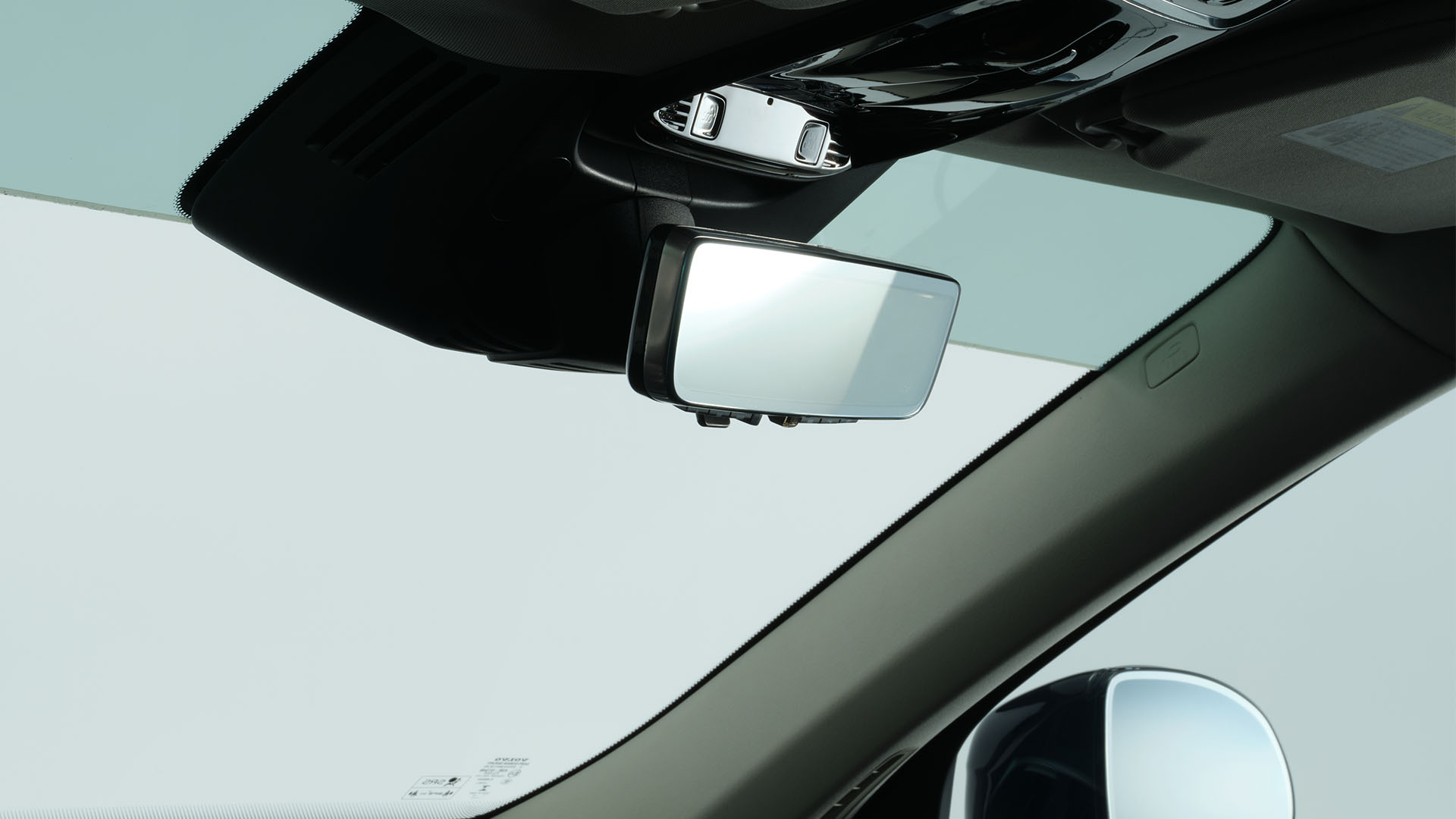
A Full Display Mirror streams a rear-facing camera into an LCD integrated behind the reflective surface. In display mode, passengers and luggage no longer interrupt that camera’s view. In mirror mode, the familiar reflection returns. Availability depends on the vehicle, model year and equipment package; this is principally technology selected by an automaker.
That makes Gentex’s customer different from its user. The driver wants visibility. The automaker wants a feature that fits the vehicle, its price and its production program. Gentex develops custom camera, display, packaging and software combinations rather than handing every manufacturer an identical box.
The existing mirror position also offers somewhere to put information without asking the automaker to install another display elsewhere. Gentex’s camera-monitoring systems can combine rear and side views. Its trailer-camera technology can show what is behind, around or inside a trailer. The product grows by solving neighboring visibility problems.
About three times the volume in five years. Bars start at zero.
03 / The factory inside the feature
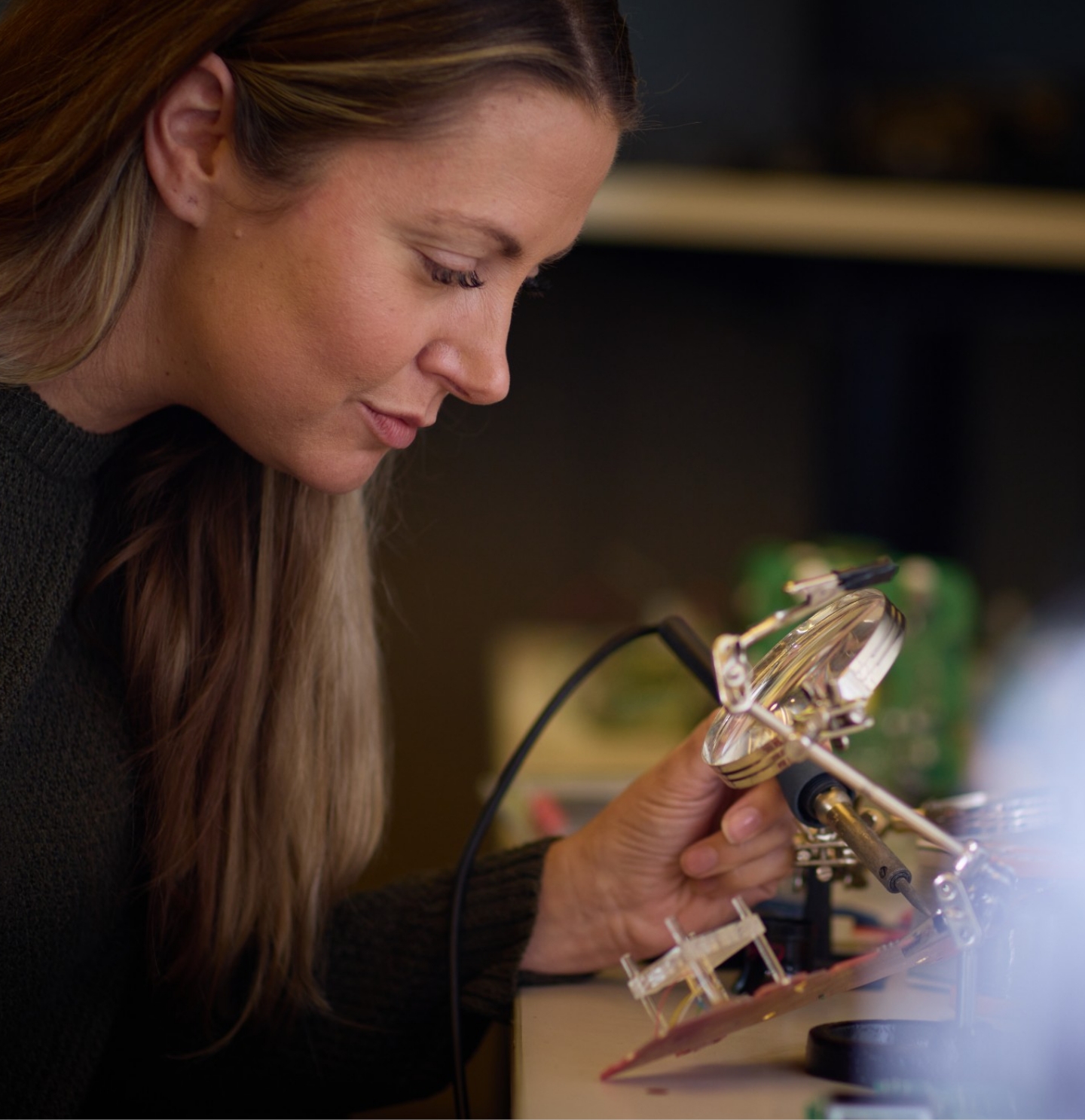
A competitor can identify the opportunity. Making the thing repeatedly is another job. Gentex’s capabilities span microelectronics, glass processing, coatings, chemistry, camera development, software and automated assembly. That collection lets it work on the relationship between the sensor, the image processing and the display, as well as the production process.
Its alternatives include Magna Mirrors, Ficosa and SMR Automotive, with Panasonic among competitors in digital mirrors. There is a pleasing complication: Gentex also supplies mirror components to some competitors. Automotive supply chains permit a company to compete for one program and contribute to another.
There are limits to putting everything behind the glass. A camera can become obstructed. Electronics can fail. Gentex’s hybrid approach preserves a reflective option. And a specialized feature can face competition from a larger bundle: its annual reporting has described pressure on SmartBeam high-beam control from multifunction driver-assistance systems. Owning a useful function does not guarantee owning its future.
04 / The $700 million garage button
In 2013, Gentex bought HomeLink from Johnson Controls for approximately $700 million. It had already integrated the vehicle-to-home control technology into mirrors for more than a decade. Buying it brought the intellectual property, testing facilities and business behind a feature customers already recognized.
The logic was close to home: protect an existing offering and expand beyond the mirror. HomeLink lets drivers operate compatible garage doors, gates and other home equipment. For another business, the useful question is which important part of an established product remains somebody else’s asset.
The 2025 purchase of VOXX stretched further, adding automotive electronics and the Premium Audio Company, including Klipsch and Onkyo. Gentex paid $7.50 for each remaining VOXX share it did not own. Its accounting put total transaction consideration, including the previously held stake and net of acquired cash, at $187.7 million.
05 / Growth has two different numbers
Gentex reported $2.53 billion in consolidated 2025 sales, up about 10%. Core sales excluding VOXX fell 2% to $2.27 billion. Those figures describe acquisition expansion and weaker underlying demand at the same time. They deserve to sit beside each other.
By the second quarter of 2026, automotive sales were down again year over year. Better earnings accompanied that disappointment, helped by cost management and product mix. More technology per vehicle can help a supplier; it cannot make the vehicle-production cycle disappear.
“While revenue during the quarter was below our forecast”
Steve Downing / Q2 2026 results
06 / What travels beyond the mirror?
Some extensions follow the original expertise closely: electronically dimmable aircraft windows, building fire alarms and PLACE smart-home safety devices. Others test its range, including eSight assistive eyewear and biometric access control. Demonstrations and acquisitions establish possibilities; durable customer demand must establish the businesses.

Even the workforce offers a concrete detail. Gentex’s on-site preschool, managed by ODC Network, provides second-shift care until 10:30 p.m. Manufacturing depends on people being able to arrive and stay. That problem deserves engineering attention, too.
The lesson a reader can borrow is specific: find a useful place in an existing routine, solve adjacent problems there, and keep improving the machinery that delivers the product. It works when customers value the additions enough to pay. In Gentex’s case, the place was already waiting above the dashboard.