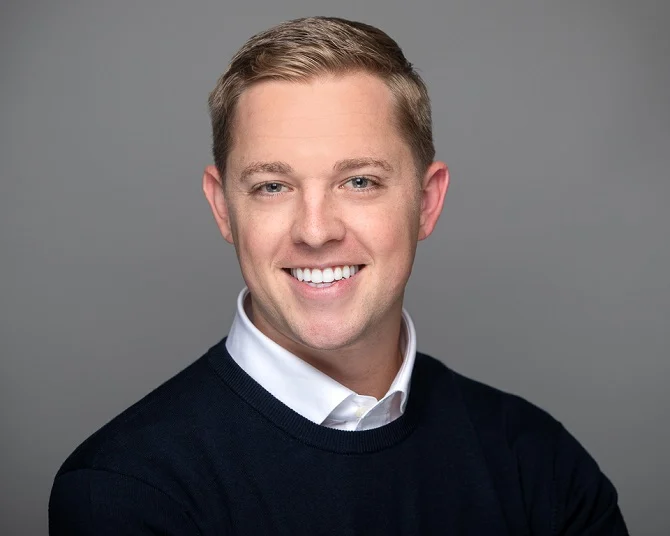
YesPress // Profile No. 042
Garrett Smallwood
The operator who took the keys at Wag five months before every office in America closed - and stayed long enough to take it public.
The operator who took the keys at Wag five months before every office in America closed - and stayed long enough to take it public.
The Lead
Garrett Smallwood runs Wag, the company you probably think of as "that dog-walking app." That description is now about half right. Under his watch since November 2019, Wag has stopped being a one-product startup and started behaving like a platform - walks, drop-ins, daycare, boarding, sitting, training, wellness plans, vet chat, and pet insurance, all stacked on the same caregiver marketplace. The dog walk is the doorway. The house is bigger than it looks from the porch.
He arrived at Wag the way many product-minded operators arrive places: he sold them his last company. In 2017, Wag acquired Finrise, the consumer-financing startup Smallwood co-founded with a subsidiary called Vetary, which handled point-of-sale financing for veterinary care. Smallwood took a product, partnerships and corporate-development title, kept his head down, and in November 2019 the board handed him the CEO job and a seat on it. Five months later, every dog in America was suddenly working from home with its owner.
A normal CEO would call that bad timing. Smallwood treated it as a renovation done while the customers were still in the house. Walks fell. Sitting and boarding had nowhere to go. So Wag did the obvious thing and the unobvious thing at the same time - it kept the marketplace running for the customers who still needed it, and rebuilt the product around the version of life that was coming back, not the one that left. By the time offices reopened, Wag had drop-ins, repeat scheduling, daycare, and a sitting-and-boarding business that hadn't existed at scale before. In 2022, the company went public via a SPAC merger as Wag! Group Co., trading on Nasdaq under the ticker PET.
Smallwood's career, viewed sideways, is a tour of marketplaces and operations roles at startups that get acquired before they get famous. He joined Redbeacon - a home-services marketplace - as one of the first five non-founding employees. Redbeacon got bought by The Home Depot. He became VP of Operations at Pillow, the short-term rental management startup that became part of Expedia's HomeAway. He co-founded Finrise. Wag bought Finrise. By his late twenties he had been part of three acquisitions and worked through what marketplaces do for a living: match supply to demand, in a category where both sides actually like you.
He has a tell, when he talks about the work. He doesn't say "users." He says "pet parents" and "pet caregivers," and he is one of the rare marketplace CEOs who genuinely seems to think both halves matter equally. "It's rare to find a marketplace where both sides love the platform," he has said, more than once. He has also called being a dog walker on Wag "the best gig in America." It is exactly the kind of line that sounds like a press release until you remember that the dog-walking gig economy is, in fact, real, and that someone has to convince a few hundred thousand people to keep showing up.
In 2020, Smallwood told TechCrunch that Wag was on a "radically different path to profitability" than its competitors. That phrase has aged better than most pandemic-era CEO quotes. While other consumer marketplaces spent the early 2020s burning money to grow into a moment that never arrived, Wag spent it adding products to the customers it already had. Specialty Services, launched in 2023, lets caregivers offer customized add-ons - the marketplace equivalent of letting your barista make their own seasonal drinks. Wellness plans and vet-chat extended the platform into the parts of pet ownership that aren't about leaving the house at all. Pet insurance got bolted on. The walk became the wedge.
Smallwood is not a celebrity CEO. He doesn't tweet through earnings calls. He shows up on podcasts - Something Ventured, Absolute Return - and talks the way an operator talks: about cohorts, retention, supply, the boring stuff. He is fond of saying that pet care is inflation-proof and post-pandemic-resilient. The argument is straightforward: people will skip a vacation before they skip the dog. The numbers, for a while now, have agreed with him.
When he is not running a public company, he is volunteering judgment to other companies. He is an Entrepreneur in Residence at NFX, the seed-stage venture firm in San Francisco that was founded by some of the marketplace-network-effect lifers he came up alongside. He has angel-invested in pet-economy companies like Dogdrop and Treat. He sits on the board of the San Francisco SPCA - the city's century-and-a-half-old nonprofit pet shelter - which means he has the slightly unusual experience of approving budgets for both a for-profit pet marketplace and the nonprofit shelter on the other end of the same city.
He lives in the Bay Area with his wife, a daughter, and a terrier mix named Toby. Toby is, of course, a Wag customer. There is a version of this story where this fact is cute marketing. The version Smallwood tells is more useful: he gets the same GPS pet-walk update on his phone that any other Wag pet parent does, and he reads it the way founders read their own production logs.
Smallwood's stated bet is that pet care, taken in aggregate, is one of the last great unbundled categories in American consumer life. The vet is a place. The dog walker is a person you found on Nextdoor. The boarding kennel is a building on the side of the highway. The insurance is a different company entirely. He thinks all of those should live in one app - and that the gig is to be the company that pulled the unbundling off without making the experience feel like a software company. The dog still has to get walked.
That is the harder problem, and it is the one he keeps returning to in interviews. Wag's caregivers are independent contractors. The platform's reputation lives or dies on whether they show up on time, hand over the leash with a smile, and send a photo of the dog mid-sniff. No amount of mobile app polish fixes a no-show. Smallwood talks about that part of the business - the supply side, the caregiver experience, the background checks and the insurance - with more energy than he talks about features. It is the part of the job most CEOs at his stage delegate. He didn't.
Whether Wag becomes the operating layer for American pet care or stays a very good vertical marketplace is not a question anyone can answer in 2026. But the person trying it is the rare CEO with an unusually specific resume: marketplaces, operations, acquisitions, and a dog at home who genuinely uses the product. The rest is a public company's worth of execution.
The Resume, in Order
The Scrapbook
By the time he was running Wag, he had already been part of three acquisitions - Redbeacon, Pillow, Finrise - all marketplaces, all early-employee or co-founder seats.
That is how he has described being a dog walker on Wag, on more than one podcast. The line is half marketing, half labor-market observation.
He has used the phrase "best paw-ssible pet care solutions" in an official statement. Whether that is endearing or alarming depends on whether you also own a dog.
Sits on the board of the San Francisco SPCA - the nonprofit shelter - and chairs the board of Wag!, the for-profit marketplace. Same city. Different income statements.
Born in San Mateo, college at the University of Arizona, working life almost entirely in Bay Area marketplaces. He never strayed far from the corridor.
Quietly advises a portfolio of early-stage marketplace founders out of NFX. The kind of operator other operators call when their supply side is wobbling.
On the Record
"When you're at the office, when you're traveling, when you're on date night, Wag is the way you take care of your pet."
"It's rare to find a marketplace where both sides love the platform" - pet parents and pet caregivers.
On young people turning to dogs for companionship as a durable, market-level trend.
Listen / Watch
Smallwood on Wag's positioning as offices reopened and pet ownership stayed up.
An early-pandemic conversation about pets, marketplaces, and a path to profitability that did not look like everyone else's.
Pet tech, public markets, and why he thinks the category is inflation-proof.