Gabriel Bayomi’s team arrived in Germany with a prototype they had been unable to test properly. Back in Brazil, they had lacked the money to buy the tablets they needed. The first encounter with the real equipment went badly. They repaired the system within a day, and their networking strategy went on to win a prize. A working demonstration, it turned out, required some acquaintance with reality.
It is a useful opening to the story of someone who now sells tools for examining artificial intelligence. Years before the title of co-founder and CEO at Openlayer, Bayomi had experienced the embarrassment of a product meeting conditions its makers had not rehearsed. The repair was a success. Having to do it on arrival was rather less convenient.
Today, the question running through his work is how to discover those surprises earlier. His route has passed through Brasília, Cornell, Carnegie Mellon and Apple. It has involved human conversation, machine learning and a recurring difficulty: building something impressive does not settle the matter of how it behaves.
The long way to a conversation
Bayomi grew up in Brasília. At school, he liked mathematics and physics, but also debate and Model United Nations. He considered law. A six-month school business project, in which students had to make and sell a product, helped steer him toward engineering. There was something persuasive about watching another person use a thing you had made.
He enrolled in electrical engineering at the University of Brasília in 2012. Computer-network research gave him an opening into a different kind of building. His team’s 2013 MANIAC Challenge result in Berlin became one of the early entries on a résumé that would accumulate research projects and internships alongside the formal qualifications.
In 2014, a Science Without Borders scholarship took him to Cornell for an exchange year. By 2017, he had finished his degree in Brasília and was heading to Carnegie Mellon. The geography can make this sound like an orderly procession of acceptances. There was a less tidy version, too: he had applied unsuccessfully to Fundação Estudar before eventually becoming a fellow.
He spent time at Brightcove in Boston and at Kraft Heinz in Brazil, then worked on machine learning at Salesforce. Those settings gave the abstract word “data” several practical meanings: video systems, industrial processes, records that needed matching. A model becomes more interesting when somebody has a job for it.
- 2012Electrical engineering
University of Brasília - 2014Exchange year
Cornell - 2017Graduate study
Carnegie Mellon - 2019Machine learning
Apple - 2021Co-founder
Openlayer
At Carnegie Mellon, his work included ARTICULAB and the Tartan team in Amazon’s Alexa Prize competition. His master’s in Intelligent Information Systems was completed in December 2018. Conversational systems brought his technical interests into contact with an older curiosity about people: how communication works, and what a machine can make of it.
That combination appears in the way he has described his interests: natural language processing, machine learning and computational social science. The last field belongs in the list. Language arrives with speakers, habits and situations attached. A sentence can be perfectly legible while leaving a machine with quite the wrong idea.
Three colleagues, one recurring problem
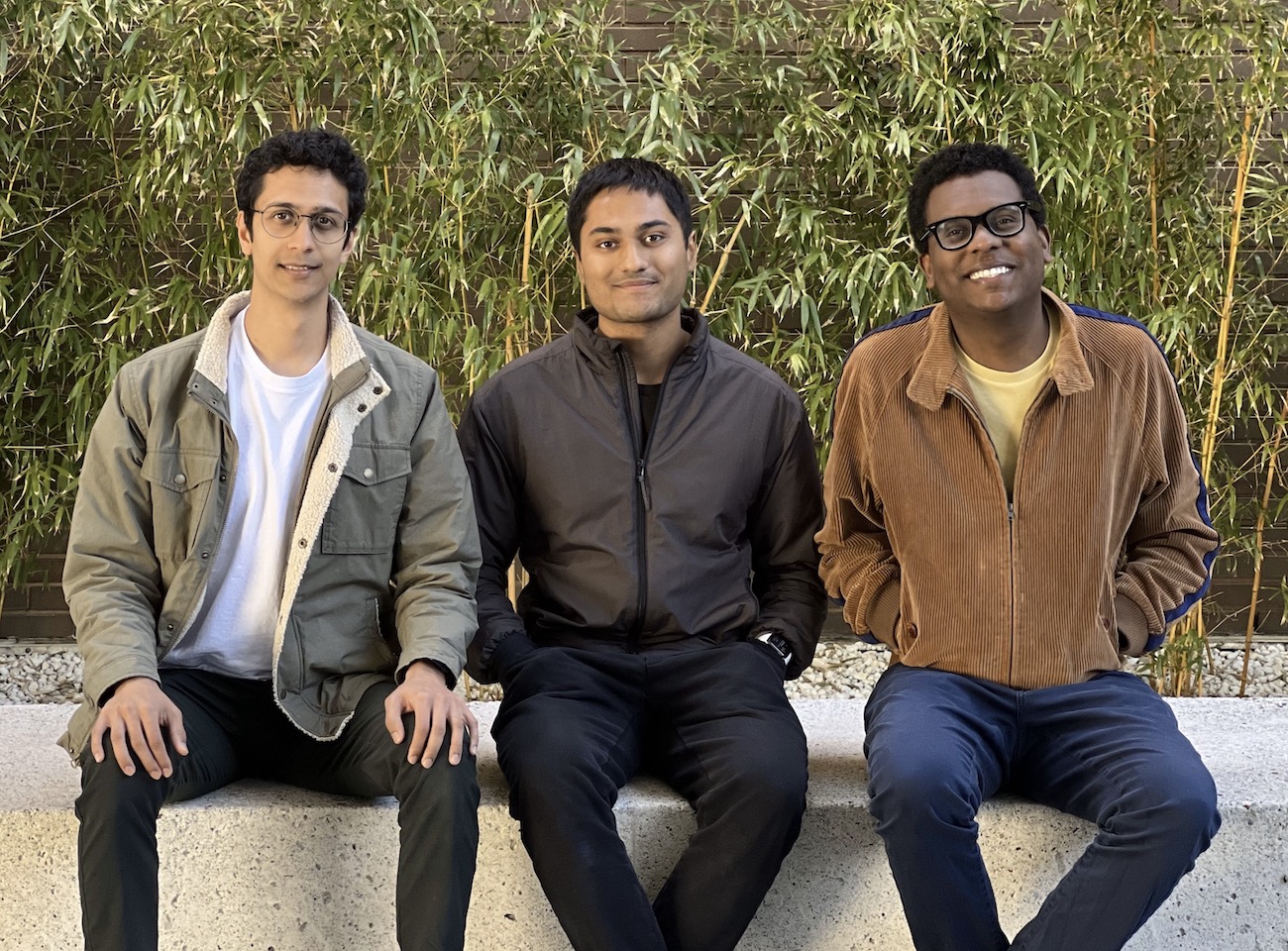
At Apple, Bayomi worked on Siri, combining multimodal signals to improve natural language understanding. He also met Vikas Nair and Rishab Ramanathan, the engineers who would become his co-founders. Their shared experience included work across Siri and Vision Pro, and repeated attempts to answer the same practical questions about models.
Different teams kept rebuilding the infrastructure for evaluation. Apple’s emphasis on privacy helped create separate working environments, and useful testing machinery did not simply travel from one group to another. The founders saw an opportunity in that repetition. If the same problem kept consuming engineers’ time, a shared product might have a purpose.
They founded the company in 2021 and joined Y Combinator’s summer batch. It began as Unbox, a name about opening the black box of a model. A name conflict prompted the change to Openlayer. The new name kept the idea of looking inside, which was a more durable ambition than any particular label.
For a sense of the difficulty, consider the difference between a test and the world outside it. A voice assistant may encounter road noise, an interruption or another device answering from elsewhere in the room. Each complication changes the setting in which a supposedly successful system has to perform. The demonstration cannot invite every possible interruption.
The founders’ earlier work had taken them across 15 Apple teams. That matters because the company’s starting point was a repeated engineering task, experienced in several settings. Bayomi and his colleagues were trying to turn work they already understood into something other teams could use without reconstructing it for themselves.
An alarm with a specific job
There is a second kind of translation in Bayomi’s career: explaining a technical product to the person who might buy it. In conversation about Openlayer, he has described moving toward concrete language. One example concerned alerts for failures in a large language model. An alert has a recipient and a reason to exist. A grand promise leaves rather more to the imagination.
“get alerts when your LLM fails”
Gabriel Bayomi, on describing Openlayer’s value
His ambitions extend further. He has spoken of Openlayer providing guardrails for AI and making evaluation part of the ordinary development routine. The practical version of that aspiration is easier to picture: define the checks, run them when something changes, and tell the team when a requirement is no longer being met.
In Openlayer’s developer workflow, a team can connect its GitHub repository and define tests that must pass. A new commit triggers those checks. After deployment, tests can also run on live data and raise alerts. The appeal is partly organizational. A concern that lived in one engineer’s head can become a repeatable check that colleagues can see.
A conceptual loop, not a performance chart. Each release returns to the checks.
Those checks have to mean something to the business using them. A team needs to decide which behaviors matter, which failures deserve attention and what happens when a result is unacceptable. Software can organize that work; people still have to choose the requirements. The uncomfortable questions do not evaporate when someone buys a platform.
Bayomi’s early customer story also contains a familiar piece of company building. Introductions from investors and supporters helped Openlayer reach its first paying customers, including eBay. Relationships opened conversations. The product still had to answer a recognizable problem once the introduction was over.
In an October 2022 conversation with Daliana Liu on The Data Scientist Show, Bayomi spent time on the mechanics: error analysis, data quality, adversarial tests and evaluation pipelines. The discussion also covered his move from engineering into an executive role. It is a useful companion to the funding announcements because it stays close to the work that preceded them.
One topic was the danger of treating a validation dataset as fixed. Another was overfitting a subset of data. Both return to the limits of a reassuring result: the examples selected for a test influence what that test can tell you. Choosing the examples deserves attention alongside choosing the model.
A larger company, the same awkward question
On May 14, 2025, Openlayer announced a $14.5 million Series A. Race Capital led the round, with participants including Y Combinator, NXTP, Mindset, Quiet Capital and Wayra. The financing gave Bayomi’s company more resources to pursue a business built around testing and governance as AI systems moved further into daily operations.
Capital announced for Openlayer’s next stage.
Company financing, not personal wealth.
Brazil remained part of the business. At the time of the round, it was Openlayer’s second-largest customer market after the United States. The company was also exploring other Latin American markets. For a founder whose education had depended on connections between Brazil and American institutions, the commercial map carried a recognizable shape.
The next year brought a distribution agreement. On March 25, 2026, Telefónica Tech announced that it would integrate Openlayer into its AI and data services, alongside consulting, systems integration and managed operations. Testing a system is one task. Helping a large organization adopt and keep operating the checks is another.
Then, in September 2026, Openlayer released jevals, an open-source Python library for agent evaluations and guardrails. Its proposition connected a development check to an operational decision: use the same evaluation definition to test an agent, then help decide whether an action in production should proceed, be blocked or receive human review.
The release included checks around tool choice, grounded answers and staying within scope. Openlayer described the library as an alpha and invited users to break it. That invitation is an appropriately practical detail. A tool designed to examine failures needs people willing to examine its failures, too.
The people around the machine
Bayomi’s public work also includes speaking within Fundação Estudar’s technology community and advocating participation beyond specialist data science teams. In a LinkedIn post about citizen data scientists, he argued for widening involvement in the process. It fits the collaborative side of his work: a model’s behavior can concern more people than the engineers who trained it.
His own path benefited from institutions that widened access: a Brazilian public university, an exchange scholarship and a fellowship supporting graduate study. These connections help explain the human scale of a career often summarized in company names. There were classrooms, research groups and introductions behind the eventual CEO title.
The student in Germany needed his prototype to work on the equipment in front of him. The founder now works on a larger version of that obligation, shared with colleagues and customers. AI can produce a convincing answer in a quiet room. Bayomi has made a business of asking what happens when somebody opens the door.
Follow the questions
Explore Bayomi’s work and conversations.
- Openlayer ↗ The company and its platform
- Gabriel on LinkedIn ↗ Posts and professional updates
- Twitter / X ↗ @gbayomi
- Personal website ↗ Redirects to his LinkedIn profile
- GitHub ↗ Public repositories
- Watch: The Data Scientist Show #055 ↗ A conversation with Daliana Liu
- Listen: Category Visionaries / BUILDERS ↗ Building and explaining Openlayer
- The Series A announcement ↗ May 14, 2025
- The Telefónica Tech agreement ↗ March 25, 2026
- Inside the jevals release ↗ September 23, 2026
- A conversation about his Brazilian beginnings ↗ Interview in Portuguese