In 2009, Tori Terhune went to lunch with a professional she was nervous and excited to meet. Her mentor was Jill Wagner, a public relations practitioner. The occasion was Fresno State’s Take a Student to Eat program, mercifully shortened to TASTE. Sixteen years later, Terhune came back to address the room.
By her account of the 2025 event, there were 81 mentor/mentee matches. She spoke about creating a personalized AI assistant. The subject was contemporary; the arrangement that brought her there was wonderfully old-fashioned. Someone further along in a career had made time for someone starting out. Now the former student had something to pass along.
That return trip is a useful way into TASTE. The meal supplies an occasion. The match supplies a person. For a student trying to imagine working life, those are two practical things to put on the calendar.
Reported by 2025 speaker Tori Terhune. A count of connections arranged, not jobs secured.
A career has an ordinary Tuesday
TASTE lives within Fresno State’s educational world. Its participants include Media, Communications and Journalism students; documented editions have also included Art and Design students. Working professionals supply career knowledge and mentoring. Advertising and public relations students help organize the experience. The service is an introduction with some structure around it.
The distinction matters. “You should network” is easy advice to give. It leaves the recipient to choose a person, invent a reason to approach them, and decide what to ask. TASTE takes responsibility for the match. Its program description places students beside people working in the fields they want to enter.
Consider the shape of the November 2016 edition. Students met their mentors at 9 a.m., spent a couple of hours job shadowing, then gathered for a luncheon at Pardini’s. The Fresno Advertising Federation presented the event, with students in a public relations campaign class coordinating it. Eric Santos, the Fresno State alumnus who founded Benchmark Intelligence, gave the keynote on networking and collaboration.
There is a sensible sequence here: see the work, then discuss it. A profession has a public face and an ordinary Tuesday. Seeing part of the Tuesday can make the lunchtime questions more precise. What does the team spend its time doing? What skills does a new person need? Which part of the job is hard to see from a classroom?
The people running lunch get homework, too
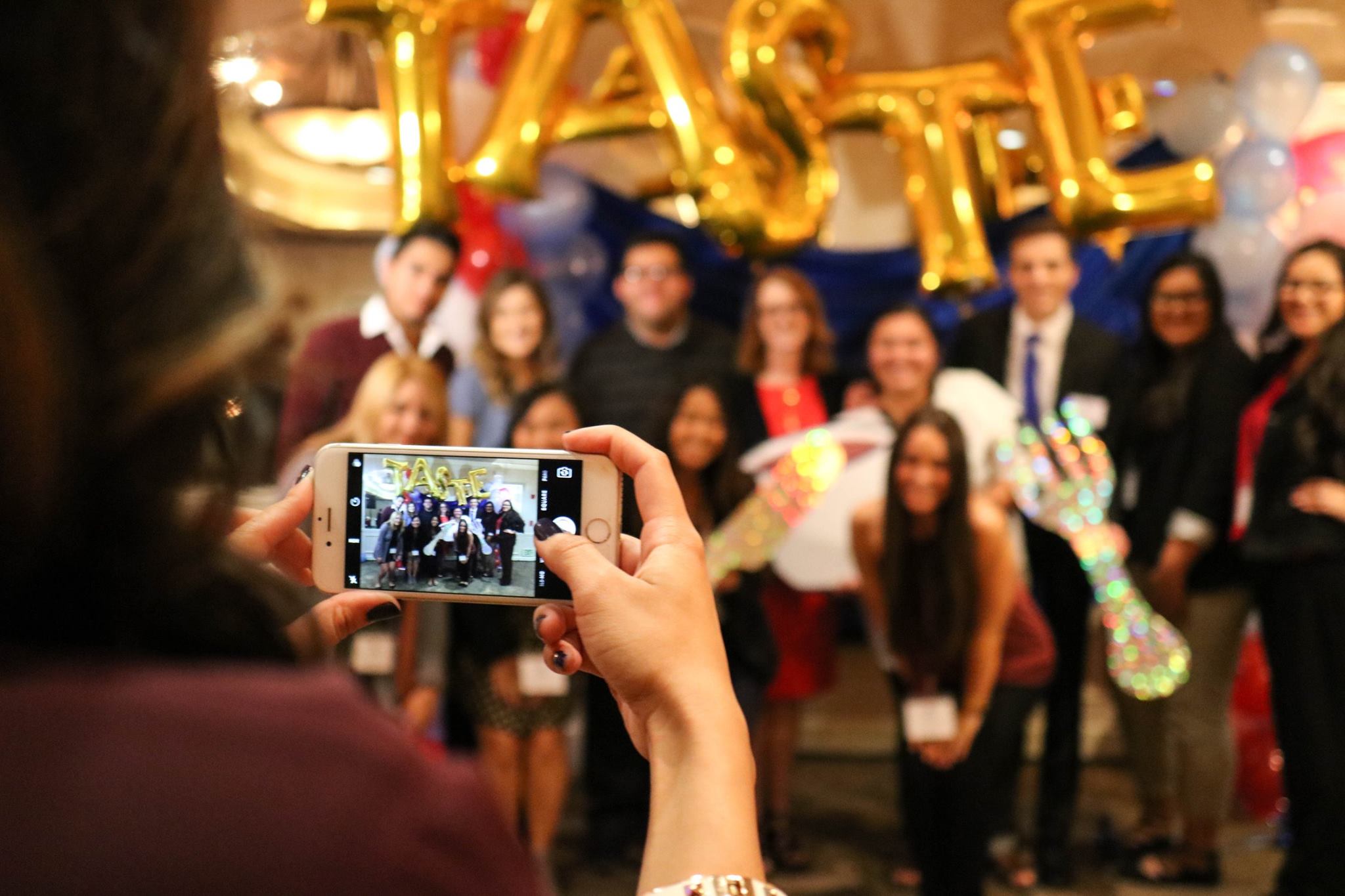
TASTE has a second classroom concealed inside the first. The students arranging the introductions are practicing the work of advertising, public relations and event management. They have people to reach, details to coordinate and an actual gathering to deliver. The department places TASTE among its hands-on student opportunities, describing a program that matches up to 100 MCJ students with area professionals.
One former organizer, Rebecca Hellwig, remembered the event in her university alumni profile. Her recollection was personal and practical:
“One of the most memorable experiences I had was putting on TASTE.”Rebecca Hellwig · MCJ alumna, class of 2009
The work continued through later student cohorts. In 2023, Jiselle Cardenas led the team running TASTE within TALK, Fresno State’s student-run advertising and public relations agency class. A scholarship announcement identified that role while recognizing Cardenas and fellow student Heidi Ecker. Leadership here can mean getting an educational experience ready for other people to use.
This is a distinctive place in the career-development market: a university-organized encounter that also gives its organizers professional practice. The participant gets access to a mentor. The organizer gets the responsibility of making the encounter happen. Both kinds of learning depend on somebody outside the classroom showing up.
Then lunch lost its dining room
In 2020, the pandemic disrupted the physical arrangement. Take a Student to Eat moved to Zoom. The student newsroom Fresno State Focus described it as the event’s first virtual edition, with organizers still matching students to professionals according to career interests.
The November 18 program ran from 10 a.m. to 1 p.m. Mentoring sessions came first, followed by workshops from Fresno State’s Career Development Center. Christine Rose, a journalist turned yoga instructor and entrepreneur, was scheduled to speak about changing careers during the pandemic. The event’s subject and its delivery had encountered the same disruption.
Graphic design student Elizabeth Pompa Rios had concrete things she wanted to learn: what designers do, what she should know before entering the field, and what companies expect from a portfolio. Those questions help explain why the meeting remained useful without a shared table. A student can take notes on the other side of a screen.
The episode offers a practical distinction for anyone copying the idea. The venue can change. The mentor still needs relevant experience, and the student still needs room to ask questions. Moving online addresses distance; arranging a thoughtful match addresses a different problem.
A small bill, a specific commitment
TASTE’s economics become easiest to understand at the level of a pair. Its 2023 reception description made attendance free for MCJ students, with registration preference for seniors. Professionals paid $40 to cover the reception for themselves and their student mentee. Proceeds supported MCJ Alumni & Friends Chapter programs and scholarships.
That edition also loosened the schedule. Students and mentors could meet during the two weeks before the April 12 reception. The shared gathering followed the individual conversation. Giving pairs a window to arrange their own meeting is a design choice another department could borrow without copying the whole event.
A separate 2025 faculty recruitment post spelled out another version of the bargain: $45 for local mentors covered their lunch and the student’s; $25 for virtual mentors covered only the student’s lunch. These were fees for that edition. The invitation again paired individual mentor time with a luncheon, scheduled for April 3.
Two lunches covered
Student lunch covered
The operating model draws on university and alumni partners, student organizing and professional participation. A mentor contributes time as well as money. For someone deciding whether to help, the assignment is legible: meet a student whose interests fit your experience, and support their place at the table.
Bring something worth remembering
Students have their part to do. Ahead of the 2018 event, student writer Kiku Gross published a TASTE preparation guide: arrive on time, dress appropriately, bring a résumé or portfolio, and take the first meeting seriously. The most useful point concerns what remains after the conversation. A professional who enjoyed meeting you still needs to know what you can do.
Compared with a broad career fair or an independently arranged informational interview, TASTE offers a particular combination: a match, time together and a wider gathering. Its value depends on fit. A student seeking a niche specialty needs someone who understands it. A mentor needs enough time to listen. A workplace visit needs access. No lunch can substitute for those conditions.
For a reader borrowing the approach, start small. Ask students what work they want to understand. Recruit people who do that work. Agree on the time commitment and who covers the meal. Help students prepare a few specific questions and something to show. Treat a later follow-up as a separate task, rather than assuming the event will take care of it.
Terhune’s return suggests one pleasing possibility: today’s recipient can eventually become tomorrow’s contributor. It is a long interval to put in an event plan. But somewhere inside it sits a very manageable first step. Put two people in touch, and give them enough time to finish the conversation.
Pull up a chair
Explore TASTE on LinkedIn, the MCJ department’s opportunities and the College of Arts and Humanities archive. New college coverage moved to Fresno State Today in July 2025.