Co-founder and CEO of Accorded. He spent fifteen years inside healthcare's plumbing, got tired of it, and started a company to fix the part everyone else ignored.
The face of a man who has read a lot of claims data. Cheung trades the spreadsheet for the strategy deck, but the actuary never really leaves.
Actuaries are not supposed to start companies. They are supposed to sit in the back, run the numbers, and tell you what your healthcare risk actually costs. Frank Cheung did that for eighteen years, and somewhere along the way he decided the back office deserved better software than the rest of us were giving it.
Today he runs Accorded, a San Francisco company he calls an actuarial intelligence platform. The pitch is unglamorous and exactly the point: take the messy claims, eligibility, and engagement data that healthcare organizations drown in, and turn it into something an actuary would actually trust. In May 2024 the company shipped Accorded Acumen, a platform that plugs straight into a customer's data warehouse - Snowflake, BigQuery, AWS S3 - and hands back standardized, audit-ready data assets for value-based contracting.
The market he chose is the one big consulting firms left behind. Smaller health plans and provider groups, the ones who could never afford a Deloitte engagement, are precisely the people Cheung built Accorded for. He has a name for the strategy: the path of least resistance. He means it as a compliment.
It worked well enough that in 2024 he landed on the list of the Top 50 Value-Based Care Thinkers - a strange honor for someone whose entire job is to make the thinking boring, repeatable, and correct.
There is a quiet ambition buried in the product. Acumen lets organizations run scalable actuarial and medical-economics analytics in-house, which is a polite way of saying it reduces the need for the traditional vendors and external consultants that Cheung himself once was. He is, in effect, building a tool that automates a chunk of his own former job - and handing it to the people who could never afford the human version. There are not many founders willing to point the disruption directly at their own résumé.
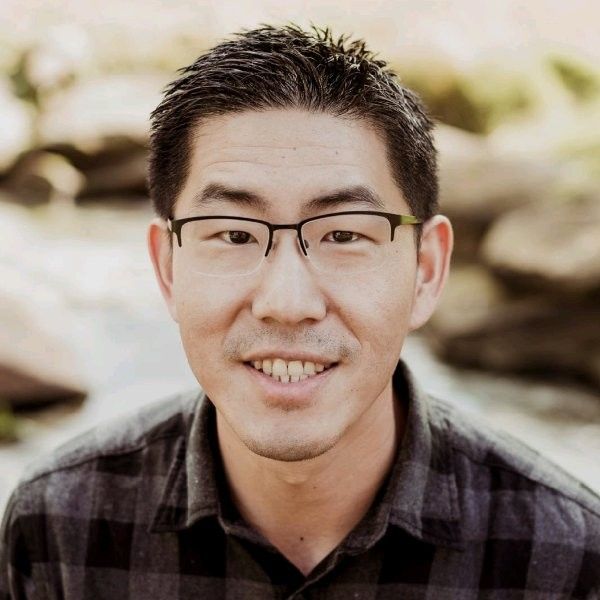
Cheung describes the founding of Accorded as "continuous frustration that built up over fifteen years in the healthcare space." Each job handed him another piece of the same puzzle - and another reason to believe nobody had bothered to connect them.
Five years at Blue Shield of California, climbing from associate to senior actuarial analyst. He learned how a health plan actually runs its money - and where the numbers go to die.
At Deloitte Consulting he advised payers and providers on value-based care and alternative payment models. He saw the provider side's pressures, and the bewildering complexity of getting a contract signed.
Leading analytics at Collective Health put him beside product and engineering teams. Proximity proved the hunch: this was a technology problem hiding inside a spreadsheet.
Cheung did not build Accorded alone. He met Thomas Bedington - a software engineer with an actuarial background - at Collective Health. They bonded over what Cheung calls "war stories" about healthcare data and interoperability, the kind of complaints that sound like grievances until one day they sound like a business plan. Bedington became Accorded's co-founder and CTO.
What makes the company unusual is its order of operations. Most healthcare software is designed first and validated later. Accorded designs its data models natively around actuarial models - and tests them against the harshest critics available.
"If our actuaries won't use it, external users won't either."- Cheung's product bar, in one line
It is a brutal standard, and a clarifying one. The strongest signal Accorded ever gets is its own actuaries reaching for the tool unprompted. Everything else - the demos, the dashboards, the investor enthusiasm - is downstream of that single test.
Selling that idea to outsiders took translation work. Pitching to investors unfamiliar with healthcare meant teaching them things actuaries take for granted: how long a value-based contract actually takes to negotiate, how resource-intensive the actuarial work behind it really is, why you cannot simply ship faster to make the timeline shorter. Cheung learned to educate before he could persuade, and the patience that requires shows up everywhere in how he runs the company.
Joins as an actuarial analyst, rising to senior. The grounding in how a health plan really works.
Senior consultant, then manager in Actuarial, Risk & Advanced Analytics. Value-based care, up close.
Head of Analytics and Director-level actuary. Meets his future co-founder. The technology thesis crystallizes.
Co-founds the company (legal entity Cerebrae, Inc.) with Thomas Bedington and takes the CEO seat.
Launches Accorded Acumen on May 10, 2024 - HIPAA-compliant, SOC 2-certified, warehouse-native. Named a Top 50 VBC Thinker the same year.
Acumen takes the three things every healthcare organization has too much of and too little control over - claims, eligibility, engagement - and turns them into clean, standardized, actuarially rigorous inputs. No new login. No new platform to learn. It lives where your data already lives.
Raw claims, eligibility files, and engagement data - messy, inconsistent, and impossible to trust at face value.
Data models designed natively around actuarial models, not bolted on afterward. Rigor is the default, not the upgrade.
Standardized, ready-to-use value-based-care data assets your own team can run analytics on, in-house and at scale.
Snowflake, BigQuery, Google Cloud Storage, AWS S3 - it integrates into the warehouse you already use.
Fully HIPAA compliant and SOC 2 certified, because in healthcare the boring guarantees are the load-bearing ones.
The smaller payers and providers traditionally priced out of big-firm consulting. The path of least resistance, by design.
Asked what he'd do with a magic wand, the AI-company CEO didn't reach for an algorithm. He'd expand access to medical education and fix the supply of doctors. More physicians, not more dashboards.
He studied economics and statistics at UC Berkeley - the exact academic DNA of an actuary who would later refuse to stay in the back office.
Accorded's legal name is Cerebrae, Inc. The brand you see and the entity on the paperwork aren't quite the same thing.
"The path of least resistance" is usually an insult. For Cheung it's the go-to-market plan - serve the underserved, and let the giants keep chasing the giants.
Cheung's career reads like a map of how American healthcare actually gets paid. He has sat inside an insurer, advised from a Big Four consultancy, and helped build analytics at a venture-backed health benefits company. Accorded itself is backed by investors including StepStone Group, Route 66 Ventures, Susa Ventures and Fika Ventures.
That map matters because it explains his unusual fluency. Cheung has lived on every side of the value-based table - the payer trying to manage risk, the provider trying to take it on, the consultant brokering between them. He understands that the incentives are not uniform: a Medicare Advantage plan and a Medicaid managed-care organization want fundamentally different things, and a tool that flattens that distinction helps no one. The temptation, he admits, is to chase all of them at once. The discipline is in refusing to.
His credentials give the whole enterprise its backbone. As a Fellow of the Society of Actuaries and a Member of the American Academy of Actuaries, Cheung carries the kind of professional rigor that healthcare buyers recognize on sight - the difference between a startup making claims about data and an actuary willing to stand behind the numbers. In an industry where trust is the scarcest currency, that signature on the work is part of the product.