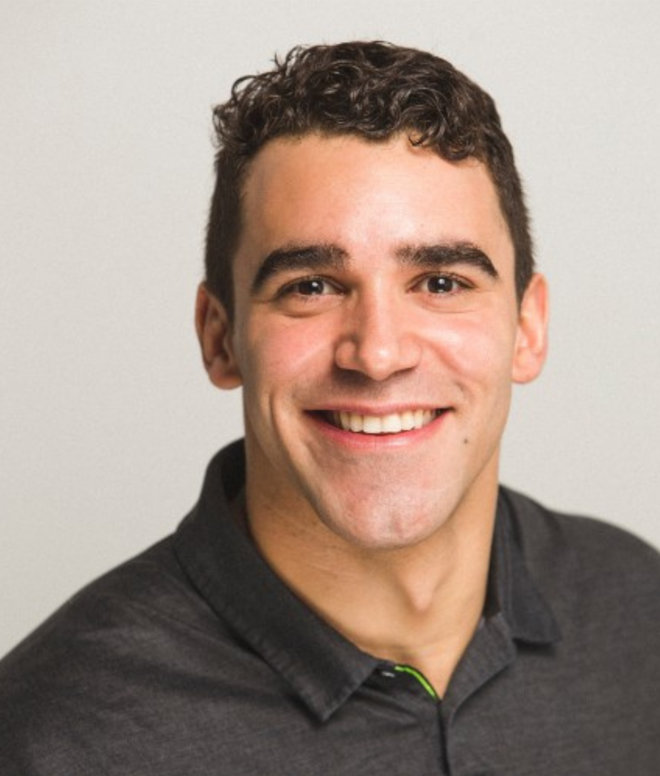
Putting the pension back into the 401(k)
Trevor Gary knows exactly what a broken retirement looks like, because he used to help take one apart for a living.
At Deloitte Canada, Gary sat on the pension actuarial team in Toronto. One of his regular assignments was helping companies wind down their defined-benefit pension plans and move employees into 401(k)-style accounts. It was steady, technical work. It was also a front-row seat to one of the quiet shifts in modern finance: the slow disappearance of guaranteed lifetime income.
"People are living longer and longer, and fewer of them have access to pension plans," Gary has said. The math was not complicated, and for a trained actuary it was hard to ignore. A pension pays you every month until you die. A 401(k) hands you a balance and wishes you luck. The savings were being built. The income was not.
That gap became the whole point of Micruity, the company Gary founded in 2017 and now leads as CEO. His insight was almost stubborn in its simplicity: a life annuity, the insurance product that trades a lump sum for income you cannot outlive, could recreate much of the pension experience inside a 401(k) - if only it were easier to reach.
The idea that changed shape
Micruity did not start where it ended up. Gary first pictured a consumer app, a place where an individual could see the gap in their retirement income and chip away at it, contributing as little as $100 a paycheck toward annuities from different providers. It was a tidy retail vision.
Then he went to Des Moines. Through the Global Insurance Accelerator, life insurance executives took him under their wing and walked him through how the industry actually works behind the counter. The problem, he learned, was not consumer appetite. It was data.
When people leave the plan, we need to be able to track them. That was the Eureka moment for me.
Retirement systems, it turned out, tend to lose sight of people at exactly the moment they need continuity most: when they change jobs, retire, or move their money. Annuities inside a 401(k) require recordkeepers, asset managers and insurers to speak the same language and keep passing information back and forth for decades. That handoff barely existed. So Gary stopped building an app and started building infrastructure.
The conduit in the middle
Micruity's product is the kind most people will never see. It is middleware - a secure layer that sits between the companies that hold retirement money and the insurers that guarantee income from it.
We're the data conduit sitting in the middle. We can move that data in a frictionless, secure way.
The strategy is deliberately top-heavy. Rather than chase everyone at once, Gary aims at the biggest employers first. "We're looking at the top 1,600 plans, with a combined 20 million or more participants," he has said. The logic is practical: large, stable employers with long-tenured workforces are the most likely to adopt lifetime-income options, and reaching them puts the technology in front of enormous numbers of savers at once.
His framing of the underlying problem is blunt. "401(k) plans were designed as retirement savings plans," Gary said around Micruity's most recent raise, "but today most Americans rely on these plans as their sole source of retirement income, leaving them vulnerable to market corrections outside their control." The company's answer is not to replace the 401(k) but to finish it - to add the payout half that the system was never really built to handle.
A cap table of would-be competitors
The clearest signal that Gary is onto something is who is writing the checks. Micruity has raised roughly $27 million, and the investor list reads like a roll call of the retirement industry: Prudential, TIAA and State Street led an early round, and a later raise of about $20 million in December 2025 added Nationwide Ventures, J.P. Morgan Asset Management, Reinsurance Group of America, Guardian, TIAA Ventures, Allianz Life, Pacific Life and Western & Southern, among others.
When that many large, competitive institutions all fund the same neutral piece of plumbing, it usually means the plumbing is something none of them wants to build alone. Micruity has also worked with carriers such as MetLife to widen access to retirement income products, positioning itself as connective tissue rather than a rival on any one side.
The person behind the platform
Gary's path into all of this was not obvious. He grew up in Toronto and went to McMaster University, where he earned two undergraduate degrees, in mathematics and economics, and captained the Marauders football team. His first job out of the gate was as a surgical consultant at a medical device company, before he moved into the actuarial world that would define his career.
Friends of the company describe a founder who thinks like an actuary - in systems, probabilities and long horizons - but leads like a captain, which he literally once was. The football detail is more than trivia. Building neutral infrastructure for an industry of competitors is a coordination problem, and coordination is what captains do.
The aspiration Gary keeps returning to is broad and unglamorous: help every American reach a secure retirement, not by inventing a flashier savings account, but by making guaranteed income as easy to move and manage as the data behind it. It is the part of the retirement story that decades of financial innovation mostly skipped - the question of what happens after the lump sum. Gary, the man who once helped switch pensions off, has spent the better part of a decade trying to switch a version of them back on.
"People are living longer and longer, and fewer of them have access to pension plans."
"We're the data conduit sitting in the middle. We can move that data in a frictionless, secure way."
"When people leave the plan, we need to be able to track them. That was the Eureka moment for me."
"We're looking at the top 1,600 plans, with a combined 20 million or more participants."
Funding, round by round
Who is Trevor Gary?
He is the founder and CEO of Micruity, a fintech company that builds infrastructure connecting 401(k) recordkeepers, asset managers and insurers to deliver lifetime retirement income.
What did he do before Micruity?
He worked as an actuary at Deloitte Canada on the pension actuarial team, where he helped companies close pension plans and move members to 401(k) plans.
Where did he go to school?
He earned degrees in mathematics and economics from McMaster University, where he also captained the football team.
How much has Micruity raised?
Roughly $27 million total, including a 2022 round led by Prudential, TIAA and State Street and a round of about $20 million in December 2025.
What problem is Micruity solving?
It moves retirement data securely between plan providers and insurers so 401(k) plans can offer annuities and pension-style guaranteed income to participants.