The first version of Franco Giaquinto's construction career arrived in the form of a mess at his brother's house. It was 2014. Boards, paint cans, tools, and workers had swallowed the patio during a renovation in Santiago. Giaquinto was studying and working, ending most months with little money left, but he wanted to start a company. The disorder suggested an opening: perhaps an app could establish reputations for construction workers and help homeowners choose them.
The idea failed. Happily, it failed in an educational direction.
Giaquinto went closer to the work. He spent roughly a year learning on a construction project and discovered that the larger problem was not choosing an individual worker. It was getting all the people on a project to plan together. A building might have a contractual schedule in one place, short-term plans in another, and the day's reality living in conversations, spreadsheets, whiteboards, and sticky notes. Every handoff created room for delay.
That observation became Ipsum, the Chilean construction software company he founded in 2015. It also began a decade-long exercise in narrowing: from a broad idea about trust, to a platform spanning multiple construction functions, to a focused bet on the schedule itself.
A founder educated by the field
Giaquinto was born in Argentina and spent most of his life in Santiago. He studied business engineering at Universidad de los Andes but left before completing the program. The biography is less tidy than the familiar engineer-in-a-garage script. He describes himself as entrepreneurial by temperament and says he tried ventures beyond technology. His first useful credential in construction was not academic. It was being willing to discover that his original theory was wrong.
Ipsum combined Lean construction methods with BIM, the digital modeling process used to coordinate buildings before and during construction. The company joined Start-Up Chile, won the inaugural CEMEX Ventures Construction Startup Competition in 2017, and raised $1 million in a 2018 round led by CEMEX Ventures and Manutara Ventures. It expanded from Chile through Latin America. By early 2020 it was operating in nine countries.
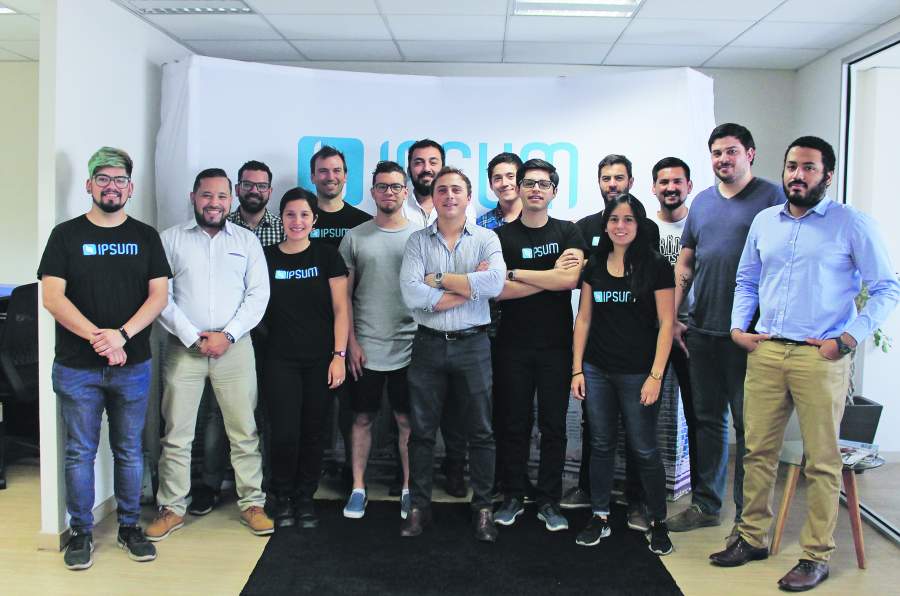
Growth supplied lessons that a pitch deck would have struggled to invent. In 2017, the team built a clever 4D integration that connected a schedule to a BIM model in two steps. Prospective users admired it. Almost nobody used it. The capability required working habits and data that many contractors did not yet possess.
“You gotta be practical too.”Franco Giaquinto
That flop still shapes how Giaquinto talks about product development. Construction is filled with firms at different points on the technology curve. One project may have a sophisticated data team; another may run on Excel; a third may still prefer a whiteboard. The winning tool, in his view, is the one a broad range of people can adopt without special staff or an archaeological dig through old data.
There is a quiet contrarianism in this. Software companies are rewarded for displaying the future. Giaquinto keeps returning to Monday morning. Can a superintendent open the product? Can a trade partner see what changed? Can the office learn what happened in the field before a monthly PDF makes the news stale? Novelty earns attention; adoption earns a place in the routine.
The pandemic redraws the map
Then jobsites stopped. When the pandemic paused projects across Latin America, customers had little appetite for paying for software they were not using. Ipsum had hundreds of active projects across eight countries, but its revenue fell. Giaquinto and his team decided that the mission was worth another attempt in a different market.
The move to the United States was not a simple sales expansion. The company rebuilt its software for American general contractors and called the product ProPlanner. It removed other modules to concentrate on two elements: the master schedule and the lookahead plan. The 15-person team changed its internal working language to English and arranged lessons. It had to develop a new network, adapt the product, retain employees, and find revenue while quarantine was still rearranging ordinary life.
A pilot and partnership with Haskell helped establish the US business in 2021. Two years later, ProPlanner became Outbuild, a name meant to suggest exceeding in the act of building. At the time of the 2023 rebrand, the company reported a team of more than 30, over 130 customers, and more than 700 projects.
Ipsum begins as a broad collaborative platform for Latin American construction.
The US rebuild focuses ProPlanner on schedules and lookaheads for general contractors.
ProPlanner becomes Outbuild, with 130-plus customers reported at launch.
An $11 million Series A supplies capital for product, sales, marketing, and operating infrastructure.
The sequence is useful because the company expanded by becoming conceptually smaller. Instead of attempting to digitize an entire jobsite, Outbuild centered on the document that determines who should do what, and when. Its software connects the contractual schedule to shorter planning horizons, allowing office and field teams to work from related information. Trades can collaborate in the platform, while Outbuild's commercial focus remains general contractors.
That focus also reveals a social idea hiding inside a technical product. A schedule is usually drawn as a stack of bars, but a project is a chain of promises between people. The electrician needs the wall ready. The drywall crew needs the inspection complete. The superintendent needs to know which promise is slipping before it becomes a delay. Connecting a master schedule to weekly planning turns those dependencies into a shared conversation. Outbuild's proposition is less about making a prettier Gantt chart than making the chart answerable to the room.
Giaquinto has kept the initial customer narrow as well. Mid-market general contractors have enough complexity to feel the pain and enough appetite to improve, without always having the technology budgets of the largest builders. Owners and trades participate, but the contractor remains the center of the commercial model. It is a choice shaped by the same discipline as the product rebuild: know whose problem you are solving before adding another constituency.
Honesty with the hard hat on
Giaquinto's practicality extends to fundraising. He has described walking investors through the good, the bad, and the ugly from the first meeting. His preferred image is mechanical: lift the hood and let them see the leaking hose beside the parts that run well. The approach risks losing people who came for an immaculate growth story. He considers that useful filtration.
In November 2024, Outbuild announced an $11 million Series A led by Sway Ventures, with Hilti Ventures, Trimble Ventures, BGV, and Zacua Ventures participating. The company said its software was then being implemented on more than 4,000 projects in ten countries. The capital was intended to expand engineering and product, add commercial capacity, establish marketing, and build the financial, human-resources, and revenue-operations machinery required of a company growing past its improvisational years.
Giaquinto is amusingly suspicious of fundraising as a spectator sport. Founders see another company announce ten or twenty million dollars on LinkedIn and begin running a race that may have nothing to do with their customers. His own advice is to research the market, find a small unit of value someone will pay for, speak with many customers, and work in steps. Watch the other horses if you must. Keep yours in its lane.
The product philosophy is simple: build for the data a contractor has, not the data a demo wishes existed.
His network has widened with the company. Giaquinto credits conversations with fellow construction-tech founders, including Matt Daly of StructionSite, Yves Frinault of Fieldwire, and Meirav Oren of Versatile, for lessons about hiring, fundraising, and the balance between industry experience and software experience. Earlier in his career, before such a network existed, he learned by watching founder videos and listening to podcasts. In 2025, he appeared on several of those programs himself and was named to Slice of Construction's 50 Under 50 list.
A bigger dent, made patiently
Ask what keeps him working and Giaquinto talks about making a dent in an industry that builds the physical world. He wants Outbuild in every major American city and, eventually, more regions beyond the United States. The aspiration is large. The method remains deliberately ordinary: listen, make the product easier, connect teams, repeat.
There is some personality in the contrast. He loves sports and speaks with a competitor's vocabulary, yet he warns founders against treating company building as a horse race. He enjoys technology and follows AI, yet distrusts the reflex to put the newest thing in front of customers who cannot use it. He wants a lasting legacy, yet the daily work is about schedules, permissions, roadblocks, and weekly plans. Ambition wears work boots here.
A small moment from a 2025 podcast catches the tone. Giaquinto arrived in a sweatshirt because he had spilled a bagel with chive cream cheese on his shirt just before recording. The founder discussing an $11 million round began with laundry. It was not strategic vulnerability. It was simply what happened.
Construction does not reward a plan for being beautiful. Weather arrives. Materials do not. A subcontractor finds a conflict. The useful schedule is the one that can absorb reality and carry the change to everyone who needs it. Giaquinto's career has followed a similar logic: the failed app, the unused feature, the pandemic, the continental move, the tighter product. Each disruption amended the plan. None persuaded him to stop building.