Six months after JUICE Pharma opened its doors, Merck came knocking. The new agency had a name that sounded less like a corporation than a command, and a founding trio with enough creative nerve to use it. Forrest King was one of them. The assignment that followed gave the young shop an early jolt, but the more revealing part of King's story is what happened after the lucky break: he stayed for the long renovation.
King's public résumé reads like a history of what advertising asked its creative leaders to become. He is a graphic designer and executive creative director by training and self-description. Over the years he was also managing partner, global creative director, chief innovation officer, founding partner and, eventually, chief executive alongside co-founder Lynn Macrone. Each title marks a fresh demand. Make the work. Build the team. Understand the machines. Rebuild the company around the machines without letting the machines run the company.
That last distinction is where King becomes interesting. He has spent years talking about technology, yet his test for it is stubbornly human. Does it help someone understand a complicated story? Does it make a representative more useful? Does it put information where a customer actually needs it? Does it add value to a busy life? He is not dazzled by the channel. He wants to know what the channel does.
The designer who kept widening the frame
King attended North Carolina State University from 1988 to 1993 and lists Phi Kappa Phi among his activities. The public record becomes much clearer with JUICE. He founded the agency in 2002 with Lois Moran and Lynn Macrone, then built a career at the overlap of art direction and operations. A colleague, Shawn Clarke, later described the combination precisely: a sharp eye for concepts, a deep understanding of production and an instinct for coaching younger professionals.
In the middle of the 2000s, King was already treating format as a creative decision. A dense article did not have to remain a dense article. It could become an online experience, a tablet presentation, a video, an animation or a graphic. His enthusiasm was not for more media on principle. It was for more ways to make an idea legible.
That same period produced his clearest piece of writing. In an essay about brand trust, King argued for fair content, authentic tone and visual restraint. The advice was notably sober for an advertising executive. A brand could damage credibility by overselling. Loud design could repel the very person it hoped to attract. Trust required the company behind the message to act as though the customer's interests mattered.
“My favorite thing about the available breadth of technology channels is that we have choices on how to best tell a story.”Forrest King, discussing new media in 2007
The tools in those early conversations now look like museum pieces. The instinct does not. King understood that media multiply faster than attention. The creative director's job was no longer to select the grandest canvas. It was to choose the form that let the story arrive intact.
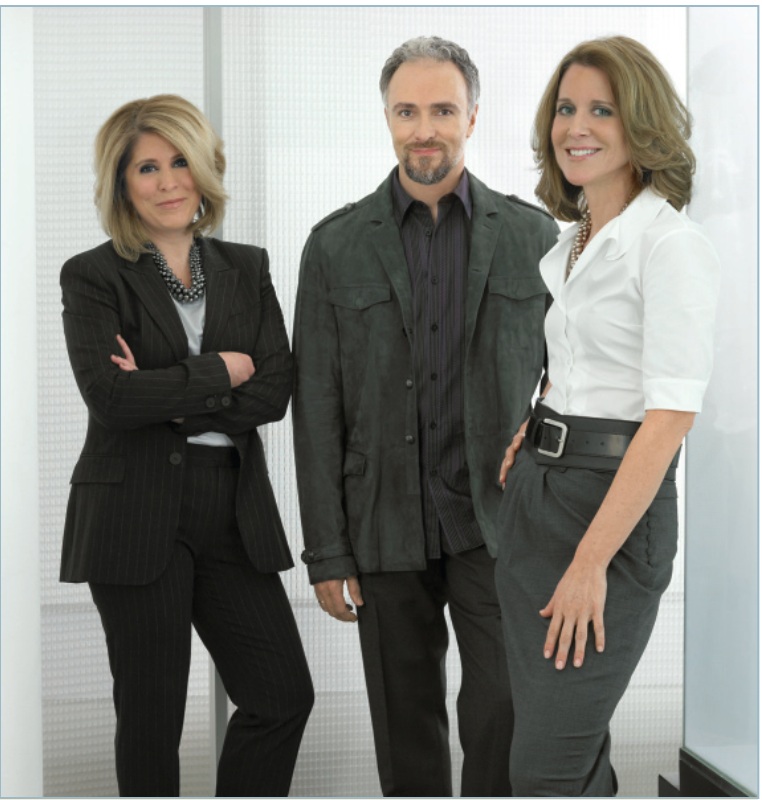
Trust is an operating decision
It is easy to file “trust” under messaging, as though the right sentence could repair the wrong behavior. King did the opposite. In his formulation, communication follows conduct. The institution has to make choices that deserve belief, then explain them with balance and restraint. It is a designer's argument with an operator's consequence: the brand is built before the advertisement appears.
That principle traveled into his view of digital transformation. In 2016, when the phrase was already being polished smooth by conference panels, King focused on the organizational friction beneath it. Legacy processes could not match the pace of modern work. Technology, legal and regulatory teams needed to join planning at the beginning, not arrive near the end carrying a red pen.
His point was practical. A digital product does not become modern because it appears on a phone. A data set has little value if it goes into what he once called a virtual “shoebox,” admired and forgotten. Tools matter when a team changes its habits around them. The difficult innovation is often a meeting held earlier, a specialist invited sooner or a decision made with a fuller picture of the customer.
By 2017, King was connecting big data, artificial intelligence and voice interfaces to more personalized communication. His prediction carried a useful paradox: better technology might enable a more human experience. He also warned against treating people as a mass market. Communication had to feel responsive, particularly in small communities where trust moves through relationships.
An independent agency learns to move
JUICE grew through the same years that King widened his remit. The agency added customer experience, analytics, video, digital production and international partner capabilities. It coined “BIGtique” for the attempt to pair a larger agency's resources with a smaller shop's attention. The name is slightly cheeky. The operating tension is real.
Independence, in King's account, offered two privileges. First, JUICE could select outside collaborators for the assignment rather than follow a holding company's internal map. Second, it could choose where to place its own attention. In 2021, during an unusually demanding run of four launches, King said the agency could focus on current clients rather than diverting energy toward constant new-business pressure.
That freedom comes with exposure. Independent agencies do not have endless benches or automatic safety nets. They have judgment, relationships and the quality of the next decision. JUICE's history contains expansions, client consolidations, office moves and reinventions. King's public language rarely lingers on triumph. It returns to preparedness: think several steps ahead, remain embedded in moment-to-moment decisions, and build a team capable of changing shape.
The empty launch pad
One scene catches the peculiar comedy of building for change. On January 4, 2020, JUICE moved into a new Manhattan office. The rooms had names like Voyage, Launch Pad, Endeavor and Cargo Bay. The technology was upgraded. A photo studio was ready. Two months later, the office was largely empty.
King compared it to an abandoned movie set, then found the joke's bright side: people would eventually return to a spotless, like-new place. It was a founder's quip, dry enough to make the disruption bearable. It also captured the agency's larger predicament. The launch pad had to work even when nobody could stand on it.
JUICE reorganized around omnichannel work, bringing creative, strategy, customer experience, analytics, operations and account leadership to the same table. King said the company wanted a “culture of firsts.” The phrase referred to client launches, but it also described a business that kept volunteering to be a beginner.
“We always stood for energy. The energy of never settling, of exploring, and reinventing.”Forrest King, 2023
There is vanity in many company metaphors. Energy can be one of them, a bright word pasted over ordinary exhaustion. King makes it more credible when he talks about people. He calls the team JUICE's “power supply.” In a public message to interns, he thanked them for raising expectations, improving the agency and helping everyone grow by watching their success.
The hierarchy in that compliment is pleasantly scrambled. Interns are supposed to arrive as recipients of wisdom. King presented them as contributors who changed the place. It aligns with the traits JUICE says it hires for: quick learning, inventive thinking, tactful debate and natural collaboration. The agency wants talent with enough confidence to disagree and enough generosity to remain in the room.
The useful future
King's career is not a conversion story in which a traditional designer discovers digital salvation. He appears to have been curious about the next channel from the beginning. Nor is it a tale of the creative who abandons craft for management. His public profile still begins with executive creative director and graphic designer. The eye stayed; the frame expanded.
By 2023, he and Macrone were still telling the agency not to get comfortable with old playbooks. They were adding leaders in business development and experience, investing in talent and sharpening an integrated offer. The titles changed again. The language did not: exploration, reinvention, partnership, people.
There is a modest discipline beneath those lively words. King asks novelty to prove its usefulness. He asks creative work to respect the audience. He asks an independent agency to earn its independence every day. And he treats a company less like a finished institution than a design problem whose constraints keep moving.
The first Merck call gave JUICE a beginning. The more consequential achievement was building an organization that could answer the calls after that, including the awkward ones, the digital ones and the ones that changed the brief halfway through. More than two decades later, King is still there, widening the frame.