The payment has gone through. Nobody applauds. Nobody asks which database recorded it, which cloud carried it or whether an engineer had a quiet night. That is the peculiar commercial ambition of Form3: to help banks make something technically demanding feel utterly uneventful. Its customers sell accounts, merchant services and financial products. Form3 sells much of the machinery underneath.
The company has taken that ambition to an unusually literal place. Its multi-cloud platform runs across Amazon Web Services, Google Cloud and Microsoft Azure. The design aims to keep processing when one provider becomes unavailable. A 2026 engineering presentation describes testing the proposition by deliberately withdrawing a cloud provider from production for 24 hours. For a business entrusted with payments, a recovery plan needs more than a reassuring diagram.
Form3 says it reached its ten-billionth payment in 2026, its tenth anniversary year. That is a cumulative milestone, not an annual run rate. More revealing than the number is the customer mix: established banks, fintechs and companies that themselves sell payment services. The infrastructure supplier has become part of other suppliers’ infrastructure.
The bankers behind the API
Form3’s beginnings were less theatrical than its engineering tests. Michael Mueller recalls early conversations in 2016 around Richard Little’s kitchen table in Pimlico, with Tom Kozlowski and seed investors. Mike Walters, Steve Cook and Adam Moulson joined the venture early, leaving corporate careers for a company still taking shape. Walters became chief executive in October 2023; Mueller moved to executive chair.
Mueller had spent more than 25 years in banking, including senior roles at Deutsche Bank, Royal Bank of Scotland and Barclays. He started as an apprentice and, as a child, had wanted to be an architect. There is a pleasing continuity in the eventual career choice: Form3 deals in structures that other people depend on, although its foundations are payment messages and software.
The problem was familiar to the founders. Banks had payment systems to maintain, changing requirements to accommodate and customers expecting faster service. Form3’s proposition was to take on the technology burden through a managed service. Its expertise therefore sits in two places: understanding the workings of payment networks and operating the software that connects institutions to them.
A single connection, several kinds of money movement
A bank or regulated fintech can use Form3 to send and receive payments through supported networks without building every connection itself. In Britain, the offering includes Faster Payments and Bacs. In Europe, it includes SEPA Instant, SEPA Credit Transfer and SEPA Direct Debit. The US portfolio includes instant-payment access alongside ACH and wire offerings.
The platform also handles orchestration and routing: deciding how payment flows move across systems. A simulator lets customers test scenarios before deployment. Sponsor-bank services provide another route to participating in payment networks. These are operational tools for institutions, several steps behind the button a consumer presses to send money.
That distinction matters when assessing the promise of a single API. A common interface simplifies technical integration; it does not erase the rules of each network. Form3’s direct RTP access description, for example, specifies eligible depository institutions and arrangements for prefunding and settlement. A customer still needs the appropriate participation model, liquidity arrangements and operational controls.
Bacs
Credit Transfer · DD
ACH · Wire · Zelle
Simplified service map. Scheme participation and access models vary.
Why Nationwide changed its shopping list
Nationwide offers a useful view of how this gets bought. In 2018, the building society began looking for locally hosted payments infrastructure. In 2019, it changed direction toward cloud architecture. Its published case study points to practical motivations: supporting growth, improving cost efficiency, adopting modern software delivery and accessing a wider pool of technical talent.
The migration involved more than picking a vendor. Accenture acted as systems integrator, and the work required coordination with central payment infrastructure and testing providers. Nationwide tracked uptime and payment response times. The useful lesson for another buyer is the sequence: establish the operational need, agree the migration dependencies and work backward from the intended live date.
By October 2025, Nationwide had extended its Faster Payments managed-service relationship with Form3 by seven years, through 2032. It also became an early adopter of Form3’s announced self-hosted Payments Resilience Platform. That combination is revealing. A company associated with managed cloud services is adding hosting choices while retaining a long-running customer relationship.
The cloud was convenient. Then came the harder question.
Form3 initially leaned on AWS services. That helped a young engineering team hand infrastructure responsibilities to a cloud supplier and concentrate on building its product. Larger banking customers brought a tougher requirement: what would happen if that supplier suffered an outage? Regulatory concerns about concentration risk helped turn a theoretical question into an engineering requirement.
The team could have recreated its platform using another provider’s proprietary services. Instead, it chose components that could run across providers: Kubernetes for running applications, NATS JetStream for messaging and CockroachDB for data. That allowed a common application codebase and a phased migration rather than maintaining different implementations for different clouds.
Consistency is the awkward part. Payments must not vanish or appear twice because computers disagree. The architecture described by Form3 uses agreement across clouds to maintain consistent records while tolerating the loss of one provider. Its published design spans nine availability zones across three providers. Keeping several copies running is useful only if they agree about what happened.
Three providers.
One consistent record.
Designed to continue processing after losing one cloud provider. Shared data consistency is the essential part.
Conceptual illustration of Form3’s published multi-cloud design; not a guarantee for every failure scenario.The backup that needed another plan
A more instructive detail appears in Cockroach Labs’ account of the deployment. Form3 initially tried locality-aware backups, but the feature did not fit its multi-cloud environment. Working with the database supplier produced locality-restricted backups, allowing staggered backups in two clouds. If one cloud became unavailable, a backup could still run elsewhere.
This is a documented mismatch, not evidence that customers lost payments. It shows why choosing a database is only part of the job. Recovery behaviour, monitoring and the location of backups need their own scrutiny. Form3’s engineers also tested software responses to losing database connectivity. The unglamorous work lives at the edges of the system, where an assumption meets a failure.
The economics deserve equal attention. In a QCon presentation, technical architect Ross McFarlane warns that running three clouds actively is expensive and makes sense only when it addresses the resilience requirements of the market being served. His blunt formulation deserves space on a procurement slide.
“bankruptcy is incompatible with uptime.”
Ross McFarlane · Form3 technical architect
The takeaway is conditional. An institution with demanding availability requirements may value this architecture. A smaller service with modest volumes and acceptable recovery windows may find the complexity difficult to justify. Nor can cloud diversity cure every failure: shared application defects, network dependencies and payment-scheme availability still matter. That is an engineering inference, and a reason to define failure scenarios before shopping for infrastructure.
Even payment companies buy the plumbing
GoCardless selected Form3 for Bacs connectivity in February 2025. At the time, GoCardless said more than 250 million of its payments went through Bacs annually. That figure describes the customer’s scale, rather than a separately measured Form3 workload. The deal illustrates the division of labour: a company can specialise in collecting payments while buying the underlying submission channels.
SumUp expanded its relationship in February 2026, adding SEPA Instant, Credit Transfer and Direct Debit to existing UK Faster Payments and Bacs connectivity. Its stated objective was to consolidate capabilities and reduce operational complexity. For a merchant, the benefit is indirect: the financial service they use can add regional payment capabilities without multiplying its infrastructure providers.
Mollie’s January 2026 agreement addresses a different problem: Verification of Payee. Form3 supplies the technology for checking payee details, helping reduce misdirected payments and fraud. Together with UK Confirmation of Payee, the service reflects a practical complication of faster transfers. A payment that reaches the wrong destination quickly is still a bad payment.
The bill, the rivals and the next small thing that can go wrong
Form3 sells business-to-business infrastructure through enterprise relationships. The managed-service proposition shifts work such as maintenance, connectivity and scheme updates to a specialist. Buyers must assess that service against the expense and control of running their own systems, including integration work that remains on their side.
There are commercial alternatives. Finastra’s Payments To Go offers a cloud payment hub; Bottomline’s Global Pay Connect addresses financial messaging and network connectivity. Their scope varies. Form3’s distinguishing argument combines account-to-account payment expertise with its documented three-cloud approach and customer deployments. The relevant comparison is the buyer’s required networks and operating model, rather than a generic contest between API providers.
Building the business has required substantial capital. A $160 million Series C in 2021 was followed by a $60 million extension completed in 2024. In October 2025, Form3 announced further Nationwide investment and a debt facility from BlackRock-managed funds and accounts. The company described that financing as supporting its path to profitability. Funding raised is not a measure of what a bank pays or what the architecture cost.
Meanwhile, Form3 is addressing another cause of interrupted service. An August 2026 explanation of Trust Fabric describes discovering certificates, mapping dependencies and managing renewal risks. An expired certificate sounds like administrative trivia until services stop trusting each other. For a company selling continuity, this is adjacent territory with a recognisable problem.
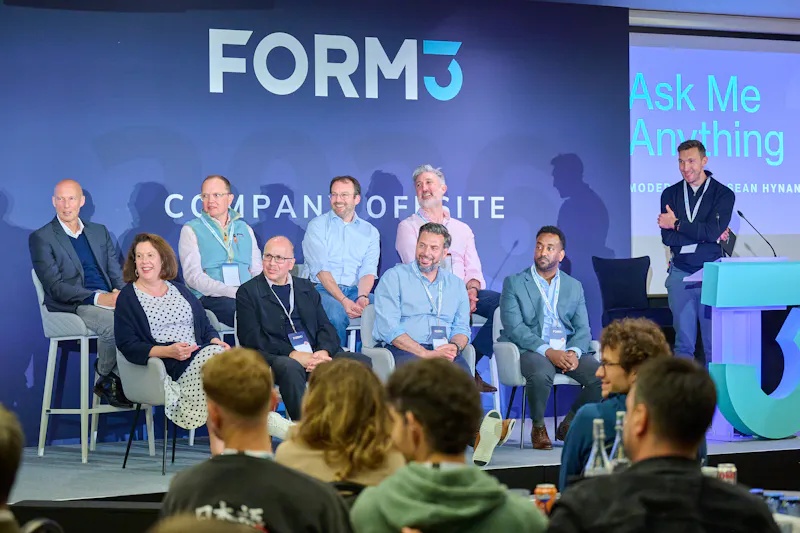
The people building these systems work in a remote-first organisation that also holds company offsites. Form3 was describing its distributed working culture in March 2020, including the importance of meeting in person. The combination suits the wider story: distribute the work, then pay attention to the connections. For customers, the desired result remains wonderfully undramatic. The payment goes through.