Venture Capital & Technology

Forest Baskett

Special Partner — New Enterprise Associates (NEA)

He taught the man who co-founded Sun Microsystems, built the operating system for history's first supercomputer, and spent 13 years shaping the graphics hardware that made Jurassic Park possible. Since 1999, he has been putting money on what comes next.

Investor Computer Scientist NAE Member Stanford Professor Silicon Valley Pioneer
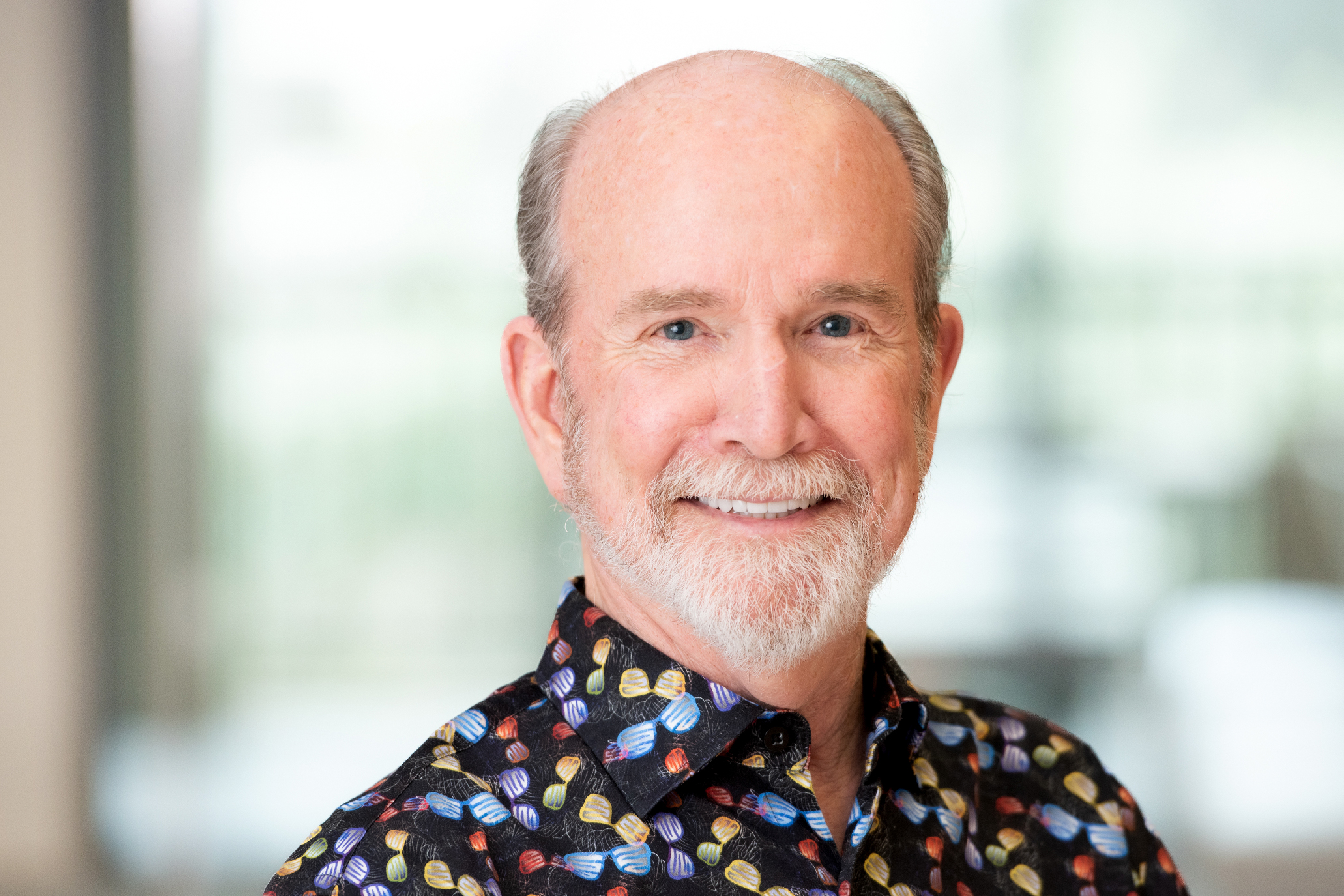
Forest Baskett, Special Partner at NEA
Forest Baskett — NEA, Menlo Park, CA
25+
Years at NEA
50+
Investments Made
1994
National Academy of Engineering
1971
Joined Stanford Faculty

The Architect of Architectures

There is a specific kind of person Silicon Valley produces once a generation - someone who does not just ride the wave but shapes the ocean floor it moves over. Forest Baskett, born in Texas in 1943, is that kind of person. When he arrived at Stanford as an assistant professor in 1971, personal computing did not yet exist. When he left in 1982, one of his doctoral students had already co-designed the workstation that would seed Sun Microsystems.

That student was Andy Bechtolsheim. The design was the original SUN workstation. And the quiet professor who supervised the architecture - who spent evenings at Xerox PARC watching the Alto personal computer taking shape - was Baskett. He has never been the loudest voice in the room. He has simply been in every consequential room.

Before Stanford, he was at Los Alamos, where he wrote the operating system for the Cray-1 - the world's most powerful computer in 1976, a machine so fast it changed what scientists thought was computable. Seymour Cray built the hardware. Forest Baskett made it run. That combination of systems-level depth and practical delivery is the throughline of his entire career.

At Xerox PARC in the early 1980s, he absorbed the full ambition of what a personal computer could be - graphical, networked, human-scale - years before those ideas were commercially viable. He took that knowledge to the Digital Equipment Corporation, where he founded the Western Research Laboratory in Palo Alto. There, his team built a RISC processor that outperformed DEC's own flagship VAX. It is a particular kind of institutional courage to build a machine that embarrasses your employer's best product. Baskett had it.

Silicon Graphics hired him next. Thirteen years as CTO during the company's run from startup to market leader in 3D graphics. SGI's workstations rendered the dinosaurs in Jurassic Park and the liquid metal T-1000 in Terminator 2. Baskett was shaping technology decisions and evaluating potential acquisitions while the company was defining what "high-performance graphics" meant for an entire industry. He was elected to the National Academy of Engineering in 1994 - specifically for "vision and leadership in the development of hardware and software for high-performance workstations."

In 1999, he joined New Enterprise Associates. He has been there ever since, now as Special Partner, backing companies in semiconductors, storage, cloud security, robotics, autonomous systems, and enterprise computing. His investment range runs from $2M to $50M, focused on Series A and B. The companies he has backed have gone public and been acquired in numbers that most investors spend entire careers chasing. Atheros Communications. Tableau Software. Data Domain. Fusion-IO. Audience. A roster that maps onto the infrastructure of modern computing the way his earlier career mapped onto its foundations.

He currently sits on the board of Timescale (the company behind TimescaleDB, one of the most widely deployed time-series databases) and Built Robotics, which is automating heavy construction equipment using AI. The pattern holds: deep engineering, infrastructure-level bets, technologies that other investors do not yet know how to evaluate.
As the prevalence of software applications for automobiles continues to increase, so does the need for a universal API. Smartcar's solution removes the friction felt by both OEMs and app developers.

— Forest Baskett, on NEA's investment in Smartcar

Quick Facts

Born May 11, 1943, Texas
Education BA Math, Rice • PhD CS, UT Austin
Current Role Special Partner, NEA
At NEA Since 1999
Location Menlo Park, CA
Focus Areas Semiconductors, Robotics, Cybersecurity, Enterprise
Fund Size $25B+ (NEA AUM)

Three Acts, One Through-Line

1960s — 1982
The Builder

Los Alamos. Stanford faculty. Xerox PARC. Built the Cray-1 OS. Taught Andy Bechtolsheim. Pioneered VLSI. Co-authored BCMP network theory still used in computer science today.

1982 — 1999
The Architect

Founded DEC's Western Research Lab. Co-designed the Sun workstation. CTO of Silicon Graphics for 13 years. Built graphics hardware that rendered Hollywood blockbusters. Elected to National Academy of Engineering.

1999 — Present
The Investor

Joined NEA. 25+ years backing deep-tech startups. 50+ investments. Exits: Tableau, Data Domain, Fusion-IO, Atheros. Current boards: Timescale, Built Robotics. Still evaluating what comes next.

Milestones

1971
Stanford University - Joins as Assistant Professor of Computer Science and Electrical Engineering. Begins advising graduate students who will shape Silicon Valley.
1975
BCMP Networks - Co-authors "Open, closed and mixed networks of queues with different classes of customers" in the Journal of the ACM. The paper introduces BCMP queuing theory, a foundational concept in computer performance analysis still studied today.
1976
Cray-1 OS - Designs the operating system for the original Cray-1 supercomputer at Los Alamos National Laboratory - the world's fastest computer at the time.
1980
Xerox PARC - Takes a leave from Stanford to work as Principal Scientist at Xerox's legendary research lab, absorbing the vision of personal computing that would shape the next four decades.
1982
Sun Workstation & DEC WRL - Co-designs the original SUN workstation architecture with doctoral student Andy Bechtolsheim. Founds Digital Equipment Corporation's Western Research Laboratory in Palo Alto.
1986
Silicon Graphics - Joins SGI as Senior VP of R&D and Chief Technology Officer. Leads technology strategy during the formative years of 3D graphics computing.
1994
National Academy of Engineering - Elected for "vision and leadership in the development of hardware and software for high-performance workstations."
1999
New Enterprise Associates - Joins NEA as General Partner, shifting from building technologies to funding the next generation of builders.
2018
Smartcar Series A - Leads NEA's $10M Series A investment in Smartcar alongside Andreessen Horowitz; joins Smartcar's board of directors.
2024
Active at NEA - Continues as Special Partner; serves on boards of Timescale (TimescaleDB) and Built Robotics. NEA raises latest fund with $468M+ in fresh capital.

A Record

  • Elected to the National Academy of Engineering (1994) for hardware and software leadership in high-performance workstations
  • Co-designed the original Sun workstation with Andy Bechtolsheim - the architecture that seeded Sun Microsystems
  • Designed the OS for the Cray-1, the world's first modern supercomputer, at Los Alamos National Laboratory
  • Co-introduced BCMP network theory (Baskett, Chandy, Muntz, Palacios) - a foundational model in queuing theory
  • Founded DEC's Western Research Laboratory; built a RISC machine that outperformed DEC's own flagship VAX
  • Served as CTO of Silicon Graphics for 13 years during the 3D graphics revolution; SGI hardware powered Jurassic Park and T2
  • Doctoral advisor to Andy Bechtolsheim (Sun Microsystems co-founder and first Google investor) and Alan J. Smith
  • Pioneer in Very Large Scale Integration (VLSI) at Xerox PARC in the early 1980s
  • Backed exits including Tableau, Data Domain, Atheros, Fusion-IO, and Audience at NEA

Trained at the Source

Rice University

BA in Mathematics. A Texas kid pursuing the abstraction that would ground everything else: queuing theory, performance analysis, VLSI design.

University of Texas at Austin

PhD in Computer Science. Focused on early timesharing systems and computer performance optimization. The foundation for BCMP and everything that followed.

Advisory Roles

Baskett serves on the Advisory Council for UT Austin's Department of Computer Science - returning value to the institution that shaped his thinking. He also recorded his oral history with the Computer History Museum in Mountain View, CA, in October 2016.


The Portfolio

Selected investments from Forest Baskett's tenure at NEA, spanning semiconductors, storage, security, robotics, data infrastructure, and developer tools.

Tableau Software
IPO Exit
Data Domain
IPO / Acquired by EMC
Atheros Communications
IPO Exit
Fusion-IO
IPO Exit
Audience
IPO Exit
Timescale (TimescaleDB)
Active — Board Seat
Built Robotics
Active — Board Seat
Beyond Identity
Active
Swift Navigation
Active
Echodyne
Active
Smartcar
Active — Board Seat
Bonsai
Acquired by Microsoft
Datrium
Acquired by VMware
Bitglass
Acquired
Mayhem (Bugcrowd)
Acquired by Bugcrowd

What People Get Wrong About Him

The Bechtolsheim Connection

While a professor at Stanford in the late 1970s, Baskett advised Andy Bechtolsheim's doctoral research. The two later co-designed the original SUN workstation - the design that Bechtolsheim brought to the company he co-founded. Bechtolsheim went on to write the first check to Google before it was incorporated. The mentor-student relationship is one of the most consequential in Silicon Valley history, and Baskett was the quiet professor at the center of it.

The Internal Disruptor

At Digital Equipment Corporation's Western Research Laboratory, Baskett's team built a RISC processor that outperformed DEC's own flagship VAX architecture. Building a machine that out-competes your employer's best product from inside their walls is either career suicide or visionary engineering. Baskett chose to build it anyway. The RISC revolution proved him right.

The PARC Observer

Before the personal computer was a commercial reality, Baskett was at Xerox PARC in the early 1980s, watching the Alto take shape - the machine with a graphical interface, a mouse, and network connectivity that Xerox never commercialized. He left with a sharpened instinct for what "inevitable" looks like before the market recognizes it. Every major bet he has placed since carries that PARC signature: infrastructure before the infrastructure is visible to everyone else.

The Computer History Museum

In October 2016, Baskett sat down at the Computer History Museum in Mountain View to record his oral history. Interviewed by Len Shustek, he traced his arc from early timesharing systems in Texas to the Cray-1 to Stanford to PARC to DEC to SGI to NEA. It is one of the few detailed public accounts of a career that shaped computing from the inside without ever seeking the spotlight.


Six Things Worth Knowing

Fact 01

He wrote the OS for the Cray-1 before personal computers existed. The machine ran at 160 MFLOPS - inconceivably fast for 1976 - and Baskett made sure it ran at all.

Fact 02

His doctoral student Andy Bechtolsheim co-founded Sun Microsystems, then wrote the first check to Google before it was incorporated. Baskett supervised both the engineering and the instinct.

Fact 03

BCMP networks - named for Baskett, Chandy, Muntz, and Palacios - remain a foundational concept in queuing theory, still assigned in graduate computer science courses 50 years after publication.

Fact 04

He was at Xerox PARC in the early 1980s, surrounded by the team that invented the GUI, the mouse, and Ethernet - arguably the richest concentration of unreleased technology in history.

Fact 05

Silicon Graphics under Baskett's CTO tenure created the graphics hardware and software that rendered the dinosaurs in Jurassic Park and the liquid-metal villain in Terminator 2.

Fact 06

Baskett has now been investing at NEA for longer than he spent as a Stanford professor. Both phases are longer than most careers. He is still at it.

Find Forest Baskett

Share 𝕏 Twitter / X in LinkedIn f Facebook