At AERO BridgeWorks, reviewing a driver file meant looking in three or four separate places. The company’s Foley case study describes manual paper records, time-consuming administration, and uncertainty about compliance. There is a peculiar indignity here: a business can move heavy equipment while struggling to move a piece of information across a desk.
Then AERO BridgeWorks adopted Foley. Its published account says the team was using the software within two weeks and saving at least $40,000 annually. That is a customer’s reported result, not a promise to the next buyer. Still, it makes a useful opening to this company’s story. The problem was ordinary enough to be overlooked. The bill for it was rather less ordinary.
- Foley connects driver hiring, screening, files, and ongoing compliance monitoring.
- Its market includes small carriers and employers with drivers spread across many locations.
- The attraction is fewer handoffs and clearer follow-up. People still have to act.
One file, four hiding places
A driver qualification file sounds like an object. In practice, it is a collection of records that must remain useful over time. A license expires. A medical document needs attention. A check produces information that somebody must interpret. An application belongs to the hiring process today and the compliance record tomorrow.
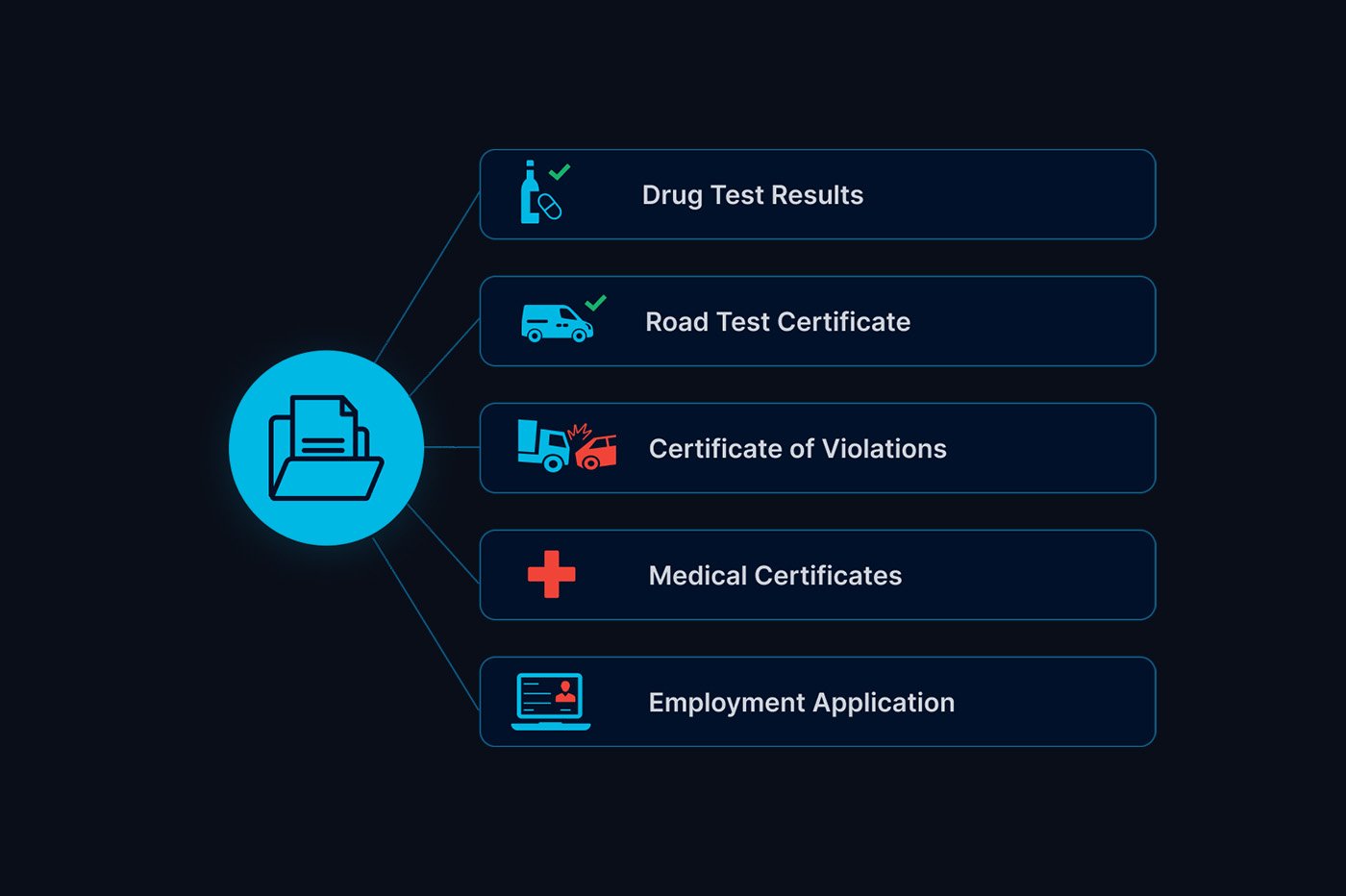
Foley’s digital file service puts these records in one system and flags missing or expiring items. The software is accompanied by specialists and services, which matters when the task involves understanding a requirement as well as attaching a document. The company’s expertise sits at the junction of employee screening and transportation regulation.
Consider the mechanism behind that figure. Every search has a small cost. Every repeated check adds another. Spread those activities across drivers, departments, and locations, and administrative effort becomes a recurring expense. AERO’s experience suggests a practical place to look for savings: work that exists because the information is scattered.
“Foley is really doing the manual work for us.”Scott · AERO BridgeWorks customer case study
The reminder that cannot see a new problem
DNC Logistics had a more familiar arrangement: paper files and Outlook calendar alerts. According to its Foley case study, the system mostly worked. It was inefficient, however, and poorly suited to growth. After moving to Foley’s automated platform, DNC reported reducing driver file management time by at least half.
This is a useful distinction. A calendar can remind you about a known date. Ongoing monitoring can alert you to a change you did not schedule. Foley’s MVR Monitor watches motor vehicle records for events such as violations and license status changes. Its CSA Monitor brings fleet safety information into view, while Audit Risk Monitor flags changes that may require attention.
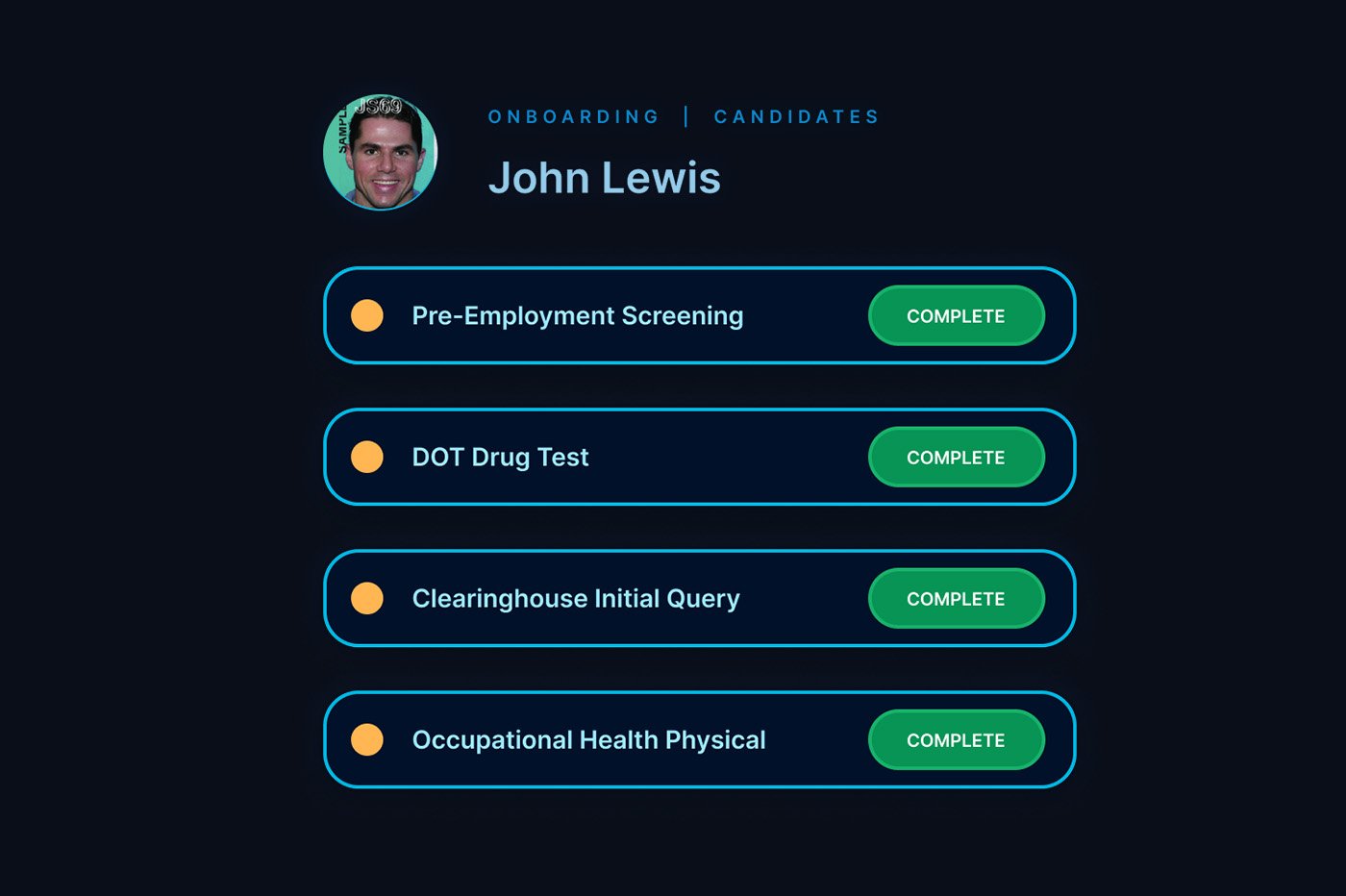
For a safety manager, the difference is the interval between learning something and responding to it. A record that was satisfactory at hiring does not tell the whole story months later. Foley sells tools intended to shorten that interval, alongside testing administration, Clearinghouse management, and digital records.
The customer base follows the driver rather than the truck-company label. Construction businesses, utilities, distributors, and manufacturers also employ people behind the wheel. A small owner-operator needs help keeping tasks straight; a distributed employer needs to know which location has an unresolved issue. Lindenmeyr Munroe’s published customer story describes that second problem across 45 locations.
From testing service to connected software
Foley began in 1992, with roots in drug and alcohol testing and transportation compliance services. A Connecticut announcement records its acquisition by BirdDog Solutions in 2010 and its move into Hartford’s historic Colt Gateway South Armory in 2012. The move brought 110 jobs to the city. Today’s software business has a substantial service history behind it.
In February 2023, Foley announced Dash, a SaaS platform for driver screening, hiring, and onboarding. In September 2025, it announced a redesigned platform that joined recruiting, screening, onboarding, and monitoring in a single experience. The progression is more revealing than the fashionable vocabulary: software first organized entry into the workforce, then connected that entry to the work of keeping records current.
Workflow illustration, not a measured performance claim.
CEO Joel Sitak’s explanation of the redesign focused on customers pulling information from multiple systems. The new platform added a proprietary Compliance Score, peer comparisons, and FMCSA Safety Insights. The latter presents safety categories in a heatmap so managers can identify where to investigate. A software score is an organizing device; readers should distinguish it from an official regulatory determination.
Foley’s stated mission, “Get you to Green,” gives the interface a destination. The more interesting part is how a team reaches it: collect the records, find the gap, identify the next task, and document the response. That sequence explains why the company combines software with customer support.
Three packages, one purchasing question
Foley sells to businesses through Essential, Professional, and Power packages. Essential covers core driver files, DOT testing, Clearinghouse queries, compliance alerts, and basic hiring tools. Professional adds ongoing MVR monitoring, driver CSA monitoring, customizable hiring workflows, and audit support. Power adds document review, customizable digital applications, and integrations with human capital management systems.
The buying question is how much work the employer needs help doing. A small fleet may want its required program organized. A growing operation may need continuous monitoring. A larger organization may value integrations and more review service. Screening choices also depend on the job; criminal checks and certain specialized checks carry separate packaging or add-on conditions.
For a cost comparison, ask for a quote against a defined driver count and service list, then measure the existing process. Include administration, checks, testing, migration, and support in the comparison. AERO’s annual savings figure describes one customer’s experience; it does not tell another fleet its purchase price or return.
Foley operates in a market with capable alternatives. J. J. Keller offers driver file management with advisors, alerts, and digital access. SambaSafety concentrates on driver risk data and monitoring for fleets and insurers. Foley’s particular proposition is the breadth of connected hiring, screening, testing, file management, and monitoring, backed by service. Buyers should compare the actual workflow and assistance they need.
Its partnerships extend that proposition into adjacent businesses. Ryder customers can access referral packages for compliance services. Foley’s Partner Hub also lists insurance organizations and OTR Solutions, a factoring and financial services provider. These relationships place compliance support alongside leasing, insurance, and the practical business of operating a fleet.
The question after the alert
Navigator, Foley’s built-in AI guide, addresses another small delay: the moment a user sees a flag and wonders what it means. It provides plain-language explanations, linked context, and guidance on the next step within Foley. A user can ask about a requirement or where to complete a task.
The product’s limits are part of its usefulness. Foley describes Navigator as support for decisions, with human help available for complex situations. It does not provide legal advice. An explanation may reduce hesitation, but somebody still needs to verify the situation and do the work.
Copy the process before buying the platform
There is a lesson here for employers who never become Foley customers. Start with one driver record. Count the places someone must search, the reminders maintained separately, and the handoffs between hiring and safety. Assign responsibility for each alert and record what resolves it. Measure the time spent chasing information before discussing automation.
Foley is a plausible fit when these tasks recur across a driver workforce and fragmentation consumes staff time. Its benefits will depend on accurate records, appropriate configuration, and people responding to the signals. A team that only needs occasional office-worker screening should compare narrower options. An organization that ignores alerts will simply have a more attractive place to ignore them.
The attraction is pleasantly unglamorous. A driver needs to be hired. A record needs to stay current. A manager needs to see the next action without visiting four hiding places. Foley has built a business around making those moments easier to manage.