Faisal Aftab was in Karachi to start filming Shark Tank Pakistan when a hotel Wi-Fi connection kept interrupting his conversation about the country’s digital economy. It was September 2024. An investor who spent his working life thinking about connectivity had encountered its less agreeable cousin: the connection that almost works.
The setting suited the subject. Aftab, the Pakistani-American founder of Zayn VC, was preparing to assess entrepreneurs on television. Behind the cameras lay a longer career in media, financial services and early-stage investing. He had spent years considering what happens when ordinary commercial activity becomes visible to software. Now he was about to become more visible himself.
His portfolio includes ticketing, groceries, fashion, logistics and payments. Read as a list of industries, it looks eclectic. Read as a collection of transactions, it becomes more coherent. Someone buys something. Someone delivers it. Someone waits to be paid. Aftab is interested in the business opportunities hiding inside that sequence, particularly the waiting.
A career with several channels
His education crossed the Atlantic: undergraduate and graduate study at Michigan State University, followed by an MBA at Oxford, completed in 2010. His working life crossed industries. He held financial-services responsibilities at National Financial Partners, worked at MTV’s Pakistan franchise and became an executive vice president at streaming business CloudStream Media.
Television, streaming and finance make a revealing combination. Each depends on distribution, although the thing being distributed changes. A programme needs an audience. A streaming service needs a working route to the screen. A financial product needs a customer it can understand and reach. Those concerns give his later investment interests a recognizable family resemblance.
He grew up mainly in California’s Bay Area, spent his high-school years in Pakistan and returned to the United States for college. Around 2016, he moved to Pakistan to pursue investment opportunities. He subsequently helped establish Lakson Venture Capital before creating Zayn. A career spent moving between markets had become a career financing one of them.
“I’m a moonlighting type of guy.”
Faisal Aftab, 2023
The line is a more useful introduction than a string of job titles. Venture investing offers him a legitimate reason to become interested in several businesses at once. The challenge is to make that curiosity useful to founders, who have the less leisurely responsibility of making one company work.
The business behind the transaction
Zayn was founded in 2021. Its stated approach allows investments across sectors while examining companies through a financial-technology lens. That helps explain why the same investor can be interested in an online marketplace and a payments business without considering them unrelated excursions.
A marketplace records purchases. A delivery platform records orders and fulfillment. A payment system records money changing hands. Those records can become useful inputs for financial services. Aftab’s recurring interest is the connection between a business doing its ordinary work and a lender becoming better able to understand that business.
Haball supplies a concrete example. The supply-chain payments and financing company announced a $52 million package in April 2025. Zayn led the $5 million equity component. Meezan Bank supplied $47 million in strategic financing. The arithmetic deserves to survive the headline: the entire amount was never a venture-equity cheque from Zayn.
$5m equity
Zayn-led component
$47m financing
Meezan Bank
Haball’s business combines invoicing, payment collection and financing. That combination gives Aftab’s broad thesis a practical address. The information that helps a company collect money can also help make its financing needs clearer. The appeal lies in improving an existing business process, then building financial services close to it.
There is a discipline here that grand talk about a digital economy can obscure. A business owner still needs stock, a customer still expects delivery and an invoice still needs settling. Technology earns its place by making those jobs easier. The investment case has to pass through the shop before it reaches the spreadsheet.
The investor founders call
Aftab’s relationships with founders offer another way into his working life. Bookme founder Faizan Aslam describes him as a mentor who makes himself available for strategic decisions. His account gives the boardroom relationship a familiar texture: the person you call when the question has become too consequential to keep turning over alone.
That is a useful counterweight to the glamour attached to writing a cheque. An early investor’s work continues after a funding announcement. A company will need to decide what to build, how quickly to expand and which compromises it can afford. Being available for those decisions is a different contribution from appearing beside a large number.
His institutional work reaches beyond individual companies. In December 2021, he addressed a NUST conference convened to discuss a policy framework for venture capital. In March 2022, the university’s National Science & Technology Park invited him to discuss the practical questions founders ask about raising money, including team structure and investment metrics.
By May 2024, the relationship had acquired a more formal shape. Zayn became Resident Venture Capitalist at NSTP-NUST. The agreement included workshops, seminars, access to laboratories and opportunities for startup pitches. The list sounds administrative until one considers how many separate introductions a young technical company otherwise needs to obtain.
A laboratory and an investment committee test different assumptions. One asks whether something works; the other must also ask whether somebody will buy it, at what price and repeatedly enough to support a business. Bringing those conversations closer together is a practical ambition. It gives Aftab another room in which to ask his questions.
A Shark meets the shopkeeper
Shark Tank Pakistan brought the investment conversation into people’s living rooms in November 2024. Aftab joined a panel that included other founders and investors, among them Aleena Nadeem and Rabeel Warraich. The television setting broadened the kinds of businesses likely to arrive in front of him.
A television pitch has a different rhythm from institutional fundraising. Products need to be understood quickly. A founder must explain the company to viewers as well as investors. A revenue figure that would sit quietly in a spreadsheet becomes something an audience hears, remembers and argues about. The arithmetic has acquired a time slot.
The format also fits an earlier part of Aftab’s career. Someone who has worked in television arrives with an understanding that a screen changes the encounter. The investor’s questions now serve two purposes: assessing the entrepreneur and helping viewers understand what an investment decision involves.
His attention to consumer businesses extends beyond filming. In 2024, he observed that he was buying more locally produced soap and shampoo than he once had. He connected the change to the relative cost of imports and the opening for domestic production. His own shopping basket had become a small example of the economic shifts he follows professionally.
It is an appealingly ordinary detail. Currency movements often appear as lines on a chart. In a household, they can appear as a different bottle on a shelf. Aftab’s investment conversations move between those scales: the global financial change and the local purchasing decision it helps produce.
Groceries, then an exit
Krave Mart connects several parts of his story. Zayn and MSA Capital wrote its first institutional cheque. Aftab later explained that his confidence rested on the founders and their ability to execute, even as other grocery businesses were attracting substantial funding. He named the team rather than presenting the outcome as an investor’s solitary achievement.
That team included Kassim Shroff, Haziq Ahmed, Hammad Bawany and Mohammad Ahsan Kidwai. Their business attracted a strategic investment from inDrive before becoming part of its wider grocery-delivery expansion. In January 2026, inDrive launched a Karachi grocery service with Krave Mart, using its network of fulfillment locations.
The acquisition received Pakistani competition approval in March 2026. Aftab marked the development publicly as evidence that local founders could build companies attractive to international strategic buyers. For an investor who had backed the company early, it supplied a consequential later chapter to a relationship that began before such an outcome was visible.
An acquisition changes the conversation around a young investment market. Founders need customers; funds also need routes through which ownership can eventually change hands. A buyer provides a concrete example of that possibility. It does not settle every question about the wider market, but it gives the discussion a transaction to examine.
Zayn’s biography reports a tenfold return on Krave Mart. That remains a firm-reported performance figure. The more durable public milestone is the acquisition itself: an early portfolio company becoming part of an international operator. Its significance can be discussed without turning an undisclosed transaction into an imaginary personal payday.
A future that still needs paperwork
Aftab also spends time on questions that reach well beyond groceries. He was an early investor in Bitcoin and Ethereum and discusses artificial intelligence, monetary systems and digital currencies in public interviews. His interests run from the mechanics of a local payment to the rules governing money across borders.
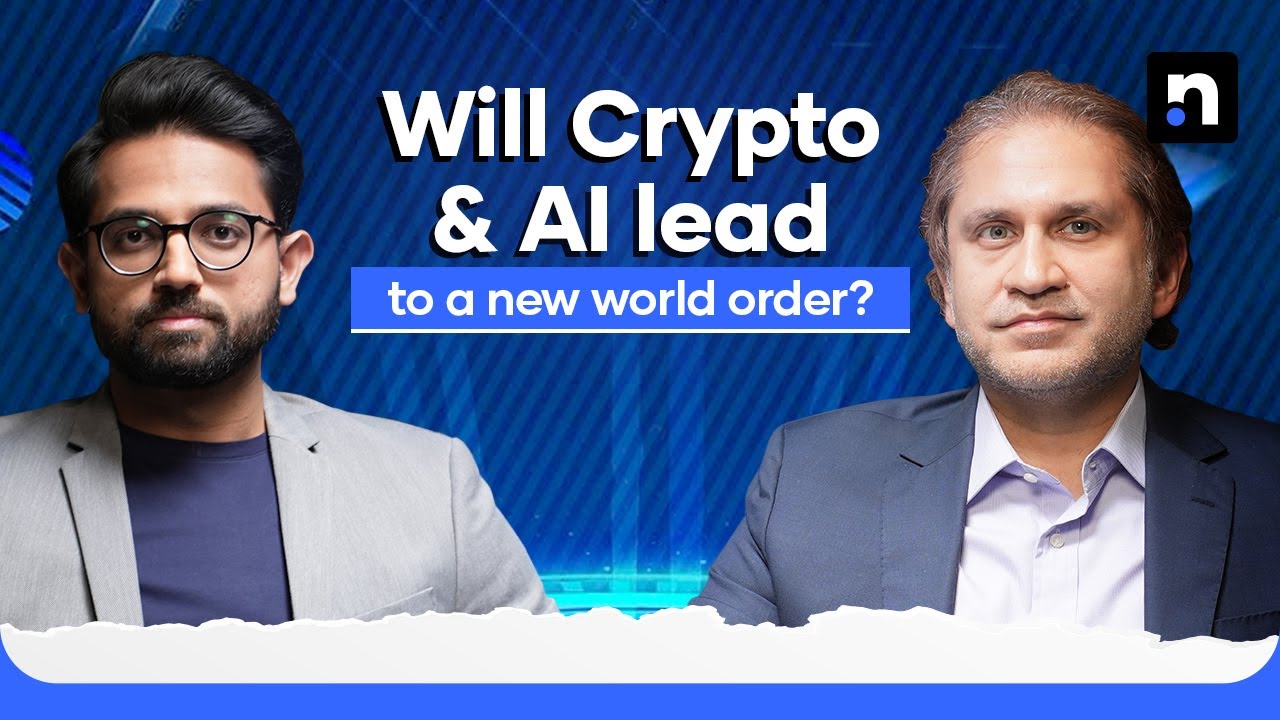
His positions resist an easy enthusiast’s label. In a 2025 conversation with Nukta, he expressed concern about unrestricted crypto movement drawing capital away from Pakistan’s real economy. He also argued for continuity in economic policy. An interest in new technology coexists with attention to what a country can afford to lose.
“We need to have the same policies for a 10-15 year period.”
Faisal Aftab, Nukta interview, 2025
That demand is less theatrical than a prediction about the next technological revolution. It asks for the conditions under which businesses can make plans. A founder ordering inventory, an investor committing capital and a lender assessing risk all depend on some confidence that the rules will remain recognizable.
Aftab’s public career now contains a television chair, university partnerships and a portfolio spread across the routines of commercial life. The question connecting them is plain enough to ask across a counter: what would make this business easier to run? He has built an investment career around taking the answer seriously.
Keep the conversation going
Profiles & social
Read & watch