Imagine a pharmaceutical production line after the wash. The equipment looks ready. The next batch is waiting. But cleanliness has an awkward property: the residue that matters may be too small to see. Before work resumes, somebody needs a chemical answer. Excellims Corporation has built its business around shortening the journey to that answer. The interesting object here is less the gleaming instrument than the idle machinery beside it.
- GA2200 analyzes trace chemicals near production equipment.
- MA3100 adds ion mobility to compatible mass spectrometers.
- MC3100 combines mobility and mass analysis in a compact system.
- The opportunity is faster evidence; the test is a validated workflow.
Clean is a chemical question
Excellims designs and sells high-performance ion mobility spectrometry instruments, or HPIMS. Its customers include pharmaceutical manufacturers, contract development and manufacturing organizations, and analytical researchers. Their common problem is finding a particular chemical in a sample, often when waiting has consequences. A cleaning team wants to know whether product or detergent remains. A scientist wants to distinguish molecules that another measurement leaves frustratingly alike.
The GA2200 is the company’s standalone answer for production environments. Its specification sheet gives a chemical acquisition time of 15-60 seconds, with electrospray ionization widening the range of compounds it can examine. That figure deserves a precise reading. It measures acquisition, not the entire interval from taking a swab to authorizing the next batch. Collection, extraction, review and the site’s procedures still exist. A stopwatch is a splendid salesman, provided somebody says where it starts.
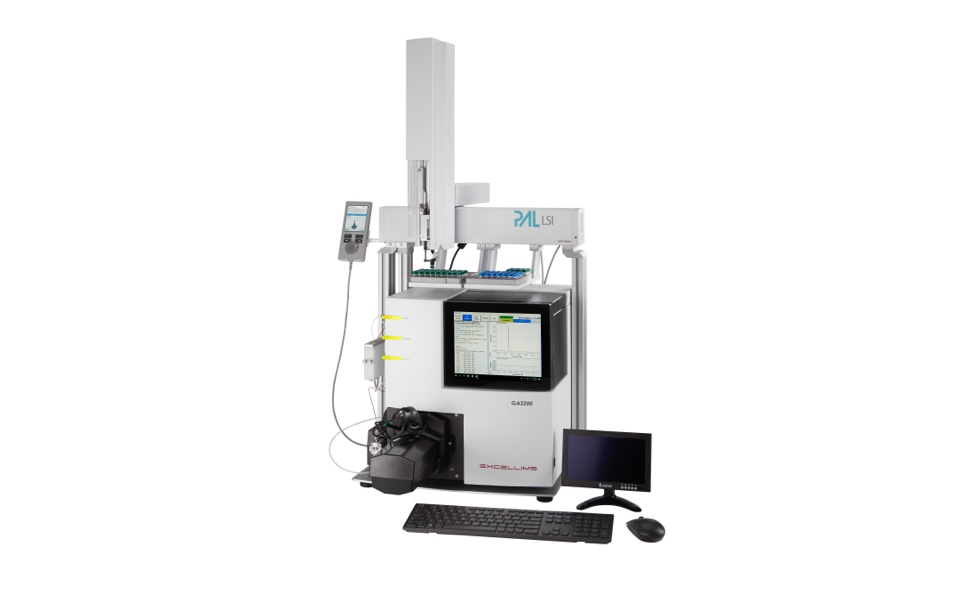
Its proposition is nevertheless concrete: put compound-specific analysis near the equipment being evaluated. High-performance liquid chromatography, HPLC, remains an alternative. Excellims offers a different separation mechanism and an at-line workflow. The commercial prize is the chance to obtain useful evidence sooner, particularly when many samples stand between one manufacturing batch and the next.
The airport in the factory
Founder and chief executive Ching Wu previously led chemical, biological and explosives-detection research at GE Security. Co-founder Paul Eisenbraun brought experience in sales and service at Ion Track Instruments, including its acquisition by General Electric. These are unusually appropriate credentials for a company interested in making chemical detection practical outside a specialist laboratory. One founder understands the measurement; the other has helped put instruments into customers’ hands.
Ion mobility has long had security applications. Charged molecules travel through gas under an electric field; their movement supplies information related to size and shape. Conventional mass spectrometry supplies mass-to-charge information. Think of two parcels with the same weight but different outlines. A weighing scale tells one story. Their progress through a crowded passage tells another. The analogy explains the complement, though the actual instrument deals in ions rather than luggage.
The first obstacle was applicability. Earlier IMS implementations could require volatile, thermally stable analytes, offer insufficient separation, or lack the software controls expected in pharmaceutical work. Excellims addressed those barriers with electrospray, a higher-resolution drift tube and regulated-workflow software. This is the documented technical evolution. It also explains why merely shrinking a familiar detector would have been an incomplete answer.
Keep the machine, add a dimension
The MA3100 makes a second argument: a laboratory should not necessarily have to replace its mass spectrometer to gain ion mobility. The module fits compatible instruments, including specified Thermo Scientific Orbitrap and linear ion trap systems. Excellims says Thermo Fisher selected its technology in 2014. A demonstration shows the module being installed in seconds, without breaking the instrument’s vacuum. Compatibility, naturally, matters more than the elegance of the demonstration.
For researchers, the benefit is an additional way to investigate isomers and complex mixtures, including collision cross-section information. Dual ion gates let users select mobility regions for subsequent mass analysis. Alexander Makarov, quoted on the product page, described the appeal succinctly: “We are excited about the experimental flexibility of this pre-separation method.” The sales pitch starts with equipment already owned, a refreshingly economical place to begin.
“We are excited about the experimental flexibility of this pre-separation method.”Alexander Makarov / Thermo Scientific
The MC3100 takes the integrated route, combining HPIMS with mass spectrometry in a compact instrument. It targets applications where both separation and mass confirmation are useful closer to the sample. Clinical possibilities feature in the company’s materials, but the product page specifies Research Use Only. That distinction belongs in any account of what people can do with it.
Four instruments before the sale
Scientific instrumentation has an earthy business model: manufacture equipment, sell it to organizations, and help them make the method work. Excellims also provides software and accessories. In May 2014, the Massachusetts Life Sciences Center announced a $980,000 Accelerator loan. The planned uses included working capital, hiring and four HPIMS instruments for customer demonstrations. Four is a wonderfully tangible number. It describes a business preparing to show its work.
Accelerator loan, including plans for four demonstration instruments, working capital and hiring.
The positioning reaches both manufacturing and research: standalone detection for the production floor, a module for an existing laboratory instrument, and an integrated system for compact deployment. Larger analytical suppliers sell alternative platforms; HPLC and LC-MS offer alternative workflows. Thermo Fisher’s role is more interesting than a simple competitor label. It is also the partner whose installed instruments give Excellims a place to attach.
A faster answer still needs a method
There is a useful lesson to copy here. Begin with the decision that arrives late, then examine everything required to move it forward. Excellims’ VisionControl software supplies user permissions, protected methods, electronic signatures and an audit trail. Those features explain why instrument performance alone cannot carry the proposition. In a controlled manufacturing environment, evidence needs a history as well as a result.
A prospective buyer should bring actual residues, sampling procedures and acceptance limits to the demonstration. If the method cannot distinguish the target from interference, or sampling misses what remains, quick acquisition will not rescue the decision. If the bottleneck lies elsewhere, faster chemistry may save little time. Excellims is most persuasive where chemical uncertainty is holding useful work still. Its practical question is simple: how close can the answer get to the person waiting for it?